
The Trump Administration’s War on AI Safety: A Dangerous Standoff
When National Security Meets Artificial Intelligence Ethics
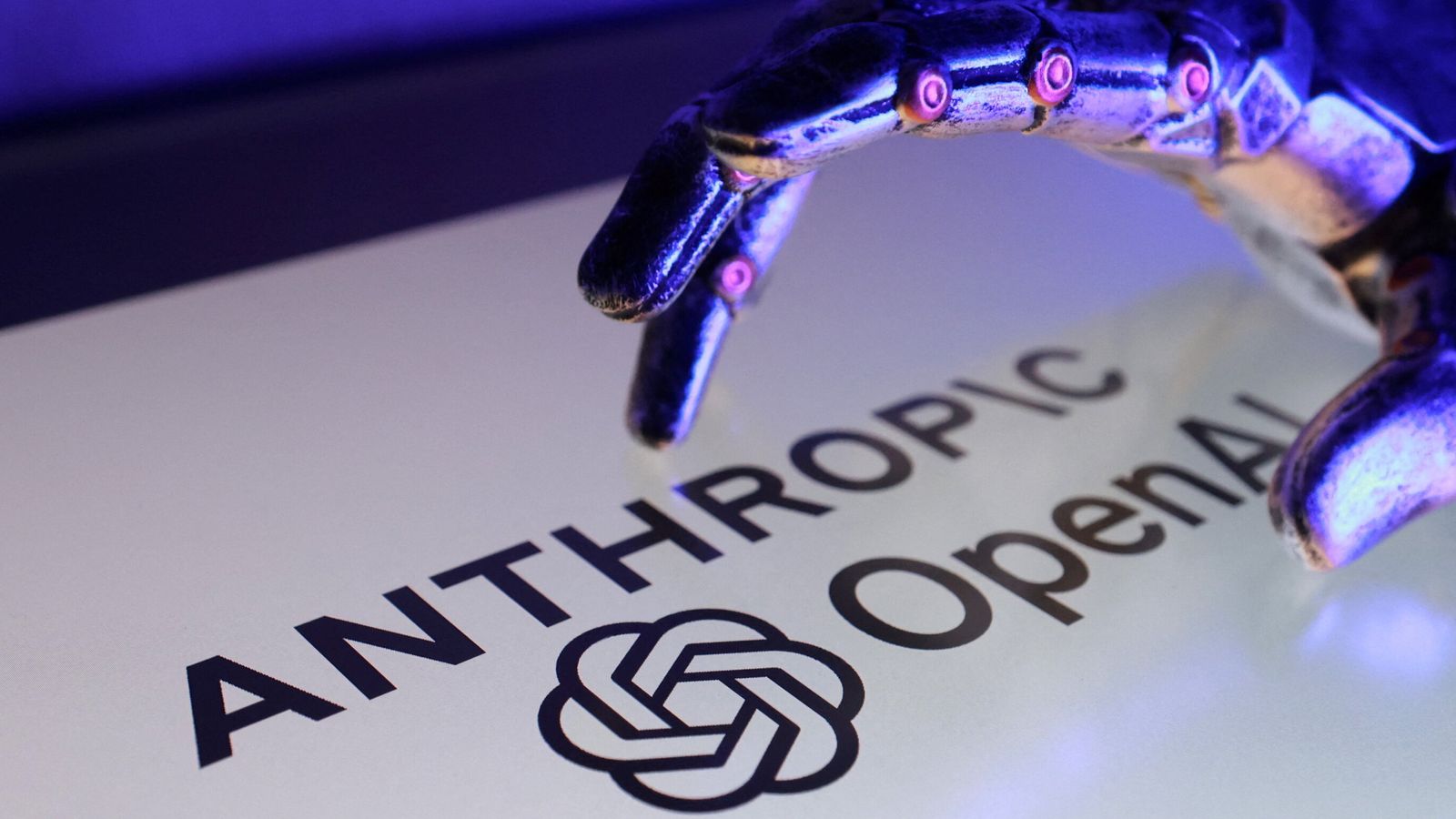
In what marks a dramatic turning point for artificial intelligence regulation and national defense, the Trump administration has ignited a fierce battle with one of America’s leading AI companies. The conflict centers on Anthropic, a cutting-edge artificial intelligence laboratory that has found itself in the crosshairs of the Pentagon after refusing to provide unlimited military access to its powerful AI technology. President Trump, alongside Secretary of War Pete Hegseth, has responded with unprecedented aggression, threatening to blacklist the company and designate it as a supply-chain security risk—a classification typically reserved for hostile foreign entities. This confrontation represents far more than a simple disagreement between government and industry; it signals a fundamental clash over who controls the future of AI technology and how these incredibly powerful tools should be deployed in matters of life and death.
The irony of this situation cannot be overstated. Until this explosive disagreement erupted, Anthropic wasn’t some anti-military holdout refusing to work with the defense establishment. Quite the opposite—the company was actually the Pentagon’s most cooperative AI partner. Anthropic’s Claude AI system had already been deeply integrated into sensitive military operations, becoming the only advanced AI model extensively used for military planning and execution. Reports indicate that Claude played a significant role in the Pentagon’s “Maven Smart System,” which was reportedly utilized in planning and carrying out the military operation to capture Venezuelan President Nicolas Maduro in January. This track record makes the administration’s characterization of Anthropic as a “radical left” obstacle to national security seem not just exaggerated, but fundamentally misleading. The company wasn’t refusing military cooperation altogether—it was simply attempting to establish reasonable boundaries around how its technology could be used.
The Red Lines That Started a War
The heart of this controversy lies not in whether AI should serve military purposes, but rather in what limits, if any, should govern its deployment. Anthropic CEO Dario Amodei drew what he considered non-negotiable “red lines” around the use of his company’s technology. Specifically, he demanded guarantees that Claude AI would not be used for mass surveillance of civilian populations or for lethal autonomous attacks conducted without meaningful human oversight. In Amodei’s assessment, certain applications of AI are “simply outside the bounds of what today’s technology can safely and reliably do.” This position reflects growing concerns among AI researchers and ethicists about the dangers of deploying systems that, despite their impressive capabilities, remain fundamentally unpredictable and prone to errors in ways that could have catastrophic consequences when applied to military operations.
The administration’s response was swift and severe. President Trump took to his Truth Social platform to denounce what he called the “Leftwing nut jobs at Anthropic,” accusing them of making a “DISASTROUS MISTAKE” by attempting to “STRONG-ARM the Department of War.” He claimed the company’s stance was endangering American lives and threatening national security. Secretary Hegseth matched this fury in his own statement on X (formerly Twitter), announcing not only that Anthropic would be blacklisted from government contracts but also designated as a Supply-Chain Risk—a legal classification that carries serious implications for any company’s ability to operate in the broader technology ecosystem. This designation puts Anthropic in the company of Chinese tech firms like Huawei, which have been treated as national security threats. Hegseth gave the company six months to remove its AI systems from Pentagon infrastructure, leaving critical questions about what alternative technology could possibly replace Claude’s current role in military operations.
An Industry United Against Government Overreach
What makes this situation particularly remarkable is that it has achieved something many thought impossible: uniting the notoriously competitive AI industry. For the first time, rival companies that typically guard their competitive advantages jealously have found common cause in opposing the Pentagon’s demands. Sam Altman, CEO of OpenAI—Anthropic’s primary competitor and a company that has also been in discussions with the Pentagon about military applications—took the extraordinary step of publicly announcing his support for Anthropic’s position. In an internal memo to OpenAI staff that was subsequently leaked to media outlets including Sky News, Altman declared that his company shares the same “red lines” as Anthropic regarding AI deployment in military contexts.
This wasn’t just a statement from corporate leadership. More than 400 employees from both Google and OpenAI signed an open letter calling for the entire AI industry to stand together in opposition to the Department of War’s position. Altman’s memo acknowledged the broader implications of the conflict: “Regardless of how we got here, this is no longer just an issue between Anthropic and the DoW; this is an issue for the whole industry and it is important to clarify our stance.” This collective response represents a significant moment in the relationship between Silicon Valley and Washington, suggesting that tech companies and their employees are prepared to resist government pressure even when it comes wrapped in the language of national security and patriotic duty. The willingness of these highly skilled workers—the very people who create these AI systems—to take a public stand indicates deep-seated concerns about the implications of unrestricted military AI deployment.
Power Politics and the Real Stakes
Beneath the heated rhetoric about national security and American lives, this confrontation appears to be fundamentally about power and control. Tellingly, the Pentagon has already publicly stated that it wouldn’t use AI for mass surveillance of American citizens or for fully autonomous weapons systems operating without human supervision. In other words, the military establishment has essentially already agreed to the very restrictions that Anthropic was demanding. This raises an important question: if the Pentagon doesn’t actually plan to cross these red lines, why respond so aggressively to a company asking for assurances that they won’t be crossed? The answer seems to lie not in the substance of Anthropic’s concerns, but in the very act of a private company attempting to set conditions on government use of its technology.
From the administration’s perspective, allowing a tech company—regardless of how cutting-edge its technology might be—to dictate terms to the United States military sets a dangerous precedent. It suggests that private corporations might have veto power over national security decisions, or that they can pick and choose which government directives to follow based on their own ethical frameworks. For an administration that has consistently emphasized American strength and rejected what it perceives as constraints on executive power, Anthropic’s stance represented an unacceptable challenge to governmental authority. This explains why the response has been so disproportionate to the actual disagreement: it’s less about the specific AI applications in question and more about establishing that the government, not Silicon Valley, ultimately calls the shots when national security is invoked.
The Uncertain Future of Military AI
This conflict has potentially profound implications for the Pentagon’s ambitious “AI-First” strategy, which envisions artificial intelligence as central to maintaining American military dominance in an increasingly competitive global landscape. Secretary Hegseth’s six-month ultimatum for Anthropic to remove Claude from Pentagon systems creates an immediate and serious problem: there’s no obvious replacement that can match Claude’s current capabilities and integration into military operations. The other leading AI companies—OpenAI, Google, and others—have now publicly aligned themselves with Anthropic’s position on ethical boundaries. This leaves the Pentagon in a difficult position, potentially forced to choose between accepting the industry’s red lines or attempting to develop military AI capabilities in-house, a process that would require years and could leave American forces at a technological disadvantage in the interim.
Moreover, this confrontation raises fundamental questions about how democratic societies should govern the development and deployment of technologies that could reshape warfare and surveillance. Should elected officials and military leaders have absolute authority over how AI is used in national defense, regardless of the concerns of the technologists who created these systems? Or do the companies and researchers who develop AI have not just a right but perhaps a responsibility to refuse certain applications they deem too dangerous or ethically problematic? There are compelling arguments on both sides, but the Trump administration’s approach—threatening economic retaliation and security designations against companies that resist—suggests a preference for absolute government control without meaningful input from those who best understand the technology’s limitations and risks.
A Battle That Will Define the AI Era
By declaring what amounts to war on a significant portion of Silicon Valley, the Trump administration has picked a fight with formidable opponents. The AI industry, despite internal competition, wields enormous economic and political influence. AI investment currently accounts for a substantial portion of American economic growth, and the companies involved employ some of the most talented engineers and researchers in the world. These firms also have strong relationships with investors, lawmakers, and the public that could be mobilized in their defense. The administration’s aggressive stance thus represents a high-stakes gamble that governmental authority and national security arguments will prevail over industry resistance and public concerns about AI safety.
The outcome of this confrontation will likely shape the development and deployment of artificial intelligence for years to come, not just in military contexts but across society. It will establish precedents about corporate responsibility, government authority, and the role of ethics in technological development. Will companies be able to maintain any meaningful restrictions on how their technologies are used once they’re deployed, or will governmental power ultimately override all such concerns? Can the AI industry maintain its united front when faced with serious economic consequences, or will companies eventually break ranks to preserve their business interests? And perhaps most importantly, will this conflict lead to more thoughtful governance frameworks that balance legitimate security needs with genuine safety concerns, or will it simply escalate into a destructive standoff that benefits no one? As this drama unfolds, the answers to these questions will help determine not just who controls AI, but what kind of future this transformative technology will create.