


TSA Workers Finally Receive Paychecks After Month-Long Government Shutdown
A Long-Awaited Relief for Frontline Security Personnel
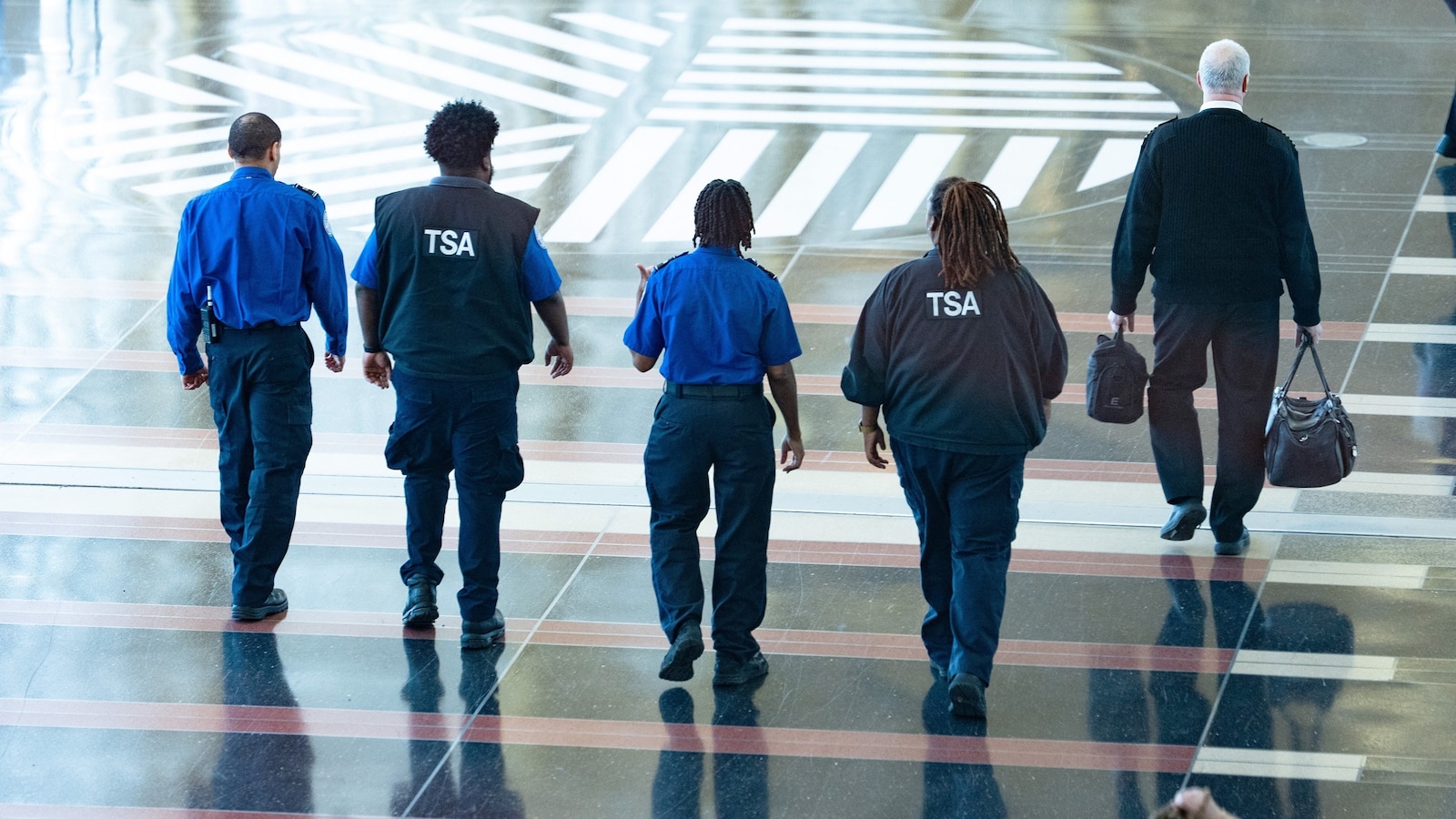
After more than a month of working without compensation, Transportation Security Administration officers finally saw some financial relief when paychecks began arriving on Monday. The Department of Homeland Security, which oversees the TSA, confirmed that most employees would receive at least two full paychecks covering the past two pay periods. However, the situation remained complicated, with some workers experiencing delays due to financial institution processing times or direct deposit issues. The payments came as a direct result of President Donald Trump signing a presidential memorandum on Friday, which directed DHS Secretary Markwayne Mullin to work with the Office of Management and Budget to identify funds with a “reasonable and logical nexus to TSA operations” to compensate the workforce. These funds were reportedly drawn from allocations made available through Trump’s comprehensive domestic policy bill signed the previous summer. Despite this welcome development, uncertainty loomed over whether TSA employees would continue receiving regular paychecks going forward, and troubling reports emerged suggesting that some workers who had called out sick might not receive payment at all.
The Human Cost of Political Gridlock
The 45-day partial government shutdown that began on February 14 forced tens of thousands of TSA officers to report to work daily while their bank accounts emptied and bills piled up. The human stories behind these statistics paint a devastating picture of federal workers caught in the crossfire of political dysfunction. TSA officers across the country shared heartbreaking accounts of missing mortgage and rent payments, taking on second jobs just to keep food on the table, and making impossible choices about their families’ basic needs. Union representatives relayed stories that no working American should have to experience: parents forced to pull their children out of daycare because they couldn’t afford the fees, families receiving eviction notices because rent payments had lapsed, and workers depleting what little savings they had left from the previous shutdown. Yolanda Keaton, a TSA officer at Hartsfield-Jackson Atlanta International Airport, described receiving only “a partial pay with ample deductions taken out along with taxes,” noting that “we did not receive all of our backpay” and that “a lot of officers’ paychecks are very, very short and not everyone received their pay today.” The Acting Assistant Secretary Lauren Bis acknowledged these concerns, stating that officials were “working aggressively” with the USDA’s National Finance Center to process the remaining half paycheck owed from the third pay period.
Families Forced to Make Impossible Choices
The emotional toll on TSA workers and their families cannot be overstated. Oksana and Deron Kelly, both TSA officers at Orlando International Airport and parents of two young children, exemplify the struggles faced by thousands of federal employees. After depleting their savings during the previous 43-day shutdown—the longest full government shutdown in U.S. history—they found themselves once again working without pay when the partial shutdown began in February. Deron took a second job as a DoorDash driver to try to make ends meet, but it wasn’t enough to maintain their family’s standard of living. The couple faced one of the most painful moments parents can experience when they had to tell their 7-year-old son that they couldn’t afford the trampoline park birthday party he wanted. Through tears, Oksana described the difficulty of disappointing her child: “He’s like, ‘Is this something we’re doing?’ And we’re like, ‘Sorry buddy, you know this birthday is going to be at the community park because Mommy and Daddy can’t afford the trampoline park.'” Another officer, a single mother working at Hartsfield-Jackson Atlanta International Airport, faced even more dire circumstances, according to Keaton, who is also a steward for AFGE Local 554: “She has a child that she has to face every day. It’s hard for her to smile with her child when she doesn’t know where their next meal is going to come from. She doesn’t know if she’s going to keep her apartment because she’s had eviction notices.”
The Ripple Effects Across America’s Airports
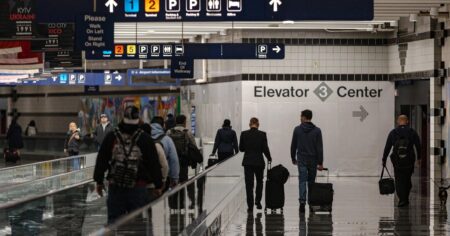
The shutdown’s impact extended far beyond individual hardships, threatening the functionality of America’s aviation security infrastructure. Paul Uecker, a TSA officer at Duluth International Airport and Vice President of Greater Minnesota American Federation of Government Employees Local 899, reported knowing “of at least one officer at MSP (Minneapolis-Saint Paul International Airport) who quit because they were having eviction processes started against them. They needed to find a way to get some money so that they could hopefully avoid that.” As financial pressures mounted, TSA officers began calling out in record numbers. On Thursday, the agency experienced its highest call-out rates of the entire shutdown, with more than 3,450 officers absent from work. George Bush Intercontinental Airport in Houston recorded the worst call-out rate at 44.4%, while Hartsfield-Jackson Atlanta International Airport came in second. In response to growing concerns about long security lines, President Trump deployed ICE agents to airports around the country the previous Monday. However, TSA officers told reporters that these ICE personnel were largely ineffective at addressing the checkpoint backlogs because they lacked the specialized training required to screen passengers and baggage—training that typically takes TSA officers about six months to complete. Maggie Sabatino, a TSA employee at Philadelphia International Airport, described the ICE presence as unhelpful and unnerving: “They’re outside the security area, watching as people are coming in, watching as people are coming out. We were told that they were supposed to be there to offer us assistance, and there’s been no assistance. Standing around and just watching, it’s not helping us. It’s putting us on edge, like we’re waiting for something to happen.”
Political Stalemate and Congressional Inaction
The partial government shutdown stemmed from a political standoff between Senate Democrats and congressional Republicans over funding for the Department of Homeland Security. Senate Democrats vowed to block DHS funding until reforms were made to Immigration and Customs Enforcement following the killings of Renee Good and Alex Pretti in Minneapolis by federal law enforcement. On Friday morning, the Senate reached a compromise to fund DHS while excluding appropriations for immigration enforcement. However, House Republicans, led by Speaker Mike Johnson, rejected this deal and instead pushed for a 60-day short-term bill to fund the entire department without conditions. The House passed this alternative measure, but the Senate refused to take it up. With Congress then departing for a two-week spring recess, TSA workers faced the prospect of continued uncertainty until lawmakers returned for a vote on April 13. The legal authority under which President Trump issued his Friday memorandum remained unclear, and the White House did not respond to requests for clarification. This ambiguity raised questions about the sustainability of the payment solution and whether it could withstand potential legal challenges.
The Broader Implications for Federal Workers
The TSA workers’ ordeal highlighted systemic vulnerabilities in how the federal government treats essential employees during political disputes. Oksana Kelly captured the frustration felt by thousands when she said, “I feel like they’re playing with our lives. We all have children. We all have parents that, you know, people [to] take care of. It’s not just some random officers. It’s real people.” These workers found themselves in an impossible position: required by law to report to work and maintain the security of America’s aviation system, yet denied the compensation they had earned and depended upon for their basic needs. The situation was particularly cruel for those who had already suffered through the 43-day shutdown the previous fall and had not yet financially recovered before being plunged into another period without pay. The stories from TSA officers across the country—from Atlanta to Orlando, from Philadelphia to Duluth—revealed a workforce stretched to the breaking point, forced to choose between professional duty and family welfare. As the political stalemate continued and Congress remained on recess, these frontline workers faced ongoing uncertainty about their financial future, even as they continued showing up to protect millions of travelers passing through America’s airports every day. Their experience serves as a stark reminder that behind every government agency are real people with real families, and that political gamesmanship has profound human consequences for those who can least afford to bear them.