
New Federal Task Force Takes Aim at Cuban Leadership
Miami Prosecutor Leads Unprecedented Initiative Against Communist Party Officials
The United States Attorney’s Office in Miami is launching an ambitious new effort that could significantly reshape American enforcement policy toward Cuba. According to sources with direct knowledge of the initiative who spoke with CBS News, Jason Reding Quiñones, who serves as the U.S. attorney for the Southern District of Florida, is bringing together a coalition of federal and local law enforcement agencies alongside the Treasury Department’s Office of Foreign Assets Control (OFAC) to create what’s being called the Cuban prosecution working group. This collaborative effort represents a potentially major escalation in how the United States government approaches accountability for Cuban officials, particularly those in positions of power within the island nation’s Communist Party structure. The Treasury’s OFAC, which traditionally handles the implementation and enforcement of economic sanctions against foreign entities and individuals, will play a crucial role in this coordinated approach, bringing its expertise in tracking financial flows and enforcing economic restrictions to complement traditional criminal prosecution efforts.
Broad Scope of Targeted Crimes and Strategic Focus
The newly formed working group isn’t limiting its sights to just one category of alleged wrongdoing. Instead, sources familiar with the planning indicate that prosecutors will be casting a wide net across multiple areas of criminal activity. The initiative will concentrate on prosecutions involving economic crimes, which could include corruption, money laundering, and sanctions violations; drug trafficking offenses, recognizing Cuba’s geographic position as a potential transit point for narcotics; violent crimes that may have connections to Cuban officials or their operations; and violations related to immigration law. What makes this effort particularly notable is its explicit focus on individuals in Cuba’s Communist Party leadership rather than lower-level operatives or peripheral figures. This strategic targeting of high-ranking officials signals an intent to pursue those with the greatest responsibility and influence within Cuba’s governing structure. By concentrating resources on leadership figures, the working group appears designed to maximize both the legal impact of any successful prosecutions and the potential political ramifications for Cuba’s government. This approach follows a pattern seen in other U.S. enforcement actions against foreign government officials, where holding leadership accountable is viewed as more effective than pursuing only mid-level or junior participants in alleged criminal schemes.
Presidential Predictions and Recent Foreign Policy Precedents
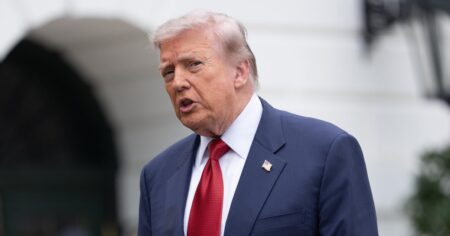
President Trump’s recent comments and actions provide important context for understanding this new prosecutorial initiative. The president has made clear through both his statements and policy decisions that his administration is taking an aggressive stance toward governments he views as adversarial, particularly those with communist or authoritarian structures. In a revealing interview with CNN conducted on Friday, President Trump made a bold prediction about Cuba’s political future, stating flatly that “Cuba is gonna fall pretty soon.” This confident assertion suggests that the administration sees the current Cuban government as vulnerable and that U.S. actions, including potentially this new prosecution working group, are part of a broader strategy to accelerate political change on the island. The president’s prediction doesn’t exist in isolation but rather follows a pattern of increasingly confrontational U.S. actions against foreign leaders. Most notably, the United States orchestrated the removal of Venezuelan President Nicolás Maduro in January, subsequently bringing him to American soil to face drug-related criminal charges—a dramatic move that demonstrated the administration’s willingness to pursue high-profile foreign leaders through the criminal justice system. Additionally, the recent joint U.S.-Israeli military operations against Iran that resulted in the death of Supreme Leader Ali Khamenei represents another example of the administration’s assertive approach to foreign adversaries. These precedents establish a context in which the creation of a specialized prosecution unit targeting Cuban leaders appears to be part of a coordinated, aggressive foreign policy strategy rather than an isolated law enforcement initiative.
Prosecutors With Multiple High-Profile Assignments
Adding another layer of complexity and political significance to this story is the fact that the same prosecutors leading the Cuban initiative are simultaneously handling another highly sensitive investigation. Jason Reding Quiñones and First Assistant U.S. Attorney Yara Klukas are also spearheading a separate investigation into former Obama-era intelligence officials, an inquiry that has drawn considerable attention due to its subject matter and potential political implications. This parallel investigation focuses on former CIA Director John Brennan and other intelligence community veterans who were involved in producing a crucial intelligence assessment regarding Russian interference in the 2016 presidential election. That assessment, completed in January 2017, concluded that Russia had actively worked to interfere in the election with the specific goal of helping Donald Trump’s candidacy—a finding that has remained politically controversial and contested by the president and his supporters. Late last year, Quiñones’ office began issuing subpoenas to former government officials demanding extensive records related to how that intelligence assessment was prepared, including all paper and digital documents, text messages, and email communications. The scope of materials being requested is remarkably broad, suggesting a comprehensive investigation into the intelligence community’s processes and conclusions. More recently, in the past several weeks, prosecutors have issued updated subpoenas that expand the timeframe for which documents are being sought, indicating that the investigation is not only ongoing but potentially broadening in scope. The fact that these same prosecutors are handling both the investigation into Obama-era intelligence officials and the new Cuban prosecution initiative may raise questions about resource allocation, potential political motivations, and the strategic priorities of the U.S. Attorney’s Office in Southern Florida.
The Unique Role of the Southern District of Florida
The selection of the U.S. Attorney’s Office for the Southern District of Florida to lead this Cuban prosecution initiative makes considerable strategic and practical sense given the district’s unique characteristics and expertise. South Florida, and Miami in particular, has the largest concentration of Cuban Americans in the United States, creating a community with deep personal, family, and cultural connections to the island nation. This demographic reality means that the Southern District has developed specialized expertise over decades in handling cases involving Cuba-related matters, from immigration violations to sanctions evasion to drug trafficking that involves Cuban territory or nationals. The prosecutors in this district have institutional knowledge about Cuban government structures, personalities, and operations that would be difficult to replicate elsewhere. Additionally, the geographic proximity of South Florida to Cuba—just 90 miles separate Key West from Havana—means that many Cuba-related criminal activities that affect U.S. interests have connections to this district, establishing clear jurisdictional grounds for prosecution. The office has also built relationships with the large Cuban-American community, which could potentially provide intelligence, cooperation, and support for investigations targeting the Cuban government. These factors combine to make the Southern District of Florida the logical choice for housing this specialized prosecution working group, even as questions remain about the specific legal theories that will be used to establish jurisdiction over Cuban officials who may have never set foot on U.S. soil.
Legal and Diplomatic Implications Moving Forward
While a spokesman for the U.S. Attorney’s Office could not be immediately reached for comment on the initiative, the establishment of this working group raises numerous important questions about its implementation, legal foundation, and potential consequences. From a legal standpoint, prosecuting foreign government officials, particularly those who remain in their home country, presents complex jurisdictional challenges. Prosecutors will need to establish that U.S. courts have proper jurisdiction over the alleged crimes, which typically requires showing either that criminal acts occurred on U.S. territory, affected U.S. interests, involved U.S. financial systems, or were committed by individuals with connections to the United States. The working group will likely rely on various legal tools, including conspiracy statutes that can reach foreign defendants who agree with others to violate U.S. laws, money laundering laws that can apply to financial transactions that touch U.S. banks, and drug trafficking statutes that have extraterritorial reach. From a diplomatic perspective, this initiative represents a significant escalation in U.S.-Cuba relations, which have fluctuated over the decades between periods of slight warming and renewed hostility. The explicit targeting of Communist Party leadership for criminal prosecution goes beyond traditional sanctions or diplomatic pressure, potentially foreclosing opportunities for negotiation or rapprochement. The success or failure of this working group may depend not only on the strength of the evidence prosecutors can gather but also on the cooperation of other countries in apprehending indicted Cuban officials who travel abroad, the willingness of witnesses to come forward despite potential risks, and the broader geopolitical context in which these prosecutions unfold. As this initiative moves forward, it will likely be watched closely by other nations, foreign policy experts, legal scholars, and anyone interested in how the United States uses its criminal justice system as a tool of foreign policy.