

Intelligence Reports Cast Doubt on Iran’s New Supreme Leader
The transition of power in Iran has taken an unexpected turn, with U.S. intelligence agencies uncovering troubling information about the country’s newly appointed supreme leader. According to multiple sources who spoke with CBS News, American intelligence officials have shared sensitive assessments with President Trump and his inner circle revealing that Iran’s late supreme leader, Ayatollah Ali Khamenei, harbored serious reservations about his son’s ability to lead the nation. This intelligence paints a complicated picture of a succession that may have gone against the late leader’s wishes, raising questions about the stability and future direction of one of America’s most significant adversaries in the Middle East.
A Father’s Concerns About His Son’s Capabilities
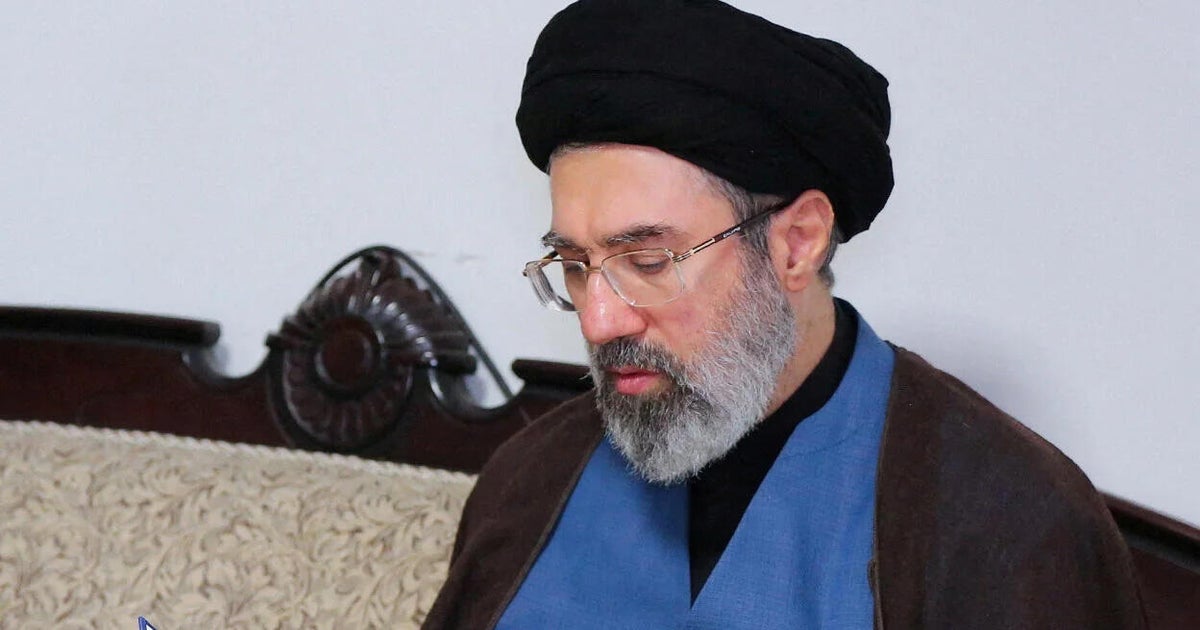
The intelligence gathered by U.S. agencies presents a stark and unflattering portrait of the relationship between Iran’s former and current supreme leaders. According to sources within the administration, the intelligence community, and individuals close to President Trump, the elder Khamenei privately expressed concerns that his son, Ayatollah Mojtaba Khamenei, was not intellectually equipped for the demanding role of supreme leader. The 56-year-old Mojtaba, who had served as a close aide to his father for many years, was apparently perceived by his own father as lacking the mental acuity and qualifications necessary to guide Iran through its complex political, religious, and international challenges. Beyond questions about his intellectual capabilities, the intelligence also suggested that the elder Khamenei was aware of personal issues affecting his son’s life, though specific details of these concerns have not been publicly disclosed. This revelation is particularly significant given that Mojtaba Khamenei was selected by Iran’s council of religious clerics to become the nation’s supreme leader just last weekend, a decision that appears to have contradicted his father’s private wishes and assessments.
The Circumstances of a Violent Succession
The circumstances surrounding this leadership transition are as dramatic as they are consequential. Approximately eight days before his son’s selection as supreme leader, Ali Khamenei was killed in an Israeli missile strike that marked the opening phase of the ongoing conflict between the United States, Israel, and Iran. This attack fundamentally altered Iran’s power structure at a critical moment. Mojtaba Khamenei himself was believed to have been injured in the same strike that killed his father, though he apparently remained within his father’s inner circle during the immediate aftermath. The violent nature of this succession, combined with questions about the new leader’s capabilities and his father’s lack of confidence in him, creates an unprecedented situation for Iran. President Trump, Vice President JD Vance, and other senior officials have all received detailed briefings on the intelligence concerning the younger Khamenei, information that is shaping America’s approach to the ongoing conflict and its understanding of Iran’s current vulnerability.
Trump’s Assessment: Iran Without True Leadership
In private discussions with his advisors and confidants, President Trump has expressed skepticism about whether the intelligence regarding Mojtaba Khamenei’s shortcomings even matters at this point. The president believes that Iran is essentially operating without genuine leadership, with the possibility that the younger Khamenei may have succumbed to injuries sustained in the Israeli strike. According to sources, Trump’s assessment is that Iran’s Islamic Revolutionary Guard Corps has effectively taken control of the country’s decision-making processes, representing a fundamental shift from the theocratic dictatorship that has defined Iran since the 1979 Islamic Revolution. This change, if accurate, would mark a significant transformation in how power operates within Iran, moving from religious authority to military control. While spokespeople for the CIA, the White House, and the vice president have all declined to comment on these intelligence assessments, President Trump has begun to hint publicly about the situation, telling Fox News on Friday that Iran’s leadership structure has been decimated and that the current leader “is not somebody that the father even wanted.”
Public Statements and a Bounty for Information
President Trump has not held back in his public characterization of Iran’s new supreme leader, dismissing him as a “lightweight” and declaring that he would be an “unacceptable” leader for Iran. The president has even suggested that the United States should have some form of oversight regarding who leads Iran, a remarkably interventionist stance that reflects the unprecedented nature of the current conflict. The U.S. government’s actions have matched this aggressive rhetoric. On Friday, federal authorities announced a reward of up to $10 million for information leading to the location of Mojtaba Khamenei and nine other key Iranian officials, essentially putting a price on the head of a sitting supreme leader. Defense Secretary Pete Hegseth has publicly stated that the younger Khamenei is “wounded and likely disfigured,” while Vice President Vance confirmed that he was injured in an apparent strike. However, his precise condition and current whereabouts remain unclear, adding to the uncertainty surrounding Iran’s leadership situation.
Historical Significance and America’s Strategic Goals
The selection of Mojtaba Khamenei as Iran’s supreme leader carries particular historical irony. He becomes only the third person to hold this position since the 1979 Islamic Revolution, following his father and Ayatollah Ruhollah Khomeini. The father-to-son succession is especially notable because the revolution that brought the current system into power was explicitly aimed at overthrowing the hereditary monarchy of the Shah. That Iran’s religious establishment would essentially create a new hereditary succession contradicts the revolutionary principles upon which the Islamic Republic was founded. As the United States enters its third week of war with Iran, the American government has made clear that its objective extends beyond military victories to the complete destruction of the Iranian regime. The intelligence regarding the new supreme leader’s perceived inadequacies, combined with questions about his survival and the apparent shift of power to military commanders, suggests that the U.S. sees a unique opportunity to fundamentally reshape the Middle Eastern political landscape. Whether Mojtaba Khamenei can overcome his father’s doubts, his own injuries, and American military pressure remains one of the most consequential questions facing the region today.