
A Community in Crisis: The Struggle of American Manufacturing in the Modern Economy
Rural Iowa Plant Closure Signals Broader Industrial Challenges
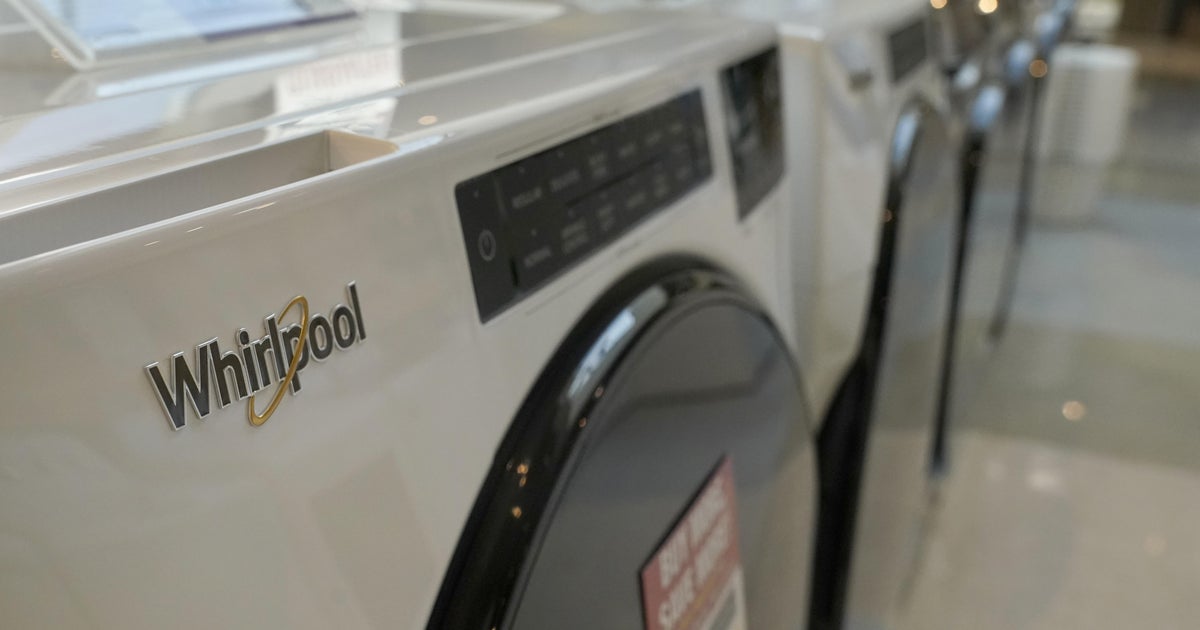
The small community of Amana, Iowa, with a population of fewer than 1,000 residents, is bracing for a devastating blow. On March 9, approximately 350 workers at the local Whirlpool factory will lose their jobs—a heartbreaking development for a plant that has been the backbone of the local economy for eight decades. This isn’t just a story about numbers on a spreadsheet; it’s about real families, real livelihoods, and a community that has built itself around this manufacturing cornerstone since 1934. The layoffs represent far more than just another business decision by a major corporation. They’re a stark reminder that despite political promises to revitalize American manufacturing, the challenges facing this sector remain as formidable as ever. The timing is particularly painful, coming at a moment when many Americans were told that jobs and factories would come “roaring back” to U.S. soil through aggressive trade policies and tariffs on foreign imports.
The reality on the ground tells a different story. While some companies have made promises to invest in American facilities in response to new tariff policies, these commitments often lack binding guarantees and could take years to materialize—if they happen at all. Meanwhile, the data paints a sobering picture: during the first year of the Trump administration’s current term, the United States shed 83,000 manufacturing jobs. For the workers at Whirlpool’s Amana plant, these aren’t just statistics—they’re neighbors, friends, and family members wondering how they’ll make their next mortgage payment or afford health insurance after March 9.
The Human Cost Behind Corporate Decisions
Brian Bryant, international president of the International Association of Machinists (IAM), which represents about 1,300 Whirlpool workers, has been fighting to save these jobs with the desperation of someone who knows exactly what’s at stake. His union sent a letter to President Trump on February 24, appealing directly to the administration’s “America First” manufacturing pledge and asking the president to demand that Whirlpool halt the planned layoffs. As of now, that letter has gone unanswered, leaving workers and their families in an agonizing limbo. Bryant’s frustration is palpable when he speaks about the situation: “This is a story that needs to be told to the American public. Everything’s not rosy in this country, and every day, workers’ jobs are still in jeopardy by corporations that favor profits over the workforce.”
What makes this particularly frustrating for workers and union representatives is the disconnect between political rhetoric and corporate reality. While the administration has repeatedly promised to protect American manufacturing jobs, Bryant notes, “As much as this administration preaches that they’re going to stop that, we’re not seeing that.” Meanwhile, Whirlpool, a publicly traded company worth $3.9 billion that reported $318 million in net income on $15.5 billion in sales in 2025, has characterized the job cuts as part of a “multi-year modernization plan” designed to position the Amana plant for “stability and success.” For workers losing their jobs and health insurance immediately on March 9, this corporate speak offers little comfort.
The situation becomes even more painful when you consider the plant’s history. Kerry Waddell, an IAM representative who worked at the Amana factory for 36 years starting in 1987, explains what these layoffs will mean for the community: “These are employees that spend their money in these communities, they send their kids to the schools there. At this time, they’re getting laid off, they’re losing their health insurance—on March 9, they lose it immediately.” The Amana plant workforce has already been drastically reduced from 3,000 employees in 2020 to about 1,300 today, with many of those jobs shifted to a Whirlpool facility in Mexico. Union officials point out that over the past two decades, Whirlpool has invested over a billion dollars in expanding its Mexican manufacturing operations, while the exports coming from those Mexican plants have increased exponentially.
The Complex Reality of Global Competition
The challenges facing American manufacturers like the Whirlpool plant in Amana are multifaceted and resist simple solutions. Economists point to several factors contributing to ongoing job losses in the manufacturing sector: automation that requires fewer workers to produce the same output, persistent wage advantages in overseas markets, increased production costs in the United States, and ironically, economic uncertainty partially caused by the very tariffs designed to protect American jobs. The tariff policies themselves have created a complicated situation—while intended to make foreign production more expensive and encourage companies to bring manufacturing back to America, they’ve also hurt U.S. manufacturers that rely on imported parts and materials to make their products domestically.
The broader picture is equally sobering. Since 2000, the United States has lost 4.5 million manufacturing jobs. During that same period, global manufacturing employment has increased by approximately 71 million workers, with most of that growth concentrated in China, India, and Vietnam, according to research from the Federal Reserve Bank of Cleveland. Despite aggressive tariff policies aimed at changing this dynamic, some U.S. companies are still finding it more economically attractive to move production overseas. A 2025 survey from the Reshoring Institute found that one-third of U.S. equipment manufacturers were planning to move their production offshore, with cost cited as the primary reason.
Adding to the uncertainty, the Trump administration’s tariff policies themselves have been in flux. Last month, the Supreme Court struck down the president’s “liberation day” tariffs, though Trump imposed new global tariffs of 15% shortly after the ruling. This constant policy shifting makes it incredibly difficult for businesses—both large corporations and small manufacturers—to plan for the future. Aaron Terrazas, an economist with Gusto, which provides payroll services to small and midsize businesses, notes that “the last year was a continuation of a long-standing trend—nothing pivoted, nothing reversed.” For manufacturing workers hoping for a dramatic reversal of decades-long trends, this reality is deeply disappointing.
Small Manufacturers Feel the Squeeze
While the Whirlpool layoffs in Amana grab headlines due to the number of workers affected, smaller manufacturers across the country are facing similar pressures, often with even less capacity to weather economic storms. The manufacturing sector today is incredibly diverse—it’s not just the large Rust Belt factories many people picture when they think of American industry. Modern manufacturing includes everything from local coffee roasters to small food producers, craft breweries to specialized equipment makers. However, these smaller operations tend to be more vulnerable to tariff costs and economic headwinds because they have far less financial cushion to absorb sudden shocks compared to larger corporations.
The experience of Charlie Wicker of Trailhead Coffee Roasters in Portland, Oregon, illustrates this vulnerability. The increased costs from tariffs forced him to lay off two full-time employees, leaving the business down to just himself and one part-time worker. “The fact that we’re still standing is a function of having a little bit of savings to keep the lights on,” Wicker explained in December. While the White House eventually granted an exemption for coffee tariffs in November, the damage had already been done to small businesses that operated on thin margins and couldn’t afford prolonged periods of increased costs. This pattern has repeated across the country in various manufacturing subsectors, with small business owners making painful decisions about whether to cut jobs, raise prices, or close their doors entirely.
Meanwhile, the latest employment data reinforces the challenges facing the manufacturing sector. According to ADP’s monthly employment report, the U.S. lost 5,000 manufacturing jobs in February, even as the private sector overall added 63,000 jobs. Laura Ullrich, Indeed’s director of economic research for North America and a former Federal Reserve Bank of Richmond official, noted that “almost all the growth was coming from health care.” This reflects a fundamental shift in the American economy, driven by demographic changes such as the aging baby boomer generation requiring more medical services. Ullrich predicts this trend will continue, with health care driving whatever job growth occurs while other sectors, including manufacturing, experience stagnation.
Why Manufacturing Jobs Still Matter
Despite representing a much smaller share of total U.S. employment than in previous generations, manufacturing jobs remain crucial for working-class Americans, particularly those without college degrees. About 12.6 million Americans were employed in manufacturing at the start of 2026, representing roughly 8% of the U.S. workforce—a dramatic decline from the peak of 38% during World War II, according to the Federal Reserve Bank of Cleveland. However, these jobs continue to offer something increasingly rare in today’s economy: solid middle-class wages for workers without four-year degrees. Manufacturing employees earn an average of about $36.20 per hour, significantly above the $26 hourly pay for retail workers and $23.38 for leisure and hospitality employees, according to Bureau of Labor Statistics data.
This wage premium helps explain why the loss of manufacturing jobs hits communities so hard. In places like Amana, Iowa, where the economy is heavily dependent on agriculture and manufacturing, the Whirlpool factory doesn’t just provide paychecks—it provides the economic foundation that supports local schools, businesses, and community services. When 350 families suddenly lose not just their income but also their health insurance, the ripple effects extend throughout the entire community. Local restaurants see fewer customers, retail shops experience declining sales, tax revenues decrease, and the social fabric of the community begins to fray. As some Iowa lawmakers have noted, including Republican Representatives Mariannette Miller-Meeks and Ashley Hinson, “These layoffs would hollow out a community and undermine the very domestic manufacturing base that American workers have spent decades building.”
An Uncertain Future Ahead
As the March 9 layoff date approaches, the workers at Whirlpool’s Amana plant face an uncertain future, and their situation reflects broader questions about the future of American manufacturing. The union has indicated that Whirlpool may be planning additional layoffs beyond the 350 already announced. Bryant grimly predicts that “if something doesn’t change, you’re looking at the workforce shrinking down to 500 to 600 people” at a factory that once employed 3,000 workers. He emphasizes that “this, unfortunately, is not just a Whirlpool issue—we’re seeing it elsewhere in the IAM.” For him and other union leaders, the situation demands government intervention: “There’s a major problem, and it’s time for the federal government and the state governments to get involved in this.”
The Amana plant’s story is part of a longer American narrative about the changing nature of work and the challenges of maintaining manufacturing jobs in a global economy. Founded in 1934 by inventor George Foerstner, the Amana company developed several refrigeration innovations that represented the best of American ingenuity—the first upright home freezer in 1947, the first bottom-freezer refrigerator in 1957. These achievements symbolized an era when American manufacturing was synonymous with innovation and quality. Today, that same plant faces an uncertain future as global economics and corporate profit calculations override community ties and eight decades of history. Whether tariffs, political pressure, or other interventions can reverse these trends remains to be seen, but for the 350 workers losing their jobs on March 9, and for the small Iowa community that depends on them, the immediate future looks bleak. Their story serves as a powerful reminder that behind every economic statistic and policy debate are real people whose lives hang in the balance.