


Washington Scrambles to Broker Peace as Lebanon Crisis Threatens Fragile Middle East Ceasefire
Urgent Diplomatic Push to End Lebanese Bloodshed
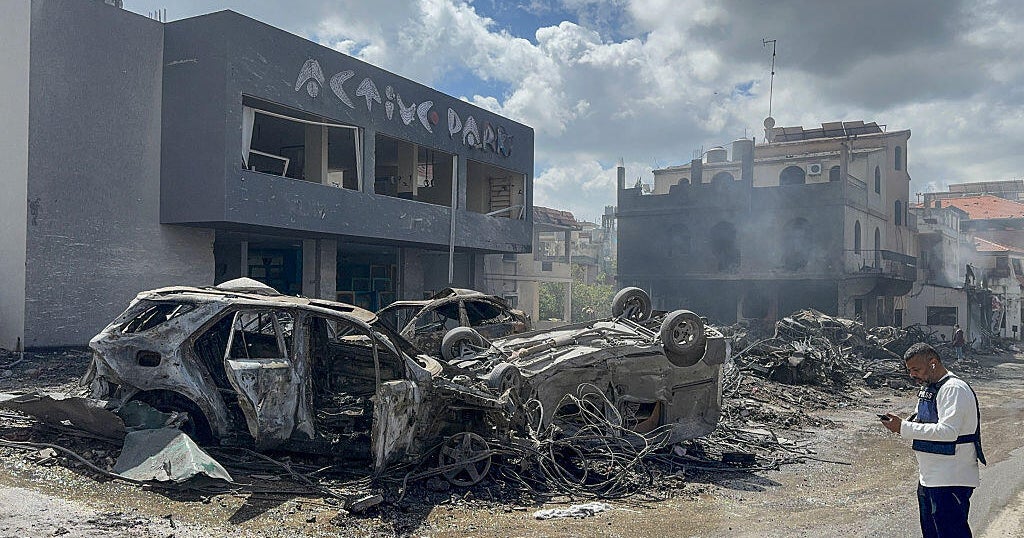
In a race against time, the United States is pulling together emergency diplomatic talks in Washington next week, hoping to stop the violence that’s tearing through Lebanon. The situation is dire: Israeli forces have been hammering Hezbollah positions with relentless airstrikes, but the missiles and bombs aren’t just hitting their intended targets—Lebanese civilians are dying too. Secretary of State Marco Rubio’s team is working around the clock to organize these three-way discussions, bringing together U.S. Ambassador to Lebanon Michel Issa, Lebanese Ambassador Nada Hamadeh Moawad, and Israeli Ambassador Yechiel Leiter. According to multiple sources close to the situation, these talks aren’t even the main event yet—they’re essentially a planning session to figure out how to get the actual peace negotiations started. The State Department has confirmed that representatives from both sides will sit down together at the State Department, marking what many hope will be the first step toward ending the bloodshed that has engulfed southern Lebanon and created one of the most complicated diplomatic challenges the new administration faces.
How We Got Here: A Chain Reaction of Violence
The current crisis in Lebanon didn’t happen in a vacuum—it’s the result of a dangerous chain reaction that started months ago. When Israel and the United States launched their military campaign against Iran, Hezbollah, the powerful Iranian-backed militia that essentially controls large parts of Lebanon, couldn’t stay on the sidelines. In a demonstration of loyalty to Tehran, Hezbollah fired rockets into Israeli territory. Israel’s response was swift and overwhelming: they launched a major new military offensive against Hezbollah and sent ground troops into southern Lebanon, occupying much of the region. Now, Lebanon has become what diplomatic insiders are calling one of the most difficult obstacles standing in the way of any broader peace agreement between the United States and Iran. Iran’s Foreign Minister Abbas Araghchi, who is expected to participate in upcoming diplomatic talks in Islamabad, has publicly accused the United States of giving Israeli Prime Minister Benjamin Netanyahu a free hand to destroy any chance at peace talks. The situation has created a web of competing claims, broken promises, and miscommunication that threatens to unravel the fragile ceasefire that was supposed to bring calm to the broader Middle East region.
The Ceasefire Confusion: What Was Actually Agreed?
Here’s where things get really complicated and frankly, confusing for everyone involved. Multiple diplomatic sources have told CBS News that when President Trump was briefed on the ceasefire deal announced last Thursday, he was told it would apply to the entire Middle East region—and that included Lebanon. Trump apparently agreed to those terms. The mediators who brokered the deal believed Lebanon was covered. Pakistani Prime Minister Shehbaz Sharif publicly announced that Lebanon was included. Iran’s Foreign Minister said the same thing. On the actual day the ceasefire was supposed to take effect, a White House official confirmed to CBS News that Israel had also agreed to the terms of the deal that Pakistan had helped negotiate. So everyone thought they were on the same page, right? Wrong. Everything changed after a phone call between Netanyahu and President Trump. According to two sources familiar with what happened, the American position completely shifted after that conversation. Now there’s deep confusion about what was actually agreed to, and the combination of these constantly changing U.S. positions and the chaotic situation within Iran’s government is making the diplomatic efforts incredibly complicated and difficult to manage.
The Blame Game and Israel’s Position
Vice President JD Vance tried to explain the mess on Wednesday, calling it a “legitimate misunderstanding” about what the ceasefire terms actually meant. But notice who he blamed for the confusion: the Iranians, claiming they misunderstood that the ceasefire didn’t include their proxy forces in Lebanon. That’s a very different story from what everyone else seemed to think was agreed upon. Still, Vance did acknowledge that the United States wants to see Israel pull back from its aggressive military campaign in Lebanon. He used interesting language, saying that Israel had offered to “check themselves a little bit in Lebanon”—diplomatic speak for scaling back their operations. Then on Thursday, Prime Minister Netanyahu made his own statement, saying he had agreed to let Israeli diplomats accept Lebanon’s request for talks. But he was vague on the details and made one thing crystal clear: as far as Israel is concerned, there is no ceasefire in Lebanon. So we have the United States saying there might have been a misunderstanding, Israel saying there’s no ceasefire at all, and Lebanon and Iran saying a ceasefire was definitely agreed upon. It’s exactly the kind of diplomatic chaos that makes peace nearly impossible to achieve.
The Key Players and Behind-the-Scenes Maneuvering
One of the most interesting developments in this crisis is the emergence of Vice President JD Vance as a central figure in the diplomacy with Iran. Vance has become the most senior U.S. official to directly engage with Omani mediators, who have been trying to serve as go-betweens in these delicate negotiations. The Omanis actually tried to broker a deal before the war started, hoping to prevent the U.S. and Israeli strikes that ultimately kicked everything off on February 28th, but those efforts failed. Before Vance got involved, the Trump administration’s Middle East diplomacy was being handled primarily by Steve Witkoff, a Trump special envoy, and Jared Kushner, Trump’s son-in-law who also played a major role in Middle East policy during Trump’s first term. Together, Witkoff and Kushner have led two separate rounds of diplomatic talks with Iran over the past ten months, but both times their efforts were cut short—ironically, by U.S. military action that undermined the negotiations they were trying to conduct. Multiple diplomatic sources have revealed something very telling: Iran specifically welcomed Vance’s involvement in the talks because Iranian officials simply don’t trust Witkoff and Kushner. That distrust has been a major obstacle to making progress. Interestingly, two sources said it was actually Witkoff’s idea to bring the vice president into the process, perhaps recognizing that his own involvement had become counterproductive.
The Road Ahead: Can Peace Be Salvaged?
As these hastily arranged talks approach, the fundamental question remains: can any kind of lasting peace be achieved when the parties can’t even agree on what they’ve already supposedly agreed to? The situation in Lebanon is heartbreaking for the people living through it—families torn apart, homes destroyed, civilians killed in attacks meant for military targets. The Lebanese government is caught in an impossible position, trying to represent its people’s interests while Hezbollah, which operates as a state within a state, pursues its own agenda aligned with Iran’s interests. Israel argues it has every right to defend itself against rocket attacks from Hezbollah, while critics argue its response has been disproportionate and is creating a humanitarian crisis. The United States is trying to play mediator while simultaneously being Israel’s closest ally and having just fought a war against Iran. The whole situation is a diplomatic nightmare, with lives hanging in the balance. Next week’s talks in Washington represent a small glimmer of hope—not for an immediate solution, but at least for getting the actual negotiations started. The fact that all parties have agreed to send representatives is meaningful, even if Netanyahu insists there’s no ceasefire. Sometimes in diplomacy, you have to allow everyone to save face and tell their domestic audiences what they need to hear, while quietly working toward compromise behind closed doors. Whether these talks lead anywhere meaningful remains to be seen, but for the civilians in southern Lebanon living under the constant threat of airstrikes, and for Israelis in the north living in range of Hezbollah rockets, any step toward peace can’t come soon enough.