
UK Braces for Inflation Surge as Global Conflicts Drive Up Costs
The Perfect Storm Hitting British Households
The United Kingdom is preparing for a significant rise in inflation, with economists and government officials warning that ongoing global conflicts—particularly wars in key regions—are set to push prices higher across the board. British families, already struggling with the cost-of-living crisis that has defined recent years, now face the prospect of even tighter budgets as international tensions ripple through the economy. The relationship between warfare and inflation is nothing new in economic history, but the current situation presents a particularly challenging combination of factors. Modern conflicts disrupt global supply chains in ways that previous generations never experienced, with the interconnected nature of today’s economy meaning that instability in one region quickly affects prices at supermarkets, petrol stations, and energy bills thousands of miles away. For ordinary people trying to make ends meet, this translates into difficult decisions about heating their homes, filling their cars, and putting food on the table. The Bank of England has been closely monitoring these developments, knowing that the inflation they’re mandated to control is increasingly being driven by factors beyond their direct influence. While domestic monetary policy can address some aspects of price rises, there’s little that interest rate adjustments can do about supply shocks caused by military conflicts disrupting oil fields, grain shipments, or critical manufacturing hubs.
How War Translates to Higher Prices at Home
Understanding the connection between distant conflicts and the price of your weekly shop requires looking at the complex web of global commerce. Wars disrupt production in affected regions—whether that’s energy resources, agricultural products, or manufactured goods—immediately creating scarcity in global markets. When supply decreases but demand remains constant, prices naturally rise, and those increases flow through to consumers. Energy costs represent perhaps the most visible example of this phenomenon. Military conflicts in oil-producing regions or near critical shipping routes create uncertainty in energy markets, causing prices to spike as traders factor in potential supply disruptions. Since energy is required to produce and transport virtually everything, these cost increases cascade throughout the entire economy. A farmer needs diesel for tractors and machinery; that cost gets passed to food prices. Manufacturers need power for factories; that cost appears in product prices. Transportation companies need fuel for delivery vehicles; those costs end up in shipping charges that businesses pass along to customers. Beyond energy, conflicts affect food security in ways that directly impact UK consumers. Ukraine and Russia, for instance, are major exporters of wheat and other grains, and disruptions to their agricultural sectors or shipping capabilities create global shortages that drive up prices for bread, pasta, and countless other staples. Fertilizer production, often concentrated in regions prone to instability, faces similar vulnerabilities, with shortages leading to reduced crop yields worldwide and further price pressures.
The Broader Economic Implications Beyond the Shopping Basket
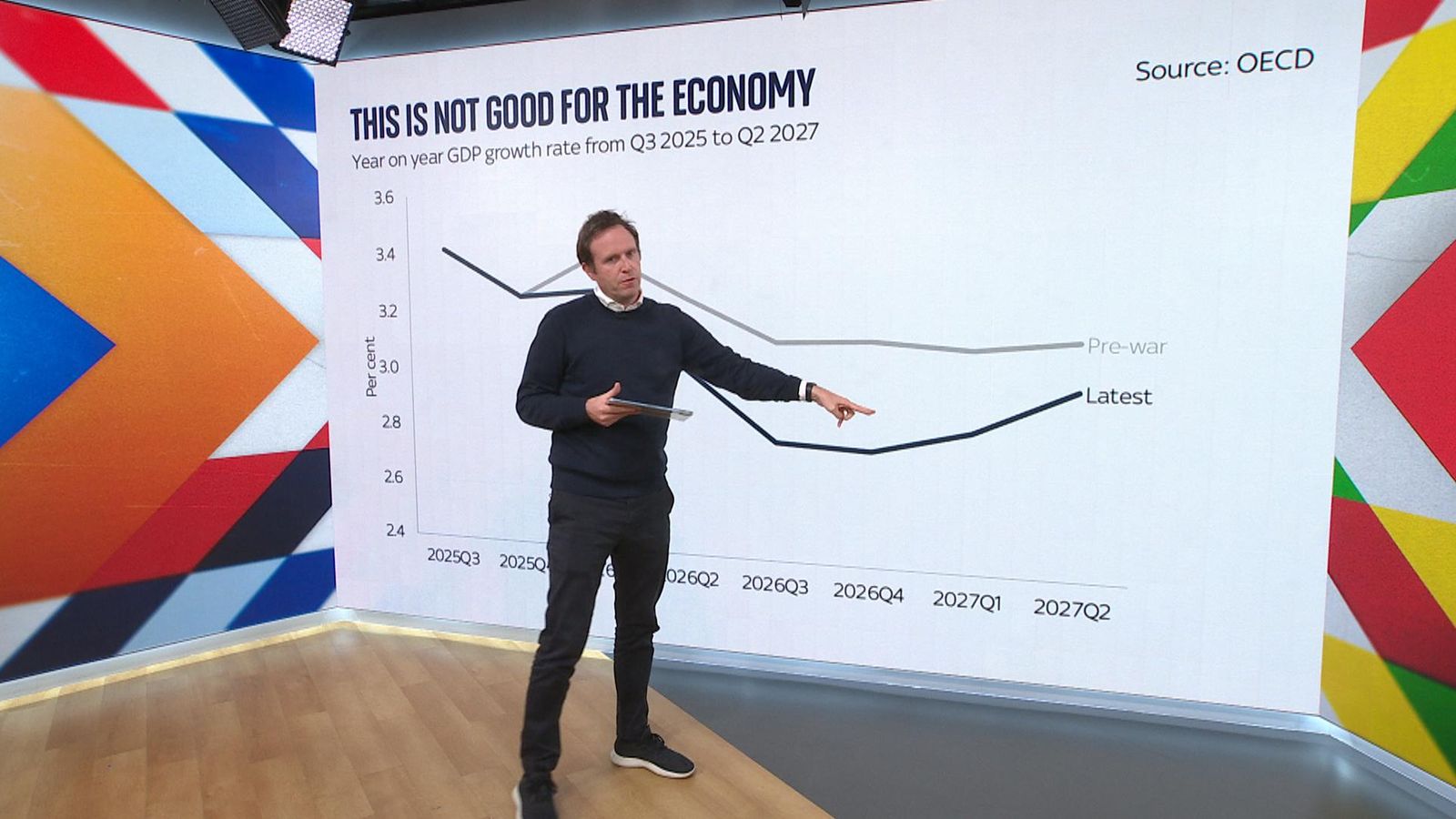
While rising prices at the supermarket represent the most immediate concern for families, the inflationary pressure from global conflicts creates broader economic challenges that affect employment, investment, and overall prosperity. Businesses facing higher input costs must make difficult decisions about whether to absorb those expenses, potentially threatening their viability, or pass them along to customers through price increases, knowing this might reduce demand. Many companies find themselves caught in a profit squeeze, where revenues can’t keep pace with rapidly rising costs. This situation often leads to hiring freezes, reduced investment in expansion or improvements, and in worst-case scenarios, redundancies. When businesses across the economy face similar pressures simultaneously, the cumulative effect can significantly slow economic growth or even tip the country into recession. The Bank of England faces particularly difficult policy decisions in this environment. Their traditional tool for fighting inflation—raising interest rates—works by reducing demand in the economy, theoretically bringing it back in line with supply and easing price pressures. However, when inflation is driven primarily by supply-side shocks from global conflicts rather than excessive domestic demand, raising rates can inflict economic pain without effectively addressing the root cause. Higher interest rates increase borrowing costs for businesses and households, potentially accelerating economic slowdown without meaningfully reducing inflation caused by disrupted global supply chains. For homeowners with mortgages, especially those on variable rates or coming up for renewal, rising interest rates compound the affordability crisis created by inflation itself, creating a double squeeze on household budgets.
The Government’s Dilemma and Policy Responses
The British government finds itself in a challenging position, needing to respond to inflation concerns while acknowledging the limited direct control it has over global conflict-driven price increases. Fiscal policy options—government spending and taxation—offer some levers to support struggling households and businesses, but these interventions come with their own complications and constraints. Providing direct financial support to offset rising energy or food costs can help families cope in the short term but risks fueling further inflation if not carefully calibrated. When the government gives people more money while the underlying supply of goods remains constrained, the additional purchasing power can simply drive prices even higher. Additionally, government spending must ultimately be financed through taxation or borrowing, both of which have longer-term economic consequences. Some policy responses focus on supply-side interventions—measures to increase domestic production, diversify supply chains away from vulnerable regions, or build strategic reserves of critical commodities. While potentially effective over the medium to long term, these approaches require time to implement and don’t address the immediate pain of rising prices. The government must also balance inflation concerns against other policy priorities, including commitments to reach net-zero carbon emissions, which sometimes create tension with short-term measures to increase energy supply. Increasing fossil fuel production might temporarily ease energy prices but conflicts with climate goals, while accelerating renewable energy development offers long-term benefits but requires substantial upfront investment.
What This Means for Ordinary British Families
For people going about their daily lives—working, raising families, trying to save for the future—the prospect of rising inflation driven by faraway conflicts can feel both abstract and deeply personal. The abstraction comes from the disconnect between complex global geopolitics and the simple act of buying groceries; the personal reality hits when you realize your salary doesn’t stretch as far as it did last year. Households will need to make increasingly difficult trade-offs between necessities, with some forced to choose between heating and eating—a phrase that should be relegated to history but has become disturbingly relevant in modern Britain. Families with tight budgets find that even small percentage increases in prices make a meaningful difference to their ability to get through the month. The psychological impact of persistent inflation shouldn’t be underestimated either. The constant worry about money, the need to scrutinize every purchase, and the feeling of losing ground despite working hard all contribute to stress and reduced wellbeing. Young people hoping to save for a home deposit watch as rising rents and living costs make that goal increasingly unrealistic, while older people on fixed pensions see their purchasing power eroded. Charitable organizations report increased demand for food banks and other support services, evidence that the inflation crisis is pushing more people into genuine hardship.
Looking Ahead: Navigating Uncertain Times
The outlook for UK inflation remains clouded by uncertainty, with the trajectory heavily dependent on factors beyond British control—how long conflicts persist, whether they escalate or resolve, and how global markets adapt to ongoing instability. Economic forecasters provide various scenarios, but the range of possibilities is wide, reflecting genuine uncertainty rather than analytical shortcomings. In the most optimistic scenario, conflicts resolve relatively quickly, supply chains stabilize, and inflation gradually returns to more normal levels without requiring severely restrictive monetary policy that chokes off economic growth. In more pessimistic scenarios, prolonged or expanded conflicts create persistent supply disruptions, requiring either sustained high inflation or severe economic contraction to eventually restore balance. For individuals and families, this uncertain environment makes planning difficult but underscores the importance of financial resilience where possible—building emergency savings, reducing debt, and carefully managing household budgets. For businesses, it requires careful risk management, supply chain diversification, and clear communication with customers about unavoidable cost pressures. For policymakers, it demands both humility about the limits of their control and creativity in supporting economic resilience while managing inflation expectations. The situation serves as a stark reminder of how interconnected our modern world has become, where conflicts anywhere can affect living standards everywhere. While globalization has brought tremendous benefits through trade and specialization, it has also created vulnerabilities that become painfully apparent when global stability fractures. The challenge facing the UK—and indeed all nations—is finding ways to maintain the benefits of global integration while building resilience against the shocks that our interconnected system inevitably transmits.