
A Timeless Symbol: The American Bison Returns to U.S. Postage Stamps
Celebrating America’s National Mammal Through Postal Art
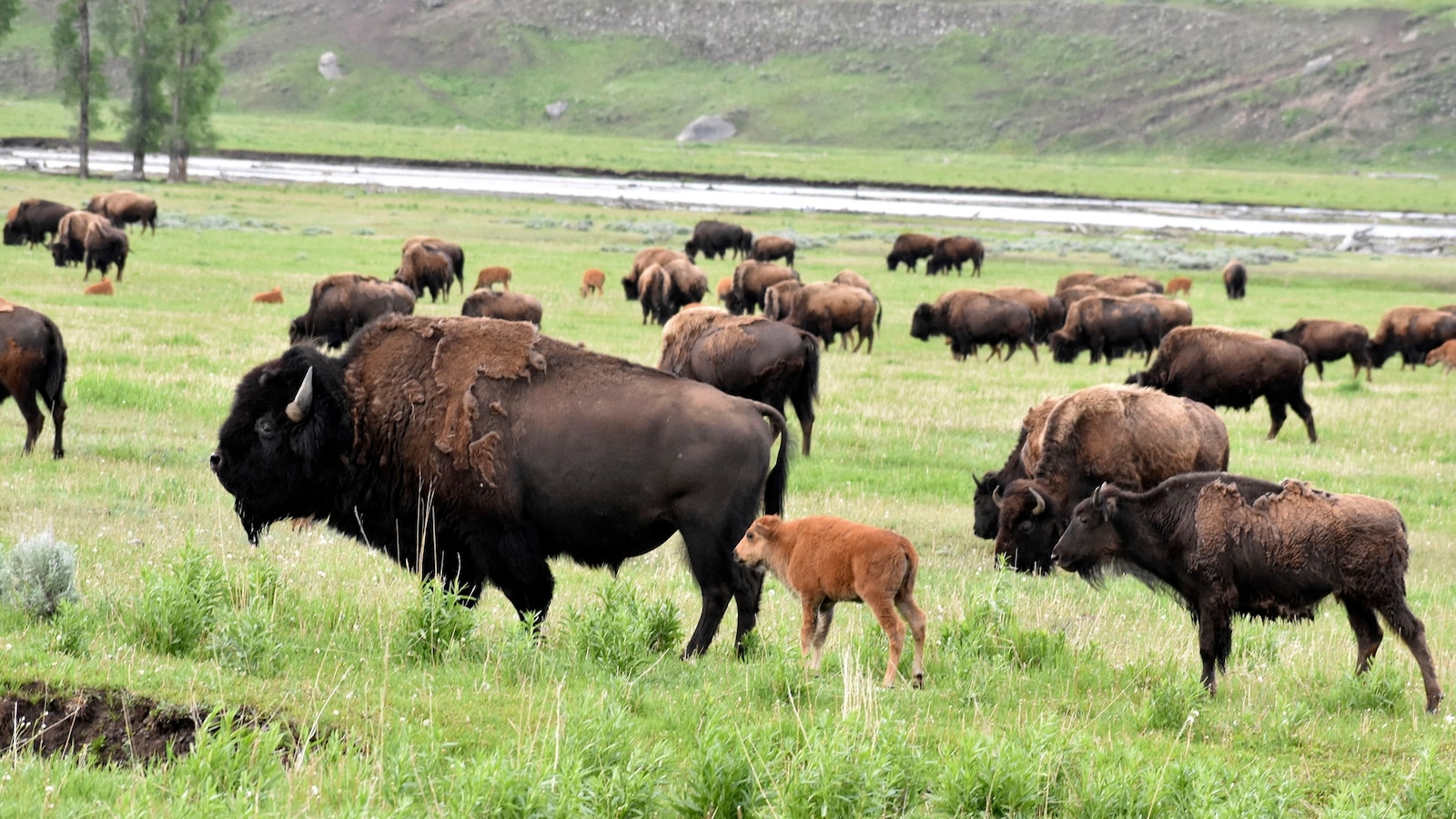
In a moving tribute to one of America’s most enduring symbols, the United States Postal Service is preparing to release a new stamp honoring the American bison, the nation’s official mammal and an iconic resident of Yellowstone National Park. This isn’t just any ordinary stamp—it’s a creative fusion of past and present that tells the story of both American wildlife conservation and the country’s complex history. The stamp features a striking contemporary photograph taken by renowned wildlife photographer Tom Murphy in Yellowstone’s Hayden Valley, artfully overlaid with a historic bison image from a 1923 stamp. Designed by Greg Breeding, who has been shaping the visual identity of American postage since 2012 as the art director of stamp design, this new release represents a thoughtful marriage of historical reverence and modern wildlife photography. The result is a powerful piece of miniature art that captures not just an animal, but an entire legacy of conservation, survival, and the American spirit.
The Journey Behind the Perfect Shot
The story of how Murphy’s photograph was selected is one of persistence and serendipity. When the Postal Service began searching for the perfect bison image to feature on their new stamp, they reached out to various sources in the photography and conservation communities. An acquaintance of Murphy’s who had worked closely with Yellowstone’s bison population connected him with the opportunity. Murphy’s first submission didn’t make the cut, but he didn’t give up. His second batch of photographs contained what would become the chosen image—a magnificent young bull standing proudly in Hayden Valley, one of Yellowstone’s most spectacular grassland areas in the park’s central region. What made this particular shot “perfect,” as the Postal Service described it, was its composition: a clean, uncluttered sky behind the animal and the rich, textured grassland beneath its feet. These elements weren’t just aesthetically pleasing—they deliberately echoed the visual language of the 1923 “American Buffalo” stamp, creating a bridge across a century of American postal history. The entire image was then converted to sepia tones, giving it a timeless, historic quality that allows the contemporary photograph to seamlessly merge with the vintage aesthetic of the original stamp design, creating something that feels both modern and nostalgic.
The Deep Cultural Significance of the American Bison
The bison holds a place in American history that few other animals can claim. As the U.S. Postal Service notes, these massive creatures are “uniquely tied to American History” in ways both inspiring and tragic. For thousands of years—millennia, in fact—the Indigenous peoples of the Great Plains built their entire way of life around the vast buffalo herds that roamed the continent. These relationships were sophisticated and sustainable, with Native Americans utilizing virtually every part of the animal: hides became clothing, shelter, and tipis that could withstand harsh prairie winters; bones were crafted into tools and implements; horns served practical purposes in daily life. The buffalo wasn’t just a resource—it was central to the spiritual, cultural, and economic lives of countless Indigenous communities. However, this harmonious relationship was shattered as American expansion pushed westward. What had once been a population estimated in the millions was reduced to just hundreds of animals by the late 1800s. This near-extinction wasn’t accidental or simply the result of habitat loss—it was the product of deliberate market hunting and, disturbingly, official U.S. Army policy that recognized that destroying the buffalo would undermine the independence and resistance of Plains tribes. It stands as one of the darkest chapters in both American wildlife history and the nation’s treatment of Indigenous peoples.
A Conservation Success Story at Yellowstone
Against this backdrop of near-total destruction, the recovery of the American bison represents one of conservation’s most remarkable success stories. Concerted efforts to protect and restore buffalo populations, particularly at Yellowstone National Park and other wildlife refuges, have brought these magnificent animals back from the brink of extinction. Today, Yellowstone holds a special place in bison conservation history—it’s the only location in the United States where bison have lived continuously since prehistoric times, an unbroken lineage stretching back thousands of years. The park now maintains the largest wild buffalo herd in the country, with population estimates reaching approximately 5,400 animals as of 2024, according to the National Park Service. These aren’t animals in a zoo or a managed farm—they’re truly wild bison, living much as their ancestors did, roaming the same valleys and grasslands, following ancient migration patterns, and interacting with the ecosystem in ways that help maintain ecological balance. Visitors to Yellowstone today can witness scenes that would have been familiar to people hundreds of years ago: massive bison crossing rivers, grazing in vast herds across golden grasslands, or stubbornly blocking traffic on park roads, utterly indifferent to the modern world around them. This recovery didn’t happen by accident—it required dedicated conservation efforts, legal protections, and a fundamental shift in how Americans viewed wildlife and their responsibility to protect it.
Through a Wildlife Photographer’s Lens
For Tom Murphy, whose photograph will grace millions of stamps and travel through postal systems across the country, bison rank among his favorite subjects in Yellowstone’s rich wildlife tapestry. Among what he calls his “top ten” species to photograph at the park—a list that includes smaller creatures like chickadees and magpies alongside coyotes and, of course, bison—these massive animals hold a special place. “They’re amazing creatures,” Murphy says with the understated appreciation of someone who has spent countless hours observing and photographing them in their natural habitat. His chosen image connects to a lineage of bison representation that extends beyond even the 1923 stamp. The original stamp that inspired this new design was itself based on a diorama that was displayed at the Smithsonian Institution from 1888 to 1957, featuring a large bison bull. That same powerful image also appeared on the 1901 “Bison note,” a $10 legal tender bill, demonstrating how the buffalo has long been considered worthy of representing American currency and official documents. This historical continuity adds layers of meaning to the new stamp—it’s not just a pretty picture of an animal, but part of an ongoing conversation about American identity, conservation values, and the symbols we choose to represent ourselves to the world and to future generations.
A Small Canvas With Nationwide Impact
The “American Bison” Forever stamp is scheduled for release at the end of May, with an initial printing of fifteen million stamps—a number that could increase significantly if the design proves popular with collectors and the general public. For Murphy, the scope of this project is almost overwhelming to contemplate. “They’re going to be in every post office in the United States,” he reflects, the magnitude of that reach clearly not lost on him. His photograph, taken in a quiet moment in Hayden Valley, will soon be handling correspondence, adorning letters, packages, and postcards traveling to every corner of the nation and beyond. It’s a form of wildlife advocacy that reaches people who might never visit Yellowstone, who might never see a bison in person, but who will encounter this magnificent animal in their daily lives, even if just for a moment while sorting mail. In an age where physical mail is becoming less common, stamps remain one of the few pieces of everyday art that still circulate widely, carrying not just letters but also messages about what we value as a society. This new bison stamp sends a clear message: that wildlife conservation matters, that American natural heritage deserves celebration, and that the story of the bison—from near-extinction to recovery—represents both a cautionary tale and a reason for hope. It reminds us that the choices we make about protecting wild places and wild creatures have consequences that echo across generations, and that sometimes, with dedication and care, we can write redemption stories even after terrible mistakes.