
Supreme Court Delivers Major Blow to Trump’s Tariff Strategy
A Constitutional Rebuke to Presidential Power
In a landmark decision that represents one of the most significant checks on presidential authority in recent years, the United States Supreme Court has struck down Donald Trump’s sweeping global tariff program. The ruling, which saw six of the nine justices vote against the former and current president’s signature economic policy, marks a pivotal moment in the ongoing debate about the separation of powers in American government. At the heart of this case lies a fundamental question that the nation’s founders grappled with centuries ago: who has the power to tax? The Supreme Court’s answer was unequivocal. Chief Justice John Roberts, writing for the majority, stated in clear terms that “the framers did not vest any part of the taxing power in the executive branch.” This declaration reaffirms a basic principle of American democracy—that Congress, as the legislative body most directly accountable to the people, holds the purse strings. The case originated from a legal challenge brought by businesses in twelve states, most of which are governed by Democrats, who argued that Trump’s method of imposing these country-specific taxes violated constitutional norms. Traditionally, tax-raising measures like tariffs must go through Congress, allowing for debate, amendment, and democratic oversight. Trump, however, sought to bypass this process entirely, using emergency powers to implement his economic vision without legislative approval.
Trump’s Response and Defiant Next Steps
The president’s reaction to the Supreme Court’s decision was swift and characteristically combative. Describing the ruling as a “disgrace,” Trump expressed shame toward certain members of the Court, suggesting they lacked the courage to do what he believes is right for America. His frustration was particularly pointed given that he had appointed three of the Court’s current justices during his first term, and all three voted in his favor in this case—though they were outnumbered by the majority. In his statement, Trump thanked the three dissenting justices before pivoting to attack foreign nations, claiming that countries “who have been ripping us off for years” are now “dancing in the streets” following this decision. This rhetoric reflects Trump’s long-held view that America has been taken advantage of in international trade, a perspective that has driven much of his economic policy throughout his political career. Rather than accepting defeat, Trump immediately announced plans to work around the ruling, demonstrating the determination that has characterized his approach to governance. He declared his intention to sign an order imposing a 10% global tariff under Section 122 of trade law, layering this tax on top of existing tariffs already being charged. This section of law allows a president to temporarily institute an “import surcharge” of up to 15% if he determines there are substantial balance-of-payments deficits that could lead to significant depreciation of the dollar in foreign exchange markets. This move illustrates the complex cat-and-mouse game between the branches of government, where executive power seeks alternative pathways when one route is blocked.
The Legal Foundation and Its Collapse
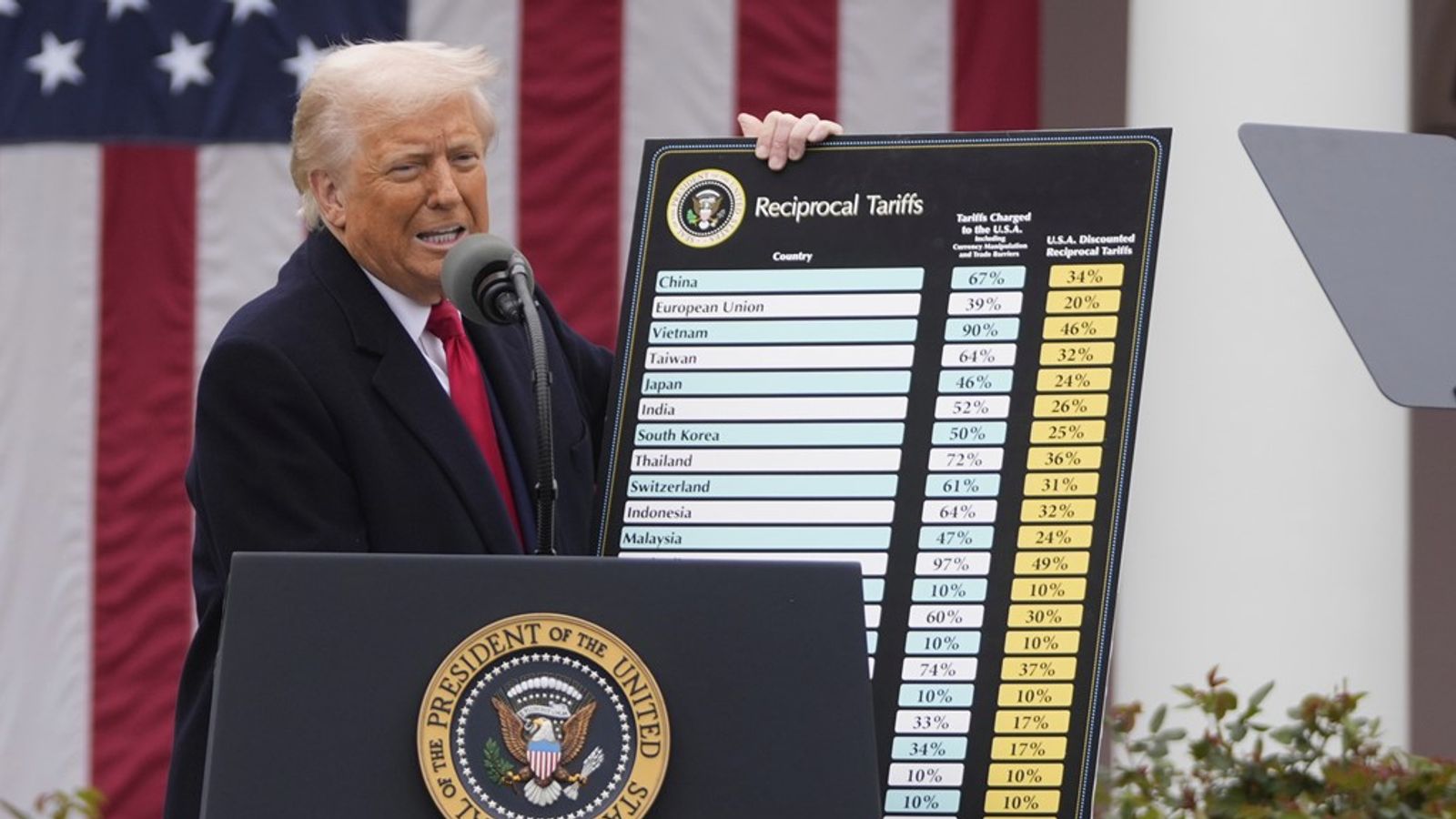
To understand the significance of this ruling, it’s important to examine the legal justification Trump’s administration had relied upon. The tariffs that were struck down had been implemented through executive order, with Trump invoking the International Emergency Economic Powers Act of 1977. This law was originally designed to give presidents special authority during genuine national emergencies, allowing them to respond quickly to threats without waiting for the often slow-moving legislative process. Trump had declared that the United States was facing a national emergency due to trade deficits with other countries. Under this emergency declaration, beginning on April 2 of last year—a date Trump dramatically called “Liberation Day”—countries around the world suddenly faced new taxes on their exports to America. The same emergency powers law was also used to justify levies specifically targeting Canadian, Chinese, and Mexican goods, though in those cases, Trump cited a different emergency: the trafficking of fentanyl, a deadly synthetic opioid, into the United States. The administration’s argument rested on the premise that this 1977 law, which allowed presidents to regulate importation during emergencies, also gave them the power to set tariffs. While other presidents had indeed used this law to impose sanctions, Trump broke new ground by being the first to invoke it specifically for import taxes. The Supreme Court majority, however, found this interpretation stretched the law beyond its constitutional limits, determining that regardless of what emergency powers a president might have, the fundamental authority to tax remains with Congress.
International Implications and British Concerns
The Supreme Court’s decision sent ripples across the Atlantic and around the world, as nations scrambled to understand what this meant for their trading relationships with the United States. The United Kingdom, which has been working to maintain a “special relationship” with America while navigating the complexities of post-Brexit trade arrangements, responded with cautious optimism tempered by uncertainty. A spokesperson for the British government stated that the UK expects its “privileged trading position” with the United States to continue, though they acknowledged the need to work closely with American counterparts to understand exactly how the ruling would affect tariffs for Britain and the rest of the world. This carefully worded response reflects the delicate position many American allies find themselves in—hoping for favorable trade terms while recognizing the unpredictability of the current political environment. The British Chambers of Commerce took a more skeptical view of what the ruling meant for businesses. William Bain, the organization’s head of trade policy, noted that the Supreme Court’s decision did little to “clear the murky waters for business.” His concern was prescient, as Trump almost immediately announced plans to use alternative legal mechanisms to reimpose tariffs. For businesses trying to plan investments, manage supply chains, and set prices, this ongoing uncertainty represents a significant challenge. Companies need stability to make long-term decisions, and the back-and-forth between different branches of government creates exactly the opposite—an environment where the rules of international commerce could change at any moment.
Economic Consequences and the Refund Question
The immediate economic impact of the Supreme Court’s ruling is both significant and complicated. According to Michael Pearce, chief US economist at Oxford Economics, the decision instantly lowered the effective tariff rate from 12.8% to 8.3%—a substantial reduction that, in theory, should benefit American consumers and businesses that rely on imported goods. When tariffs are imposed on imports, the costs are typically passed along to consumers in the form of higher prices, so removing them should, theoretically, make products cheaper. However, the practical reality is far more complex than simple economic theory might suggest. Major companies, including the popular wholesale chain Costco, have already filed lawsuits seeking refunds of the tariff money they paid under the now-invalidated policy. The question of what happens to the billions of dollars already collected under these tariffs has emerged as a massive uncertainty. Justice Brett Kavanaugh, writing in the dissenting opinion, acknowledged this problem directly: “The Court says nothing today about whether, and if so how, the government should go about returning the billions of dollars that it has collected from importers.” He went on to note that this process is likely to be a “mess,” a characterization that legal experts acknowledged during oral arguments before the Court. This uncertainty about refunds and the administrative chaos of unwinding already-collected tariffs may actually eliminate much of the economic benefit that might otherwise come from removing the taxes. Businesses that paid these tariffs have already adjusted their prices, reworked their supply chains, and made countless other adaptations to the tariff regime. Simply reversing course doesn’t automatically reverse all these changes.
Looking Ahead: Uncertainty as the New Normal
As the dust settles from this Supreme Court decision, what becomes clear is that uncertainty itself may be the most significant outcome. Trump’s immediate pivot to alternative legal mechanisms for imposing tariffs means that businesses, consumers, and foreign governments cannot simply assume that trade policy has been settled. The president’s determination to pursue his economic vision, combined with the existence of multiple legal pathways for implementing tariffs, suggests that the battle over trade policy is far from over. For the Supreme Court, this case represents the first major challenge to Trump’s agenda that has reached a final decision, but it likely won’t be the last. The tension between executive authority and constitutional limits will continue to play out across multiple policy areas, with the Court serving as the ultimate arbiter of these disputes. The fact that the decision was 6-3, rather than along the typical ideological lines that often characterize controversial cases, suggests that even justices generally sympathetic to executive power recognized that Trump’s tariff approach crossed a constitutional line. For the American economy and the global trading system, the path forward remains unclear. Will Congress step in to grant the president some of the tariff authority he seeks through proper legislative channels? Will Trump’s alternative approach using Section 122 survive its own legal challenges? How will other countries respond to the ongoing uncertainty about American trade policy? These questions will shape economic relationships and business decisions for months and possibly years to come. What this case ultimately demonstrates is that even in an era of expanding executive power, there remain constitutional limits that even the Supreme Court’s conservative majority will enforce. The power to tax, the framers believed, was too important to trust to any single individual, regardless of their intentions or the urgency they perceive. That principle, established over two centuries ago, has been reaffirmed for a new generation.