
Tragedy in Austin: A Community Grapples with Mass Violence and Questions of Terrorism
Investigation Unfolds After Devastating Downtown Shooting
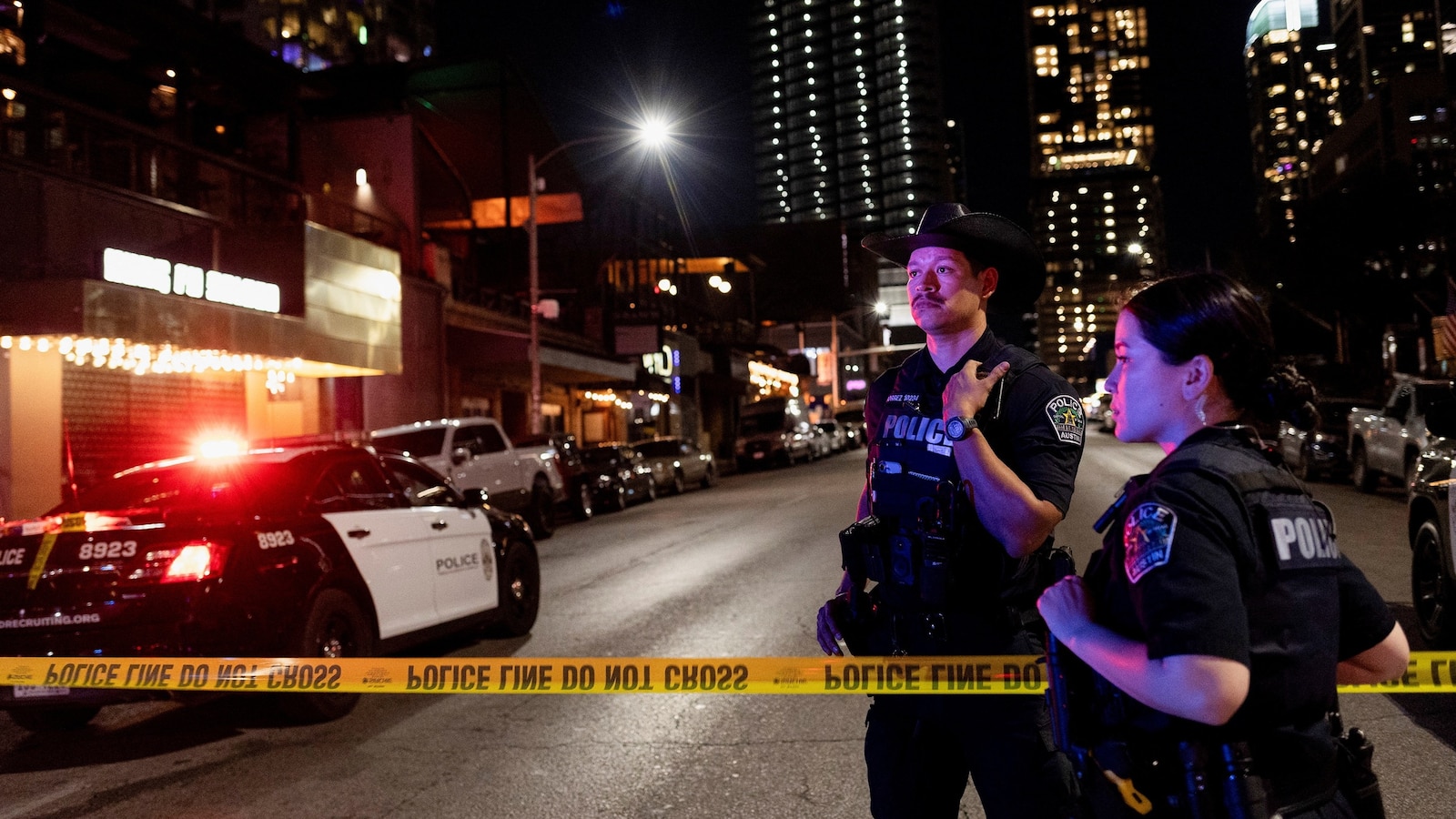
The vibrant entertainment district of Austin, Texas, became the scene of unimaginable horror in the early morning hours of Sunday when a gunman opened fire on young people enjoying a night out, leaving two dead and more than a dozen injured. As families mourn and a community struggles to understand what happened, federal and local law enforcement officials are working around the clock to piece together the events that led to this tragedy. The investigation has taken on additional complexity as authorities explore a possible terrorism motive behind the attack, which ended when police fatally shot the suspect after he terrorized the busy West Sixth Street area outside Buford’s Bar, a popular gathering spot for students and young adults.
At a somber news conference on Monday, Austin Police Chief Lisa Davis shared the identities of the two young lives lost in this senseless act of violence. Savitha Shan, just 24 years old, was a student at the University of Texas with her whole future ahead of her. Ryder Harrington, 22, attended Texas Tech University and was known among his friends and fraternity brothers as someone who brought joy to every room he entered. These weren’t just statistics or names in a headline—they were beloved children, cherished friends, and promising young people whose dreams were cut short in an instant. The weight of their loss hung heavy as Chief Davis also revealed that three victims remained hospitalized in critical condition, with one tragically scheduled to be removed from life support. In total, fourteen people were injured in the shooting, each one representing a family forever changed by what happened that night.
Understanding the Suspect and the Search for Motive
The man responsible for this attack has been identified as Ndiaga Diagne, a 53-year-old naturalized U.S. citizen originally from Senegal who was living in Pflugerville, a quiet suburb of Austin. As investigators work to understand what drove him to commit such violence, certain details have emerged that complicate the picture and raised immediate concerns about potential terrorism connections. According to multiple sources familiar with the investigation, Diagne was wearing clothing with significant symbolism when he carried out the attack—a sweatshirt that referenced Allah and underneath, a T-shirt bearing the Iranian flag and an image of the late Shah of Iran, Mohammad Reza Pahlavi, who was overthrown in the 1979 Iranian Revolution.
The timing of this attack has not escaped investigators’ attention. Just one day before the Austin shooting, U.S. and Israeli forces conducted a major military operation in Iran that resulted in the death of Ayatollah Ali Khomeini, Iran’s supreme leader. Whether this international event had any connection to the attack remains one of the central questions driving the investigation. Alex Doran, the acting special agent in charge of the FBI’s San Antonio field office, confirmed that the bureau is investigating terrorism as a possible motive, noting that “there were indicators on the subject and in his vehicle that indicate potential nexus to terrorism.” However, he stressed during Monday’s news conference that making any definitive determination would be premature at this stage. “We are poring through thousands of hours of video. We have massive amounts of digital and physical evidence,” Doran explained, emphasizing that investigators want to ensure they have their facts 100% correct before drawing conclusions about what motivated this horrific act.
How the Attack Unfolded and the Heroic Police Response
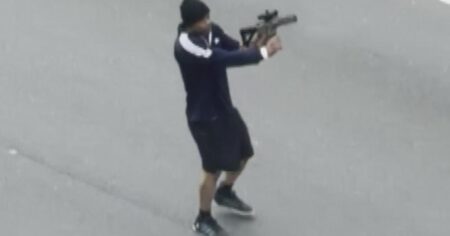
The terrifying sequence of events began just before 2 a.m. on Sunday, when 911 dispatchers started receiving frantic calls about shots being fired on West Sixth Street in downtown Austin, specifically around Buford’s Bar. According to Chief Davis, the suspect drove a large SUV repeatedly around the block where the bar is located, methodically circling the area while firing a gun out of his rolled-down window at unsuspecting people. The attack seemed coldly calculated—he targeted patrons sitting on the bar’s patio and those standing outside the front door, people who were simply trying to enjoy a night out with friends. After making several passes in his vehicle, the suspect then parked, stepped out of his SUV, and continued his assault on foot, opening fire on people gathered on the sidewalk.
In a situation that could have resulted in even greater loss of life, the presence of police officers already stationed in the entertainment district proved crucial. Austin had strategically positioned law enforcement in this busy nightlife area, and those officers were able to respond immediately when the shooting began. The suspect was killed in a confrontation with police, bringing the attack to an end before he could claim more victims. Austin Mayor Kirk Watson praised the rapid response, stating that “multiple lives were saved” due to the quick action of police and emergency medical services. The gun used in the shooting, investigators learned, had been purchased legally in San Antonio back in 2017, adding another layer to the ongoing national conversation about gun access and public safety. As the investigation continues, police are conducting interviews with approximately 150 witnesses, each of whom may hold pieces of the puzzle that will help explain why this happened.
Remembering the Victims and Their Bright Futures
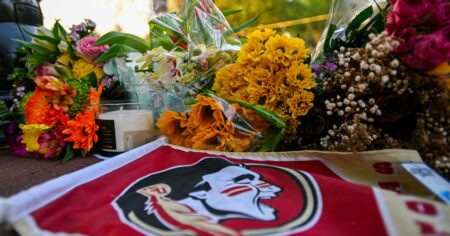
Behind the statistics and investigation details are real people whose lives mattered deeply to those who knew them. Ryder Harrington wasn’t just a victim—he was a light in the lives of everyone around him. As an active member of the Beta Theta Pi fraternity at Texas Tech University, he had built a brotherhood that now mourns his loss. His fraternity released a heartfelt statement that captured the essence of who Ryder was: “Ryder was a beloved son, brother, and friend whose kindness and presence touched countless lives. From the moment he joined our brotherhood, he brought a light that was impossible to ignore.” They remembered his rare ability to enjoy life fully, to make people laugh, and to transform ordinary moments into unforgettable memories. “If anyone embodied what it meant to live fully and love deeply, it was Ryder,” the statement concluded, a testament to a young man whose impact far exceeded his years.
Savitha Shan’s loss is equally devastating to the University of Texas community and beyond. Jim Davis, president of the University of Texas, spoke eloquently about the tragedy, describing her as “a child of loving parents. A loyal friend to many. A Longhorn preparing to change the world.” Those few words encapsulate the promise that was stolen—not just a student, but someone with ambitions, relationships, and the potential to make meaningful contributions to the world. President Davis also acknowledged that numerous other UT students were injured in the attack, some very seriously, while others are on the path to recovery. He has personally met with many of the affected families and pledged the university’s full support as they navigate the difficult road ahead. The pain ripples outward from these two young lives lost, touching families, friends, roommates, classmates, and an entire community struggling to make sense of senseless violence.
The Complex Investigation Ahead and Unanswered Questions
As the investigation moves forward, authorities face the challenging task of determining exactly what motivated this attack. The potential terrorism angle adds layers of complexity that require careful, thorough examination of evidence that goes beyond typical criminal investigations. Investigators are scrutinizing the suspect’s background, examining his vehicle, analyzing digital footprints, and reviewing countless hours of surveillance footage from the busy entertainment district. Chief Davis indicated that police are still working through the suspect’s criminal history and plan to release those details later this week, which may provide additional context about warning signs or previous concerning behavior.
The investigation must answer difficult questions: Was this attack ideologically motivated, and if so, what ideology drove it? The symbols on the suspect’s clothing—references to Allah, the Iranian flag, and the Shah—present a confusing picture that doesn’t fit neatly into typical categories. The Shah’s image, in particular, is perplexing, as he represented a regime overthrown by the Islamic Revolution, making him a symbol that current Iranian leadership would oppose. Was the timing related to the military operation in Iran just a day earlier, or merely coincidental? Did the suspect have connections to any groups or receive direction from anyone, or was this the act of a lone individual? These questions matter not just for understanding this specific tragedy, but for preventing future attacks. The FBI’s methodical approach—refusing to rush to judgment while working around the clock to gather and analyze evidence—reflects the high stakes involved in getting the answers right. For the victims’ families, the witnesses who will carry these memories forever, and a community seeking both justice and understanding, these answers cannot come soon enough, yet they must be built on solid, verified facts rather than speculation or assumptions.