
Fatal Shooting of U.S. Citizen by Homeland Security Agent Raises Serious Questions
New Video Evidence Contradicts Official Account
A tragic incident that occurred during spring break in South Padre Island, Texas, has come under intense scrutiny after newly released video footage appears to contradict the Department of Homeland Security’s official account of events. On March 15, 2025, 23-year-old Ruben Ray Martinez, a U.S. citizen, was fatally shot by a Homeland Security Investigations agent named Jack Stevens. What makes this case particularly troubling is that DHS initially failed to disclose their agent’s involvement in the shooting. Local news outlets first reported it as an officer-involved shooting, but it wasn’t until February—nearly a year later—that media outlets uncovered the fact that federal agents were actually responsible for Martinez’s death. This lack of transparency has only fueled concerns about accountability and raised important questions about the use of deadly force by federal law enforcement officers.
The official statement from DHS, provided to a San Antonio ABC affiliate, painted a picture of agents heroically responding to a dangerous situation. According to their account, HSI agents were assisting South Padre Island Police officers with traffic control following an unrelated accident at the popular spring break destination when a driver “intentionally ran over” an agent, causing that agent to end up on the hood of the vehicle. DHS claimed that upon witnessing this threatening situation, another agent fired “defensive shots to protect himself, his fellow agents, and the general public.” The department also reported that an agent was hospitalized with a knee injury following the incident. This narrative suggested a clear-cut case of justified self-defense, with federal agents protecting themselves and others from a reckless or potentially malicious driver who deliberately tried to harm law enforcement personnel.
Family Attorneys Challenge the Official Narrative
However, attorneys representing Martinez’s mother have released a statement that directly challenges every major element of the DHS account. Charles M. Stam and Alex Stamm, the legal representatives for the grieving mother, reviewed the newly released video footage from the Texas Department of Public Safety and came to dramatically different conclusions. According to their analysis, the videos show that “Ruben’s car was barely moving when he was shot” and that “he was braking, not accelerating.” Most significantly, they assert that “nobody was on the hood of his car” and “nobody was in front of his car when he was shot.” The attorneys emphasize that Martinez “was shot at point-blank range through his side window by an ICE agent who was in no danger,” and they conclude that “this batch of evidence shows no justification for Ruben’s killing.” This stark contrast between the official account and what the video appears to show has created a credibility crisis and raises disturbing questions about whether federal agents provided truthful statements about a fatal shooting.
What the Body Camera Footage Reveals
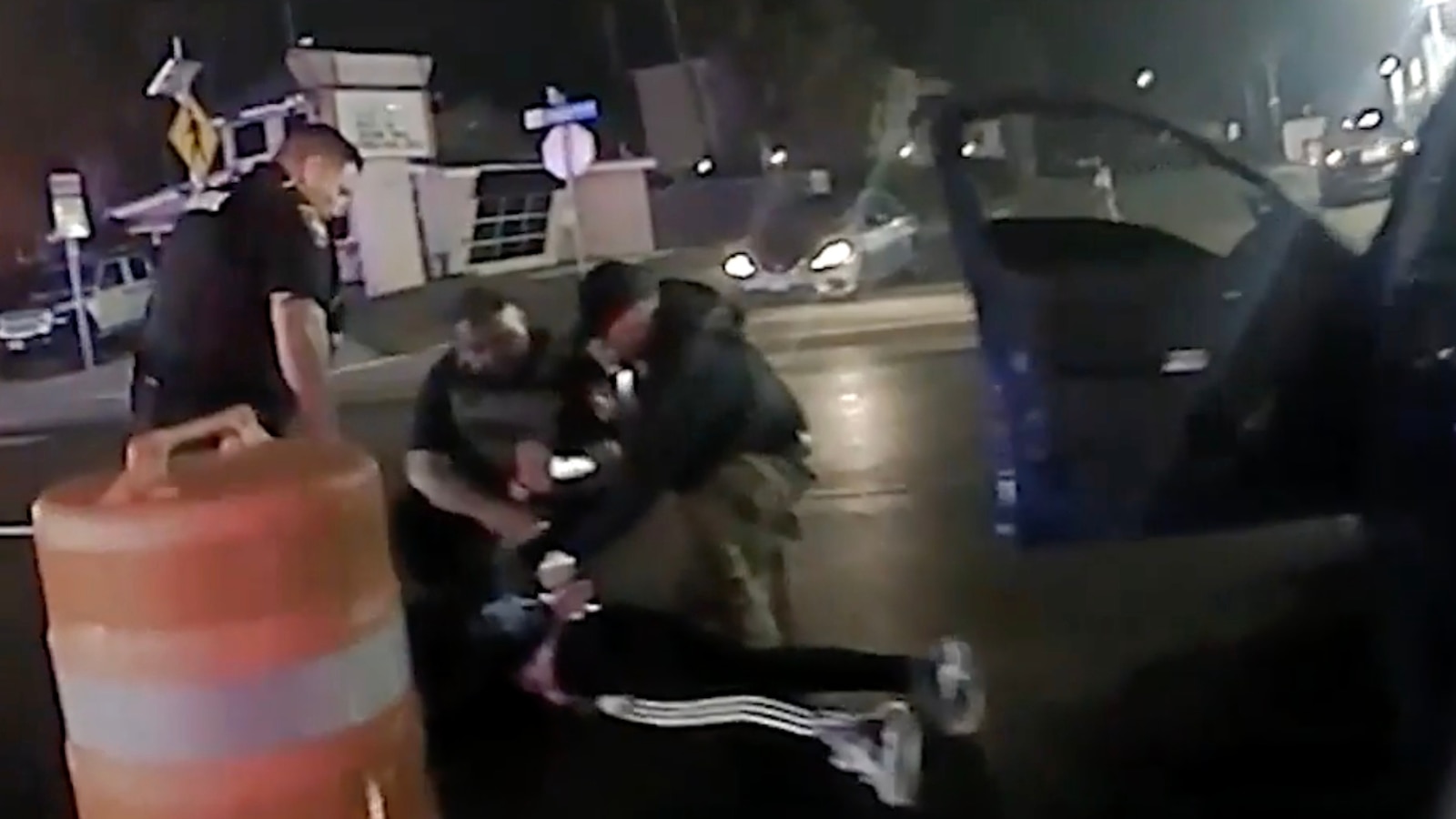
The body-worn camera footage from a South Padre police officer provides crucial visual evidence of what actually transpired in those critical moments. The video shows Martinez’s blue Ford slowly approaching an intersection and moving forward when someone can be heard saying “Keep going.” The vehicle then slows to a crawl or possibly comes to a complete stop as a group of pedestrians crosses the street. After the pedestrians pass, Martinez moves forward again, at which point officers appear to become alarmed, yelling “Stop him” and “Get him out.” Three gunshots can be heard as the officer wearing the camera runs toward the vehicle. Critically, Martinez’s brake lights appear to be illuminated at the moment he is shot, suggesting he was trying to stop rather than accelerate. After the shooting, someone can be heard desperately saying “Stop the f—— vehicle” as the car comes to a complete stop. Agents then pull both Martinez and his passenger, Joshua Orta, from the vehicle, and paramedics begin rendering aid approximately a minute after Martinez is removed from the car. A toxicology report would later reveal that Martinez had a blood alcohol level of 0.12%, above the legal limit of 0.08%, though this doesn’t address whether the shooting was justified.
The Shooter’s Perspective and Justification
Special Agent Jack Stevens, the officer who fired the fatal shots, provided his own account of events in documents released as part of the investigation. Stevens stated that he approached the vehicle after an officer yelled to “get him out.” Upon approaching, he claimed to smell marijuana coming from the driver’s side window. He described Martinez as having eyes “open widely,” with fists “clenched to the steering wheel,” looking past the officers on scene while failing to comply with “loud and repeated verbal commands.” Stevens characterized this behavior as “a pre-attack indicator and sign of noncompliance” based on his training and experience, suggesting that Martinez was “looking in the path of their intended movement” rather than showing compliance. Stevens expressed concern that this “path of movement, if left unmitigated, would, using the vehicle as a weapon, have resulted in numerous casualties.” He claimed he was struck and knocked backwards by the vehicle’s driver’s-side front pillar and side mirror, and that he attempted to backpedal to avoid being run over while “still in contact with the vehicle” as it struck another agent named Hector Sosa. Stevens specifically referenced the New Year’s Day vehicle attack in New Orleans that had occurred earlier in the year, stating these incidents were “fresh on my mind.” He justified his decision to fire by saying he observed the vehicle strike Agent Sosa, “causing him to fall onto the hood of the vehicle,” and claimed his shooting “stopped the threat and gained compliance from the driver.” Despite the significant discrepancies between this account and what the video appears to show, a grand jury decided not to issue an indictment in the case.
Passenger’s Account Adds Complexity to the Tragedy
Joshua Orta, the passenger in Martinez’s vehicle, provided his own perspective during an interview with investigators, offering a somewhat middle-ground account that differs from both the official DHS narrative and the family attorneys’ interpretation. Orta explained that when they approached the accident scene, an officer spotted a container of alcohol in the vehicle but instructed them to keep moving forward and turn left. However, Martinez continued straight toward other officers instead. According to Orta, “That’s when he, you know, panicked and turned the wheel, and he didn’t floor the gas but he kind of went a little bit and I guess they thought he was like trying to run the cop over or something.” Orta acknowledged seeing an officer “kind of get on the hood,” but clarified that Martinez didn’t actually hit him—rather, the officer “caught his feet.” Importantly, Orta was adamant that Martinez had no intention of running over the agents, stating, “He didn’t know what to do … he definitely didn’t want to go to jail. But as far as, like, running over an officer … he wouldn’t do that.” This testimony suggests a young man who panicked in a high-pressure situation rather than someone deliberately trying to harm law enforcement. Tragically, Orta himself died in a car crash in February, meaning his testimony from that initial interview represents his only contribution to understanding what happened that day. His death adds another layer of tragedy to this already heartbreaking situation and removes a crucial eyewitness from any future proceedings or civil actions related to the shooting.