



Virginia Supreme Court Blocks Voter-Approved Congressional Map in Landmark Redistricting Decision
Court Strikes Down Democratic-Favoring Redistricting Plan
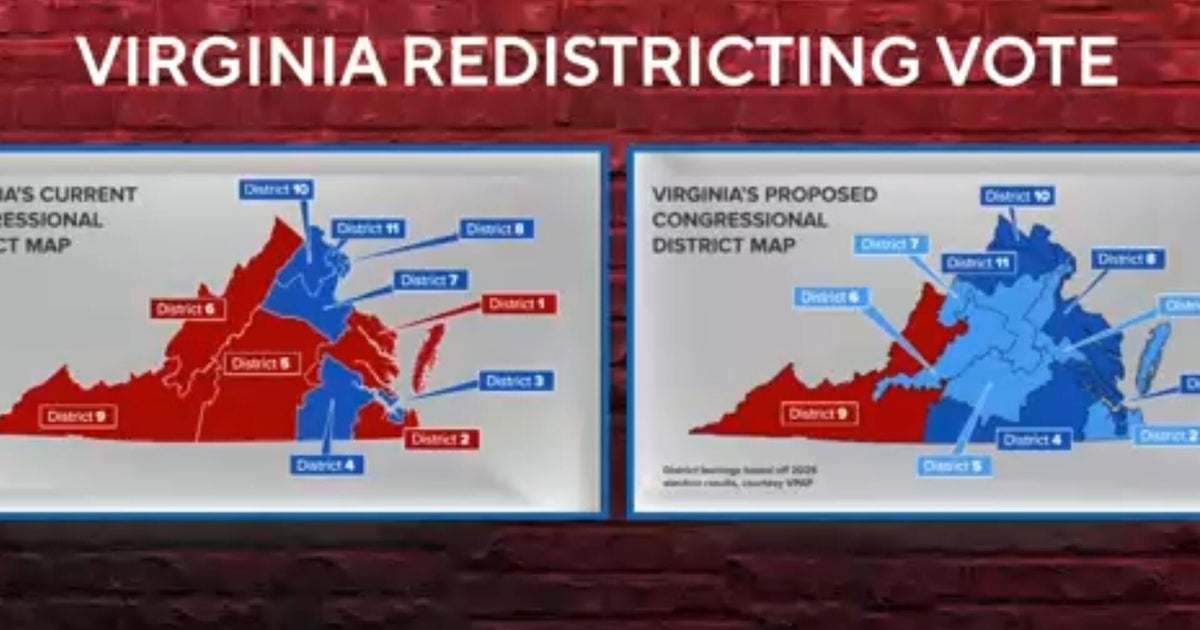
In a significant ruling that has sent shockwaves through the political landscape, the Virginia Supreme Court delivered a decisive blow to Democrats on Friday by invalidating a congressional redistricting referendum that had been approved by Virginia voters just weeks earlier. The court’s decision effectively nullifies what would have been a dramatic reshaping of the state’s political map, one that would have heavily favored Democratic candidates in upcoming congressional elections. The proposed redistricting plan would have created a lopsided advantage for Democrats, giving them favorable positioning in ten of the state’s eleven House districts while leaving Republicans with just a single safe seat. This ruling represents a major setback for Democratic Party strategists who had invested considerable effort into the redistricting initiative, viewing it as a crucial opportunity to expand their congressional representation in a state where political power has been closely divided. Currently, Virginia’s congressional delegation reflects this political balance, with six Democratic representatives and five Republican representatives serving in the U.S. House, even though both of the state’s U.S. senators are Democrats. The court’s decision has instantly transformed the political calculus for both parties heading into future election cycles.
Constitutional Violations at the Heart of the Ruling
The Virginia Supreme Court’s opinion centered on fundamental constitutional concerns, finding that the process used to advance the redistricting proposal violated Article XII, Section 1 of the Virginia Constitution. In clear and unambiguous language, the court stated that “the legislative process employed to advance this proposal violated” the state constitution, and that “this constitutional violation incurably taints the resulting referendum vote and nullifies its legal efficacy.” This legal reasoning represents a significant statement about the importance of following proper constitutional procedures, even when pursuing changes to the constitution itself. The court essentially determined that the ends do not justify the means when it comes to constitutional matters, and that procedural irregularities cannot be overlooked simply because voters ultimately approved the measure at the ballot box. Virginia Senate Republican Leader Ryan T. McDougle enthusiastically welcomed the court’s decision in the case, known as Scott v. McDougle, offering praise for the justices’ commitment to constitutional principles. “The Supreme Court ruling today affirms what we all know: you cannot violate the Constitution to change the Constitution,” McDougle declared in his statement responding to the ruling. He further emphasized that the decision demonstrated an important principle of governance: “The justices of the Supreme Court of Virginia after careful and thorough review of this matter affirmed that even the General Assembly must follow the law.” This language underscored the Republican position that no government body, regardless of its democratic legitimacy or popular support, stands above the constitutional framework that governs the state.
Political Reactions Reveal Deep Partisan Divide
The immediate political reactions to the Virginia Supreme Court’s decision revealed the deep partisan divisions that characterize contemporary American politics, particularly on issues related to electoral maps and voting power. Democratic Speaker of the Virginia House of Delegates Don Scott struck a defiant tone despite the legal setback, choosing to emphasize the high voter turnout rather than dwelling on the loss. “We respect the decision of the Supreme Court of Virginia,” Scott said in his official statement, before pivoting to celebrate the political engagement the referendum generated: “I’m proud that Virginians came out in historic numbers, made their voices heard, and sent a message not just here at home — but across the country — to Donald Trump and his administration.” This framing represented a clear attempt to salvage a political victory from a legal defeat, suggesting that the mobilization effort itself had value beyond the specific policy outcome. On the other side of the political spectrum, President Donald Trump wasted no time claiming the court decision as a validation of Republican interests, characterizing it as a “huge win for the Republican Party, and America, in Virginia.” Trump’s statement reflected his tendency to insert himself into state-level political battles and to frame judicial decisions through a partisan lens, treating the constitutional ruling as a political victory rather than a legal determination made on procedural grounds. This reaction pattern has become typical of the broader nationalization of politics, where even state supreme court decisions on constitutional matters are immediately absorbed into the larger narrative of partisan conflict.
The Broader National Context of Redistricting Battles
The Virginia decision cannot be understood in isolation but must be viewed against the backdrop of a nationwide redistricting battle that has intensified dramatically in recent years. The current wave of redistricting efforts across the country was largely triggered by Texas in 2025, when that Republican-dominated state legislature moved aggressively to redraw its congressional maps in ways that would favor Republican candidates. This bold move by Texas set off a chain reaction of redistricting initiatives across the nation, as states controlled by both parties began pursuing their own map revisions. California, under Democratic Governor Gavin Newsom, announced its intention to reshape its own congressional map in direct response to the Texas action, framing it as a necessary defensive measure to maintain partisan balance in national representation. Since those initial moves by Texas and California, both red states and blue states have taken their redistricting proposals to their respective state legislatures, creating a patchwork of redistricting battles across the American political landscape. This tit-for-tat dynamic has raised concerns among political observers and good-government advocates about the escalating nature of partisan gerrymandering and the potential for redistricting to become an increasingly normalized tool of partisan warfare. The situation has created a political environment where each party feels compelled to pursue advantageous redistricting whenever the opportunity arises, fearing that restraint will simply result in being outmaneuvered by the opposition.
Virginia Democrats Vow to Fight On Despite Setback
Despite the significant setback represented by the Supreme Court decision, Virginia Democrats quickly moved to project confidence and determination, vowing to continue their political efforts under whatever map ultimately governs future elections. Democratic Senator Tim Kaine of Virginia, a prominent national figure and former vice-presidential candidate, directly addressed the nationwide redistricting context in his statement responding to the court’s ruling. Kaine drew a sharp contrast between Virginia’s approach and the methods employed by Republican-controlled states, saying, “Unlike GOP-led states that redrew their congressional maps in backroom deals, Virginia let the people decide.” This framing positioned Virginia Democrats as champions of democratic participation and transparency, suggesting that their approach was fundamentally different from and morally superior to the Republican redistricting efforts in other states. However, Kaine also acknowledged the practical reality created by the court decision: “But the Virginia Supreme Court has blocked the people’s choice. So we have to campaign and win on their maps. We can do it!” This statement reflected a pragmatic acceptance of the new political reality while simultaneously maintaining an optimistic and combative posture. The message to Democratic activists and voters was clear—while this legal battle was lost, the larger political war continues, and victory remains achievable through effective campaigning and voter mobilization. This response illustrated the resilience of political organizations in the face of setbacks and the ability of parties to quickly reframe defeats as opportunities for demonstrating strength and commitment.
Implications for American Democracy and Electoral Politics
The Virginia Supreme Court decision and the broader redistricting battles occurring across the nation raise profound questions about the health of American democracy and the integrity of electoral processes. At the heart of these controversies lies a fundamental tension between democratic principles and partisan advantage, between the ideal of fair representation and the reality of political power. The competing narratives surrounding redistricting—with each party accusing the other of manipulating maps for partisan gain while defending its own efforts as either necessary responses to opposition actions or as exercises in democratic participation—reveal how difficult it has become to establish shared norms around electoral fairness. The Virginia case specifically illustrates the complex interplay between popular sovereignty and constitutional proceduralism, raising difficult questions about what should happen when voter preferences expressed through a referendum conflict with constitutional requirements about process. While Republicans celebrated the court’s adherence to constitutional procedure, Democrats emphasized the popular will expressed through high voter turnout, and neither side’s position is entirely without merit. Moving forward, the partisan redistricting arms race shows no signs of abating, as each party’s actions fuel further responses from the opposition, creating a cycle that potentially undermines public confidence in the fairness of electoral systems. The ultimate resolution of these tensions will likely require either federal intervention, dramatic shifts in state-level political control, or the development of new consensus around independent redistricting commissions—though the current polarized political environment makes any of these outcomes challenging to achieve.