
Britain’s New Steel Strategy: A Turning Point in Trade Policy
A Document That Matters More Than You Think
At first glance, the government’s newly released Steel Strategy might seem like the kind of policy document that only industry insiders and economics enthusiasts could get excited about. And truthfully, there is indeed a small group of people for whom this represents an extraordinarily fascinating and important moment. If you’re reading this, you’re probably not one of them. But here’s why you should care anyway: this seemingly mundane document about the steel industry actually signals something much bigger than steel production itself. It represents a fundamental shift in how Britain approaches trade, protectionism, and its place in the global economy. What we’re witnessing is a quiet but significant departure from decades of economic philosophy, and its implications will ripple far beyond the steelworks of Scunthorpe or Port Talbot. This is about the future direction of British economic policy in an increasingly fractious and protectionist world.
What’s Actually in the Steel Strategy
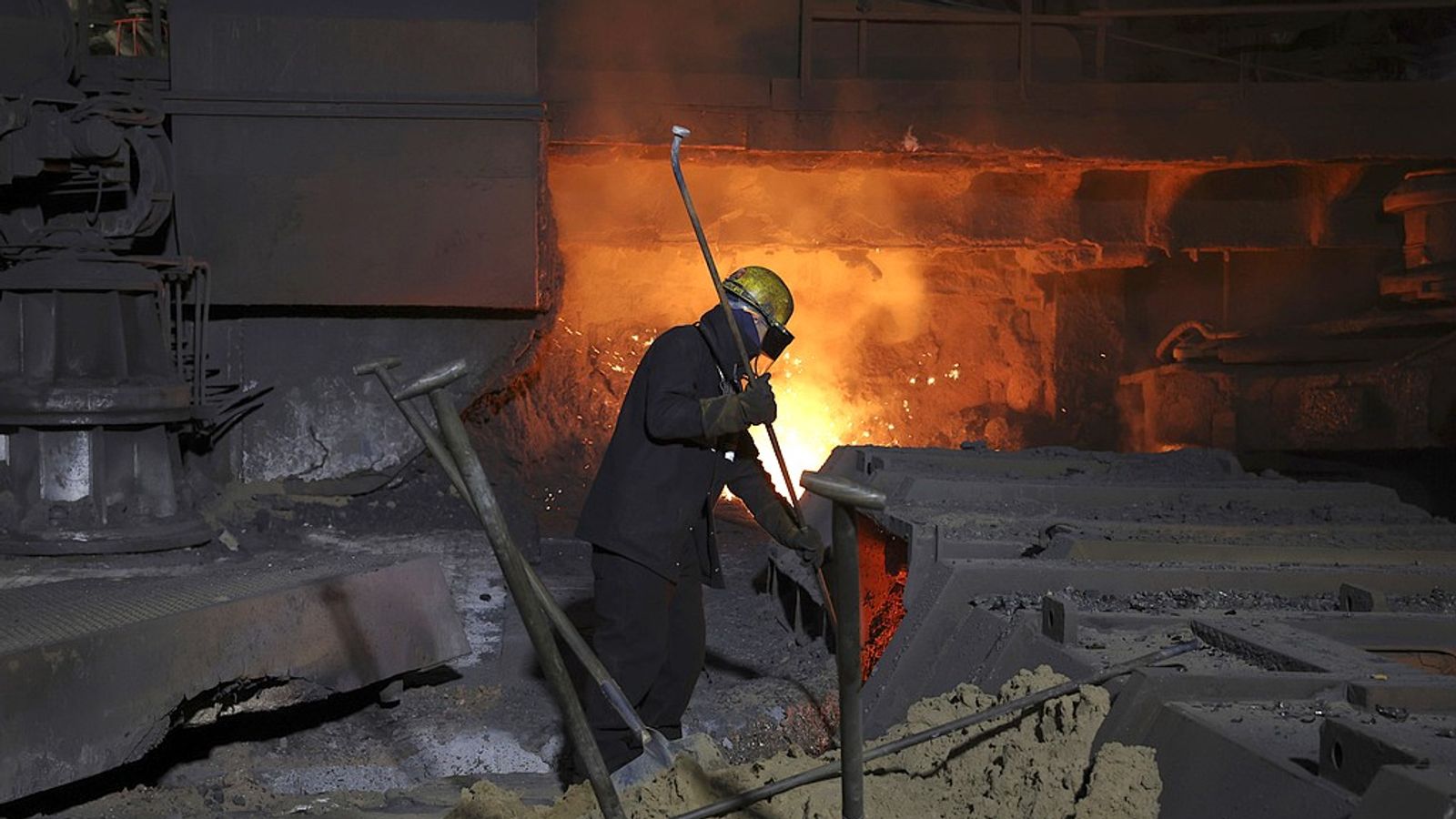
For those who do follow the steel sector closely, this strategy document is genuinely momentous. The government has committed approximately £2.5 billion in support for steel producers across the country. Some of this funding will go to British Steel’s works in Scunthorpe, which have been effectively brought under public ownership, while other portions will support private steel manufacturers in their efforts to produce lower-carbon metal. This investment reflects both the industrial and environmental challenges facing the sector in the twenty-first century. Perhaps the most ambitious goal contained within the strategy is the pledge to dramatically increase the proportion of steel used in Britain that is actually made in Britain. Currently, that figure stands at a record low of just 30%, which is frankly quite depressing when you stop to think about it. Look around at the wind turbines scattered across the countryside and offshore, or consider the vast infrastructure projects happening nationwide—most of that steel still isn’t made, and indeed can’t be made, with the steelworks and equipment currently operating in this country. The government’s ambition is to raise domestic steel usage to 50%, which certainly sounds better than the current situation, though it essentially just returns us to pre-COVID levels.
The Real Story: Britain’s Relationship with Global Trade
However, the truly significant element of the Steel Strategy—the part that affects all of us, whether we work in steel or not—concerns trade rules and tariffs. To understand why this matters, we need some background. For several years now, British steel producers have been struggling mightily to compete with their overseas counterparts. Take galvanised steel as an example: the UK is currently experiencing a flood of extremely cheap galvanised steel from countries like Vietnam and Turkey. The crucial factor here is that most of those foreign producers enjoy generous subsidies and tax breaks that their British competitors simply don’t receive. The result is that it’s incredibly difficult, if not outright impossible, for British producers to compete on price. This isn’t just a business challenge—it’s becoming an existential crisis for the entire domestic steel industry. There have been some trade barriers on these types of steel imports, but they were scheduled to expire in June anyway, and more importantly, they weren’t particularly prohibitive to begin with. In practice, anyone who wanted to import cheap galvanised steel from Turkey or Vietnam could do so without paying any tariff whatsoever. They faced essentially no meaningful barriers to flooding the British market.
The Protectionist Turn: New Tariffs and What They Mean
The centerpiece of the new steel strategy is a brand new 50% tariff on many of these steel imports, accompanied by new, lower quotas on the volume of steel that can be imported. These are the measures that really matter. In some ways, this development isn’t entirely surprising—the previous regime needed updating since it was due to expire soon, and Europe has already implemented tariffs that look very similar to these new British ones. However, there’s something more historically significant happening here that goes beyond routine policy updates. This marks the first time since the beginning of the current trade war—and indeed the first time since Britain regained control of its trade policy after Brexit—that the government has raised tariffs to these kinds of levels. It’s difficult to make precise historical comparisons given the convoluted details of trade barriers across different eras and products, but the fundamental truth is clear: these are probably the biggest increases in trade barriers imposed by a British government in at least a generation, possibly longer.
Breaking with Free Trade Orthodoxy
While other countries, most notably America under President Donald Trump’s various trade wars, have been raising their tariff barriers left and right, Britain had until this moment held firm. For many ministers and policymakers, this stance was a matter of genuine national pride and identity. Britain, after all, is the country that essentially “invented” modern free trade as we know it. This is the nation that abolished the Corn Laws in the 19th century, bringing economic relief to millions and introducing the world to concepts like “comparative advantage”—the idea that countries prosper most when they specialize in what they do best and trade freely with others. For true believers in free trade economics, many of whom have held influential positions in British government for decades, raising tariffs, even in an environment where everyone else was doing the same, would have been considered an economic abomination and a betrayal of core principles. Yet here we are. It’s a sign of how dramatically the times have changed that this is precisely what the current government has done. Britain will now have some of the highest steel tariffs it has imposed in its entire modern history, all in an explicit effort to protect its domestic industry from foreign competition.
A Watershed Moment in British Economic History
Many people, including government officials themselves, will be quick to point out that the way these new tariffs are structured is far more sophisticated and considerably less brutal than the blunt-instrument tariffs imposed in America. They’ll emphasize that Britain is mostly just mirroring what’s already happening in Europe, maintaining some level of alignment with our closest trading partners. These are fair points and important distinctions. Nevertheless, it’s extremely hard not to conclude that this represents a genuine watershed moment in British economic policy. Britain, in short, is dipping its toes into the waters of protectionism, perhaps tentatively at first, but unmistakably nonetheless. This new Steel Strategy may look, on its face, like a boring, arcane document meant for a relatively small sector of the economy that most people never think about. But in economic and historical terms, this document is absolute dynamite. It signals that the long-standing British commitment to free trade, a commitment that has defined the country’s economic philosophy for more than a century and a half, is being reconsidered in the face of a changing global landscape where other nations play by different rules. Whether this represents wise pragmatism or a dangerous first step down a protectionist path remains to be seen, but there’s no denying that something significant has shifted in how Britain sees itself in the global economy.