

The Controversial Rise of Russia’s Ruble-Backed Stablecoin: Inside A7A5’s Global Ambitions
Navigating the Compliance Minefield
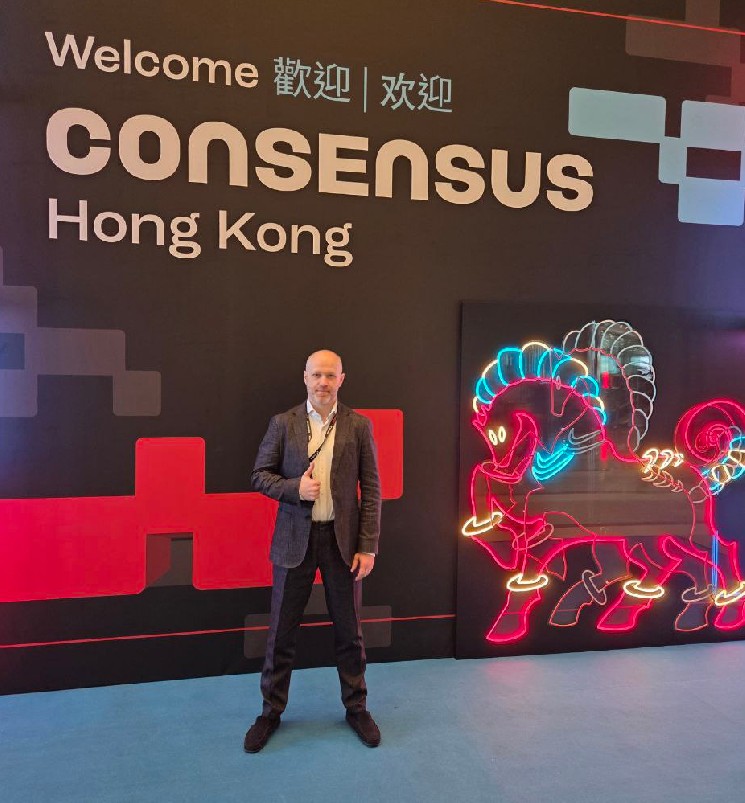
Oleg Ogienko stands defiant in the face of criticism. As the director of Regulatory and Overseas Affairs for A7A5, he’s become the public face of what might be the most controversial stablecoin project in the cryptocurrency world today. During a recent appearance at Consensus Hong Kong, Ogienko made his position crystal clear: he’s willing to debate anyone who claims his company has violated compliance laws. For him, the issue is straightforward—A7A5 operates within the legal framework of Kyrgyzstan, where it’s incorporated, and follows all the rules that apply within that jurisdiction. The company conducts regular audits, implements Know Your Customer (KYC) procedures, and has built anti-money laundering (AML) mechanisms directly into its infrastructure. According to Ogienko, they don’t violate any principles set forth by the Financial Action Task Force, the global standard-setter for combating financial crime. But this defense, while technically accurate within certain borders, doesn’t tell the whole story of why A7A5 has become such a lightning rod for controversy in international finance.
The Sanctions Elephant in the Room
Here’s where things get complicated. While A7A5 might be playing by Kyrgyzstan’s rules, the company operates in a financial gray zone that has drawn the attention of U.S. authorities. The issuing entities behind A7A5—Old Vector LLC and A7 LLC—along with Promsvyazbank (PSB), the bank holding the stablecoin’s reserves, have all been sanctioned by the U.S. Department of the Treasury. This means that anyone or any institution operating within the U.S. dollar-dominated financial system is prohibited from doing business with them. It’s a significant restriction, considering that American laws and the dollar’s dominance underpin the majority of global trade. However, and this is the crucial point that Ogienko emphasizes, helping Russian companies circumvent U.S. sanctions isn’t illegal in Kyrgyzstan or Russia itself. This creates a fascinating legal paradox where A7A5 operates in full compliance with local laws while simultaneously existing outside the framework that governs most international finance. The stablecoin has become a tool for Russian users facing banking restrictions to conduct cross-border payments and, importantly, to access liquidity in USDT—the market-leading stablecoin—through decentralized finance protocols, all without directly holding dollar-denominated stablecoins themselves.
Explosive Growth Fueled by Restrictions
The numbers behind A7A5’s growth tell a remarkable story. Last year, this Ruble-denominated stablecoin added nearly $90 billion in circulating supply, according to data from Artemis. To put that in perspective, that’s more than Tether’s USDT, which added $49 billion, and dramatically more than Circle’s USDC, which added approximately $31 billion during the same period. This explosive growth didn’t happen despite the sanctions—in many ways, it happened because of them. The restrictions imposed on Russian entities and individuals created a massive demand for alternative payment mechanisms that could bypass traditional banking channels. For Russian businesses that need to engage in international trade but find themselves cut off from the SWIFT payment system and dollar-based banking, A7A5 offered a solution. Ogienko acknowledges that living under sanctions creates pressure and limits access to certain Western goods and services. It’s not comfortable, and it certainly complicates daily life and business operations. But according to him, the sanctions haven’t stopped business activity or cross-border trade altogether. Instead, they’ve simply redirected that activity into channels like A7A5, creating what he describes as an obstacle rather than an economic dead end—and in the process, creating a thriving market for exactly the service his company provides.
Building Bridges in a Fragmented Financial World
The primary users of A7A5, according to Ogienko, aren’t shadowy criminals or sanction-evaders operating in the dark corners of the internet. Instead, they’re businesses in Asia, Africa, and South America that maintain legitimate trade relationships with Russian exporters and importers and need functioning cross-border payment mechanisms to conduct that trade. This is where A7A5 fills a genuine market need, providing the financial infrastructure for transactions that would otherwise be nearly impossible to complete through traditional banking channels. However, the stablecoin faces significant challenges in expanding its reach. Centralized cryptocurrency exchanges won’t list the token because they fear secondary sanctions—the possibility that the U.S. government might penalize them for facilitating transactions with sanctioned entities. This leaves decentralized finance (DeFi) liquidity pools as the primary venue where A7A5 can be exchanged for other cryptocurrencies like USDT. But even here, liquidity is severely limited; A7A5’s own dashboard shows only about $50,000 in USDT available for swaps at any given time. Ogienko’s trip to Hong Kong for the Consensus conference was specifically aimed at addressing this liquidity problem. He spent his time meeting with exchanges and blockchain platforms—though he declined to name specific organizations—working to build partnerships that could provide more robust trading infrastructure for the stablecoin.
The Politics of Presence and Partnership
A7A5’s efforts to integrate into the broader cryptocurrency ecosystem have run into obstacles that go beyond purely technical or financial concerns. The company wasn’t a sponsor at Consensus Hong Kong, and for good reason—having a U.S.-sanctioned entity involved with any major conference could make organizers and other sponsors extremely nervous, even when such involvement is technically legal in the jurisdiction where the event takes place. This tension played out publicly at Token2049 in Singapore, where A7A5 initially appeared as a sponsor. The event was organized by BOB Group, a Hong Kong-registered company operating in a jurisdiction that has imposed no sanctions on Russia, making the sponsorship legally permissible. However, when concerns emerged from other sponsors about A7A5’s involvement, BOB Group quietly removed references to the stablecoin company from official sponsor lists. It’s a perfect illustration of how sanctions create pressure that extends far beyond their formal legal boundaries—companies and organizations that aren’t themselves bound by U.S. sanctions still fear the reputational and business consequences of association with sanctioned entities. Despite these challenges, Ogienko remains focused on expansion. A7A5 currently operates on the Tron and Ethereum blockchains, and the company is exploring deployment on additional blockchain networks to broaden its reach and utility.
Ambitions Beyond Borders and Sanctions
Looking ahead, Ogienko has set ambitious targets for A7A5’s role in international trade. He believes the stablecoin can grow to settle more than 20% of Russia’s trade with other countries, a staggering goal that would represent a fundamental shift in how Russian businesses engage with the global economy. Interestingly, despite being designed to facilitate Russian business, A7A5 still cannot be used within Russia itself, as lawmakers there continue to draft regulations governing stablecoins. Ogienko maintains that he’s in regular contact with Russian authorities, but he characterizes these interactions as consultative, focused on providing input about blockchain regulation and financial infrastructure rather than taking direction from government officials. He’s careful to position A7A5 as a business rather than a political entity, emphasizing that “we’re not politicians, we are traders, we are businessmen” and insisting that the company remains neutral and “open for business cooperation with any country.” This framing is central to how Ogienko wants A7A5 to be understood—not as a tool of the Russian state or a sanction-evasion scheme, but as a legitimate financial service provider operating in a fragmented global financial system where different jurisdictions have different rules. Whether that characterization will satisfy critics, regulators, and potential partners remains to be seen, but what’s clear is that A7A5 represents a new kind of challenge for international financial governance, one where cryptocurrency’s borderless nature collides head-on with the geopolitical reality of economic sanctions.