
Bitcoin Holds Steady Amid Middle East Tensions While Markets React to Geopolitical Uncertainty
Initial Market Response Shows Bitcoin’s Resilience
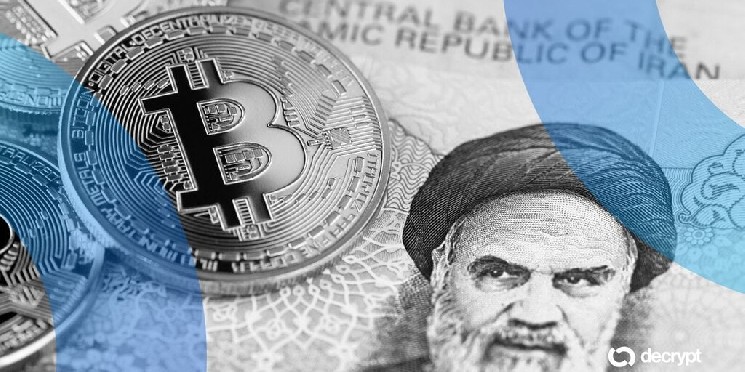
The cryptocurrency market has demonstrated notable stability in the face of escalating Middle East tensions, even as traditional markets experienced significant volatility. Following U.S.-led military strikes on Iranian targets and subsequent retaliatory attacks involving missiles and drones, global financial markets braced for impact. The situation intensified amid reports concerning Iran’s supreme leader Ayatollah Ali Khamenei’s 36-year rule potentially ending, while Iranian officials promised further retaliation. Additionally, shipping and aviation disruptions throughout the Gulf region have amplified concerns that this conflict could expand beyond a contained exchange between involved parties.
Despite these geopolitical headwinds, Bitcoin has shown remarkable resilience compared to traditional assets. After dropping to approximately $63,000 over the weekend, the leading cryptocurrency recovered most of its losses, trading down just 0.4% to $66,600. This represents a weekly decline of roughly 2.8% according to CoinGecko data. What makes this performance particularly noteworthy is that Bitcoin’s losses were considerably smaller than those experienced by equity-index futures. The Nasdaq, Dow, and S&P 500 futures all fell more than 1%, suggesting that investors were broadly reducing their exposure to risky assets in response to overnight geopolitical developments ahead of the U.S. market opening. This divergence in performance has caught the attention of market analysts who see it as evidence of Bitcoin’s evolving role in times of crisis.
Expert Analysis Points to Oversold Conditions
Market professionals are viewing the current situation through an increasingly bullish lens, citing several technical indicators that suggest Bitcoin may be oversold. Ryan McMillin, chief investment officer at Merkle Tree Capital, characterized Bitcoin’s initial sell-off as almost textbook behavior, explaining that markets typically react more strongly to uncertainty than to actual bad news. Once the Iran conflict appeared to be contained within certain boundaries, buying interest quickly returned to the cryptocurrency market. McMillin pointed to compelling technical signals that support a more optimistic outlook for Bitcoin in the near term.
Particularly interesting are the extreme readings on sentiment indicators and futures markets. The Fear and Greed Index, a popular tool for measuring market sentiment, currently sits at 11—an extraordinarily low reading that indicates extreme fear among market participants. Simultaneously, Bitcoin futures funding rates have swung to negative 6%, meaning that traders holding short positions are paying a significant premium to maintain their bearish bets. This combination of factors hasn’t been seen since Bitcoin was trading around $16,000 back in 2022, during one of the cryptocurrency’s darkest periods. According to McMillin, these conditions create a situation where “the market is mechanically paying you to be long,” suggesting it may be an opportune time for investors to take bullish positions.
Price Action Suggests Market Has Absorbed the Shock
Other market experts echo the sentiment that Bitcoin has successfully weathered the initial storm of geopolitical uncertainty. Pratik Kala, head of research at Apollo Crypto, noted that Bitcoin’s price action throughout the weekend suggested much of the initial shock from the Middle East situation had already been reflected in current prices. His analysis indicates that if Bitcoin were going to experience a significant selloff in response to these events, it would have already happened by now. The cryptocurrency’s relatively stable performance during the crucial weekend period—when news of the conflict was breaking—was particularly encouraging.
Kala also observed that CME Bitcoin futures had opened without triggering major downward moves, another sign that the market may have found its footing. If Bitcoin were going to follow equities lower or experience a major dump, those movements would have materialized by now. This resilience suggests that cryptocurrency markets may be developing greater independence from traditional financial markets, at least in their initial responses to geopolitical shocks. The implication is that Bitcoin investors have already processed the available information about the conflict and determined that current price levels adequately reflect the risks involved.
Oil Market Dynamics and Inflation Concerns
While Bitcoin has held relatively steady, other markets have experienced more dramatic movements, particularly in the energy sector. Broader market participants have focused intensely on the potential for disruption around the Strait of Hormuz, the strategically critical shipping lane through which approximately one-fifth of the world’s oil supply passes. Any sustained disruption to this vital waterway could have profound implications for global energy markets and, by extension, the broader economy.
Oil prices have indeed surged sharply in response to the Iran conflict. Brent crude jumped roughly 8-10% toward the $80 per barrel mark, while U.S. West Texas Intermediate (WTI) crude rose about 7-8%. These increases raise important questions about potential second-order effects on the cryptocurrency market. As Kala explained, if oil prices remain elevated for an extended period, there’s a risk of higher inflation readings in economic data, which would generally be negative for risk assets including Bitcoin. Higher inflation could prompt central banks to maintain or even increase interest rates, which tends to reduce appetite for speculative investments.
However, Kala doesn’t expect sustained oil price increases to be the most likely scenario going forward. He points to several mitigating factors, including the substantial oil supplies available from OPEC countries that could potentially “plug the gap” if Iranian oil exports are disrupted. Additionally, he expects President Donald Trump to take actions within his power to keep oil prices low, noting that the president understands how energy prices affect American consumer sentiment. This political dynamic could result in policy measures designed to increase oil supply or reduce demand, potentially moderating price increases.
Gold Surges as Traditional Safe Haven While Questions Remain About Sustainability
Traditional safe-haven assets have responded predictably to the geopolitical uncertainty, with gold experiencing a significant rally. The precious metal has jumped more than 2% to reach $3,388 per troy ounce, reflecting investors’ flight to assets perceived as stores of value during times of crisis. According to Han Tan, chief market analyst at Bybit Learn, the ongoing Middle East conflict is positioned to provide further tailwinds for gold, likely triggering knee-jerk price spikes driven by rising safe-haven demand.
However, Tan offers an important caveat based on historical patterns in how markets respond to geopolitical events. Seasoned market observers understand that geopolitical risk premiums—the extra value investors place on safe-haven assets during crises—are often “faded out swiftly” once market and economic risks are properly digested and appear to be contained. This pattern suggests that while gold, oil, and other reactive assets may experience initial spikes, these moves often reverse as investors gain clarity about the actual economic impact of geopolitical events. The question for Bitcoin investors is whether the cryptocurrency will continue to demonstrate the resilience it has shown so far, potentially positioning itself as a modern alternative to traditional safe havens, or whether it will eventually follow broader risk assets lower if the situation deteriorates further. For now, the cryptocurrency market appears to be taking a measured approach, neither panicking in the face of uncertainty nor ignoring genuine risks to the global economic outlook.