
Washington Updates on Iran Conflict: Timeline, Strategy, and Economic Impact
Escalating Tensions and Conflicting Messages from the White House
As the conflict with Iran enters its third week, the situation in the Middle East continues to intensify, with Washington struggling to present a coherent message about America’s military objectives and exit strategy. President Donald Trump and his administration have spent recent days attempting to reassure both domestic audiences and international allies that the United States maintains overwhelming military superiority, yet Iranian forces continue their attacks throughout the region. The contradictions between official statements and ground realities have created confusion about the actual state of the conflict and its potential duration.
On Saturday, President Trump made bold claims on social media, declaring that the United States has “already destroyed 100% of Iran’s Military capability” and promising that American forces “will soon get the Hormuz Strait OPEN, SAFE, and FREE.” These confident assertions stand in stark contrast to the ongoing Iranian strikes and the administration’s Friday announcement deploying 2,200 Marines to the region—a decision that raises obvious questions about why additional forces are necessary if Iran’s military has truly been completely neutralized. The administration has remained notably silent about the Marines’ specific mission parameters, creating further uncertainty about America’s strategic goals in the region.
The economic consequences of this conflict are already being felt by American families and businesses. Energy Secretary Chris Wright acknowledged in interviews over the weekend that “Americans are feeling it right now and will feel it for a few more weeks,” referring to the economic pain caused by disrupted oil supplies and rising energy costs. However, Wright attempted to frame these hardships within a longer-term strategic context, arguing that eliminating what he called “the greatest threat to global energy supplies” would ultimately benefit global stability and American interests. This acknowledgment of immediate economic suffering represents a significant shift from earlier administration messaging that focused primarily on military victories.
The Critical Question of Timeline and Strategic Objectives
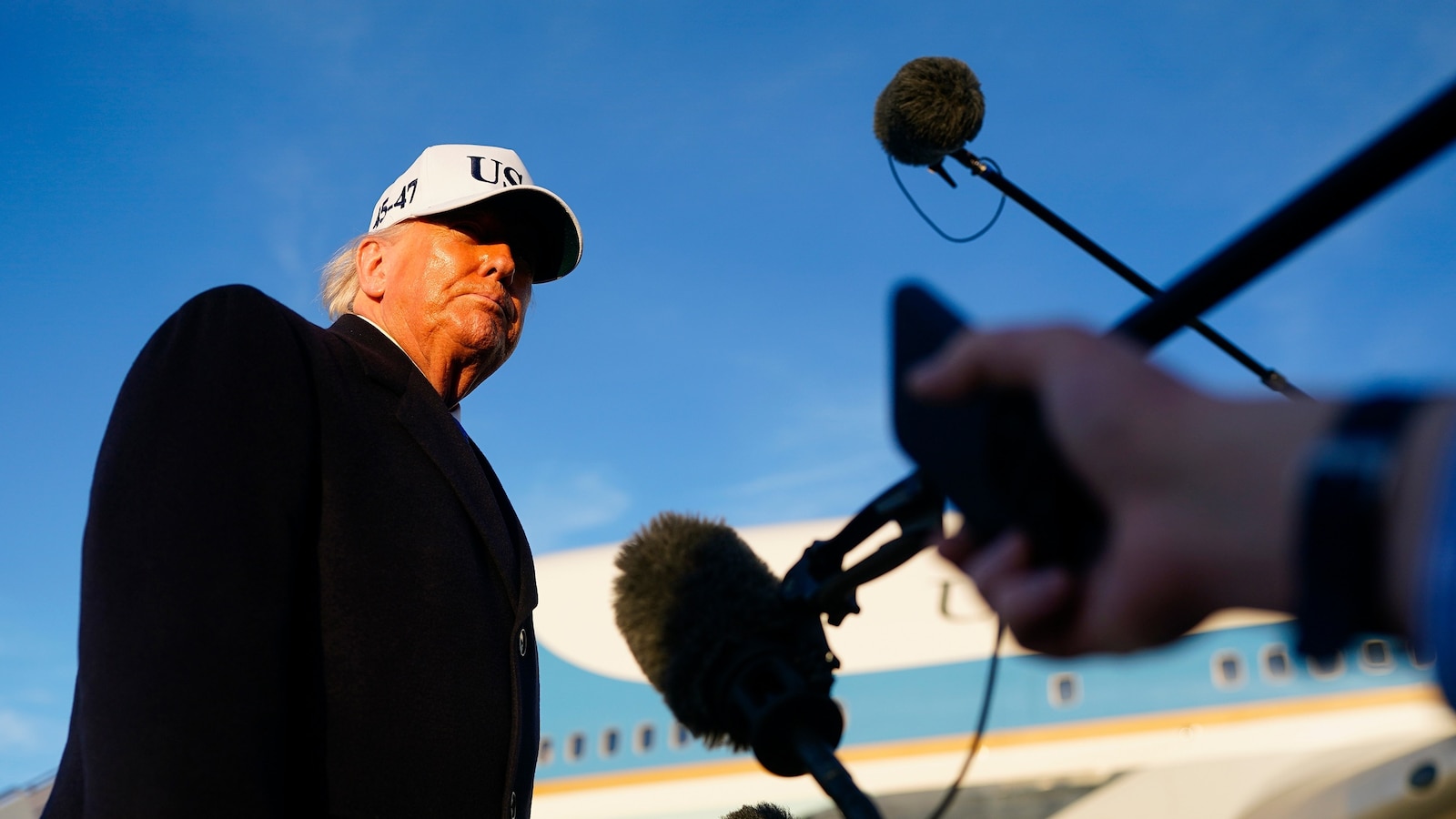
Perhaps the most persistent question facing the Trump administration concerns the anticipated duration of American military engagement in this conflict. Throughout last week, President Trump repeatedly suggested the war would conclude quickly, seemingly attempting to calm nervous financial markets and reassure Americans worried about a prolonged military entanglement. However, when pressed by reporters as he departed Washington on Friday evening, Trump offered a far less specific response: “As long as necessary.” This vague timeline contrasts sharply with his earlier optimistic predictions and suggests the administration may not have a clear endgame strategy.
Energy Secretary Chris Wright provided a somewhat more concrete timeline during his Sunday interview with ABC News’ Martha Raddatz, stating, “I think that this conflict will certainly come to an end in the next few weeks. Could be sooner than that, but the conflict will come to the end in the next few weeks.” This “few weeks” projection represents a significant extension from Trump’s earlier suggestions of an imminent conclusion. The shifting timelines have fueled criticism from opposition Democrats and raised concerns among military families about how long American service members will remain in harm’s way.
The administration’s difficulty in articulating a clear timeline reflects deeper strategic uncertainties about what constitutes “victory” in this conflict. Is the goal simply to degrade Iranian military capabilities to a certain level? Does it require regime change or a fundamental restructuring of Iran’s government? Must Iran agree to a new nuclear deal before hostilities can end? These fundamental questions remain inadequately answered, leaving Americans—and America’s allies—uncertain about the scope and duration of this military commitment.
Securing the Strait of Hormuz: Coordination Challenges and International Cooperation
The Strait of Hormuz represents one of the world’s most critical oil shipping chokepoints, with roughly one-fifth of global petroleum passing through this narrow waterway. Iran’s ability to disrupt traffic through the strait has created severe economic consequences, with oil prices spiking and global supply chains experiencing significant disruption. The Trump administration’s efforts to secure this vital passage have been marked by confusion, contradictory statements, and apparent lack of preparedness—despite the entirely predictable nature of Iran’s strategy to threaten this waterway.
On Saturday, President Trump called upon other nations dependent on Strait of Hormuz commerce to assist in securing the waterway, specifically naming “China, France, Japan, South Korea, the UK, and others.” He suggested that commitments had been received from some of these countries, though he declined to specify which nations had agreed to participate. Later that same day, Trump told NBC that cooperating countries “think it’s a great idea,” but then contradicted himself by saying, “We believe we’ll be joined by other countries”—language that suggests commitments remain tentative at best. This confusion has been compounded by the administration’s refusal to clarify which countries, if any, have actually committed forces to help secure the strait.
Defense Secretary Pete Hegseth attempted to project confidence on Friday, stating, “We have been dealing with it, and don’t need to worry about it.” However, shipping companies have reportedly had requests for military escorts denied, and no actual escort operations have commenced. Energy Secretary Wright explained that additional military operations must first degrade Iranian capabilities that threaten the strait before escort missions can begin, but he could not provide a timeline for when commercial shipping might safely resume. Democratic critics have argued that this coordination with allies should have occurred before military operations began, not as an afterthought once the economic consequences became severe. The lack of preparation for this entirely foreseeable Iranian response has raised serious questions about the administration’s strategic planning and coordination with international partners.
Diplomatic Prospects: The Elusive Nuclear Deal
Many foreign policy experts and former diplomats believe that sustainable peace will ultimately require a comprehensive nuclear agreement between the United States and Iran—a diplomatic outcome that currently appears distant despite occasional hints from both sides. President Trump indicated over the weekend that while Iran “wants to make a deal,” he is unwilling to negotiate “because the terms aren’t good enough yet.” This suggests that preliminary diplomatic feelers may have been extended, but significant gaps remain between the positions of the two adversaries.
The diplomatic landscape is further complicated by questions about Iran’s current leadership structure. Trump raised doubts about whether the new supreme leader, Ayatollah Mojtaba Khamenei, is even alive following recent U.S. strikes. The State Department has announced a $10 million reward for information on key Islamic Revolutionary Guard Corps leaders, including Khamenei, suggesting uncertainty about the Iranian command structure. This leadership confusion creates additional obstacles to meaningful negotiations, as it remains unclear who possesses the authority to make binding commitments on behalf of the Iranian government.
Iran’s Foreign Minister Abbas Araghchi adopted a defiant tone in his Sunday CBS interview, stating, “We don’t see any reason why we should talk with Americans, because we were talking with them when they decided to attack us, and that was for the second time.” However, he also made what some analysts interpret as a potentially significant diplomatic signal: Iran has not yet attempted to retrieve the 440 kilograms of highly enriched uranium buried beneath the rubble of nuclear facilities bombed by the United States last June. Araghchi indicated that if this material were to be recovered, it would be done under supervision of the International Atomic Energy Agency—a statement that suggests Iran might be preserving options for renewed international oversight of its nuclear program. Earlier reports indicated that Trump had rejected ceasefire negotiation efforts from Middle East allies, though the White House has not responded to requests for comment. Araghchi’s assessment that “nothing is on the table right now” and “everything depends on the future” captures the current diplomatic stalemate, even as the continued fighting imposes mounting costs on both sides.
Military Escalation: Marine Deployment Raises Questions
The Friday announcement that 2,200 Marines aboard three U.S. Navy amphibious ships are being deployed to the Middle East represents a significant escalation of America’s military commitment—one that directly contradicts President Trump’s claims that the war is essentially won. Marine Expeditionary Units are versatile forces capable of conducting land operations, amphibious assaults, and aviation missions, suggesting the administration is preparing for potential operations beyond the air campaign that has characterized the conflict thus far. The deployment actually involves approximately 5,000 personnel when the 2,000 to 2,500 sailors operating the ships are included.
President Trump has not commented on this deployment decision, leaving Americans to wonder why such reinforcements are necessary if Iranian military capabilities have truly been destroyed as he claimed. The Pentagon has neither officially acknowledged the deployment nor provided any information about the Marines’ intended mission. This silence has fueled speculation about potential ground operations or more extensive military objectives than the administration has publicly acknowledged. The deployment timeline means these forces won’t arrive in the region for at least ten days, raising questions about what specific threat or opportunity necessitates their presence.
The contrast between Trump’s triumphalist rhetoric about Iranian capabilities being “100% destroyed” and the simultaneous deployment of thousands of additional Marines highlights the credibility gap that has emerged in the administration’s public messaging. Military families and the American public deserve honest assessments of the military situation and clear explanations of why their service members are being placed in harm’s way. The administration’s unwillingness or inability to provide this transparency has become a significant political liability and undermines public confidence in the war effort.
Domestic Political Controversy and Economic Consequences
The war has generated domestic political controversy beyond strategic debates, particularly after a Trump-affiliated political action committee called Never Surrender Inc. sent a fundraising email featuring an official White House photograph from the dignified transfer ceremony for the first six U.S. service members killed in the conflict. The email, which showed President Trump saluting a flag-draped transfer case, also offered contributors access to “private national security briefings”—effectively monetizing both the deaths of American service members and classified military information for political fundraising purposes.
Former Transportation Secretary Pete Buttigieg articulated the outrage felt by many, stating on CNN: “If the president is willing to raise campaign funds over the bodies of America’s war dead, he is unfit to be the commander in chief.” When asked about the fundraising email aboard Air Force One on Sunday, Trump claimed he “didn’t see” it and deflected responsibility to unnamed staff members, saying “somebody puts it up” and “we have a lot of people working for us.” He then attempted to change the subject by asserting “there’s nobody that’s better to the military than me.” The six service members killed when their KC-135 refueling aircraft crashed in western Iraq have been identified as personnel from MacDill Air Force Base in Florida and Rickenbacker Air National Guard Base in Ohio, representing both active duty and National Guard components of America’s military.
On the economic front, the conflict’s impact continues to ripple through global energy markets. The International Energy Agency announced on Sunday the largest-ever coordinated release of oil from strategic reserves—400 million barrels from 32 member countries, including 172 million barrels from U.S. stockpiles. However, the IEA indicated that these reserves will reach Asian markets immediately but won’t be available to the United States and Europe until late March, meaning Americans will continue experiencing elevated energy prices for several more weeks. Significantly, the agency did not specify the daily flow rate of this released oil, leaving analysts uncertain about its immediate price impact. The fact that oil prices have not yet responded to the reserve release announcement suggests markets remain skeptical about whether supply will adequately offset the disruption caused by the Strait of Hormuz closure. American families are already feeling the economic pain through higher gasoline prices, increased heating costs, and inflation in goods that depend on petroleum-based transportation and production—costs that will likely persist regardless of how quickly military operations conclude.