



Cryptocurrency Market Experiences Turbulence as Meme Tokens Take the Biggest Hit
The cryptocurrency landscape is once again demonstrating its characteristic volatility, with recent market movements painting a complex picture of decline and resilience across different sectors. While the broader market continues to experience downward pressure, the impact has been far from uniform, with meme coins bearing the brunt of the selloff while Bitcoin shows surprising strength. This latest downturn highlights the ongoing challenges facing digital assets as investors navigate an increasingly uncertain financial environment. Understanding these market dynamics is crucial for anyone involved in or watching the cryptocurrency space, as different sectors and individual tokens respond in vastly different ways to prevailing market conditions.
Meme Tokens Face Severe Pressure in Latest Market Downturn
The meme cryptocurrency sector has emerged as the hardest-hit category in the latest market downturn, experiencing the sharpest declines across the board. According to comprehensive data from SoSoValue, the Meme index plummeted by 5.01 percent over a 24-hour period, significantly outpacing losses in other cryptocurrency categories. This dramatic drop represents a notable shift in sentiment for a sector that has previously captured enormous attention and speculative interest from retail investors. The decline is particularly striking given that meme coins had experienced periods of explosive growth in recent months, driven largely by social media hype and community enthusiasm rather than fundamental technological developments.
The most eye-catching casualty in the meme sector was MemeCore (M), a token that had previously enjoyed robust growth and attracted considerable investor attention during its earlier rally. In a stunning reversal of fortune, MemeCore crashed by 29.56 percent within the same 24-hour timeframe, representing one of the most significant single-day losses for any major cryptocurrency token. This precipitous fall serves as a stark reminder of the extreme volatility inherent in meme-based cryptocurrencies, which often lack the fundamental utility or technological innovation that underpins more established digital assets. For investors who had piled into MemeCore during its growth phase, the losses were particularly painful, underscoring the high-risk nature of speculative meme token investments.
However, not all meme tokens followed this downward trajectory, with some notable exceptions demonstrating that opportunities for gains still exist even in challenging market conditions. BUILDon (B) bucked the broader trend by posting a respectable gain of 11.24 percent, showing that selective strength persists in certain corners of the meme token universe. Even more impressive was the performance of $PIPPIN, which surged by an remarkable 39.36 percent, standing in stark contrast to the overall sector decline. These outlier performances highlight the fragmented and unpredictable nature of the meme token market, where individual projects can experience wildly different outcomes based on community support, social media trends, or specific project developments. For traders and investors, these divergent performances underscore the importance of selective research and the risks of painting the entire meme category with a single brush.
Major Cryptocurrencies Show Mixed Performance Amid Market Uncertainty
While meme tokens dominated the headlines with their dramatic swings, the market’s major established cryptocurrencies displayed more measured, though still mixed, performance. Ethereum, the second-largest cryptocurrency by market capitalization and the foundation for much of the decentralized finance ecosystem, experienced a modest decline of 1.67 percent. Despite this pullback, Ethereum managed to maintain its position above the psychologically important $2,000 price level, a threshold that has served as a critical support point during previous market fluctuations. The ability to hold above this level, even amid broader market weakness, suggests that there remains underlying demand for Ethereum and confidence in its long-term prospects as the primary platform for smart contracts, decentralized applications, and the growing world of blockchain-based innovation.
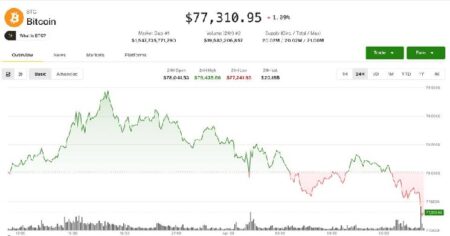
In contrast to Ethereum’s slight decline, Bitcoin demonstrated remarkable resilience and actually posted gains during this period of market turbulence. The world’s first and most valuable cryptocurrency rose by 1.13 percent, a performance that allowed it to cross back above the significant $70,000 threshold. This movement is particularly noteworthy as it represents Bitcoin’s ability to decouple from broader market trends and assert its position as a relative safe haven within the cryptocurrency ecosystem. The strength in Bitcoin suggests that investors may be rotating out of more speculative assets, including meme tokens and smaller altcoins, and seeking the relative stability and established track record that Bitcoin offers. This flight to quality within the crypto space mirrors similar dynamics that occur in traditional financial markets during periods of uncertainty, where investors gravitate toward assets they perceive as less risky or more fundamentally sound.
Sector-by-Sector Analysis Reveals Nuanced Market Dynamics
A deeper examination of specific cryptocurrency sectors reveals a complex tapestry of performance that defies simple categorization. The PayFi category, which encompasses cryptocurrencies focused on payment solutions and financial transactions, experienced a modest decline of 0.82 percent. However, within this category, Telcoin (TEL) managed to swim against the current, posting a positive gain of 1.82 percent. This divergence within sectors demonstrates that individual project fundamentals, specific news developments, or technical factors can override broader category trends, providing opportunities for discerning investors who conduct thorough research on individual tokens rather than simply following sector-wide movements.
The decentralized finance (DeFi) category, which has been one of the most transformative developments in the cryptocurrency space, declined by 0.85 percent overall. Despite this general weakness, Hyperliquid (HYPE) stood out as a notable exception, recording an impressive 3.26 percent increase during the trading day. Similarly, the centralized finance (CeFi) category experienced a 0.94 percent decrease, yet Aster (ASTER) bucked this trend with a robust 8.19 percent gain. These performances highlight how specific projects within broader categories can capture investor interest and capital flows based on their unique value propositions, recent developments, partnerships, or technological advances. For market participants, these patterns underscore the importance of looking beyond broad sector classifications and examining individual projects on their own merits.
The infrastructure layers of blockchain technology also showed mixed results. The Layer 1 index, which includes base blockchain protocols that serve as foundations for other applications, fell by 1.87 percent overall. However, Kaspa (KAS) emerged as a bright spot within this category, rising by 6.03 percent and demonstrating continued investor interest in alternative Layer 1 solutions. Meanwhile, the Layer 2 category, which comprises scaling solutions built on top of existing blockchains like Ethereum, experienced a 1.91 percent decrease. Within this segment, Stacks (STX) faced particular headwinds, losing 3.20 percent of its value. These varied performances across infrastructure categories suggest that investors are making increasingly sophisticated distinctions between different technological approaches and specific project execution, rather than simply investing in broad themes.
Understanding the Broader Implications of Current Market Movements
The current market dynamics reveal several important themes that extend beyond simple price movements. First, there appears to be an ongoing differentiation process occurring within the cryptocurrency market, where investors are becoming more selective and discriminating in their investment choices. The days when all cryptocurrencies moved in lockstep may be giving way to a more mature market where fundamental factors, technological innovation, and practical utility play larger roles in determining individual asset performance. This evolution, while potentially painful for holders of declining assets, represents a healthy maturation of the cryptocurrency ecosystem toward a more sustainable and fundamentally-driven market structure.
Second, Bitcoin’s relative strength amid broader market weakness reinforces its evolving role as a bellwether and potential safe haven within the cryptocurrency space. As the oldest, most liquid, and most widely recognized cryptocurrency, Bitcoin appears to be benefiting from a flight to quality as investors reduce exposure to more speculative assets. This dynamic suggests that Bitcoin may be gradually establishing itself as a distinct asset class within the broader cryptocurrency universe, one that serves different purposes and attracts different investor profiles than newer, more experimental tokens. For the long-term health of the cryptocurrency market, this differentiation between Bitcoin and alternative cryptocurrencies (altcoins) may prove beneficial, as it allows for both conservative and speculative investment strategies to coexist within the same broader ecosystem.
Navigating Volatility: What This Means for Investors and the Market
For cryptocurrency investors, the current market environment presents both challenges and opportunities. The severe decline in meme tokens serves as a powerful reminder of the risks inherent in speculative investments driven primarily by social sentiment rather than fundamental value or technological innovation. While the potential for outsized gains exists in these assets, as demonstrated by $PIPPIN’s impressive surge, the equally real potential for catastrophic losses, as seen with MemeCore’s nearly 30 percent single-day decline, demands careful risk management and position sizing. Investors drawn to the excitement and community aspects of meme tokens should approach these investments with capital they can afford to lose and with a clear-eyed understanding of the speculative nature of these assets.
At the same time, the resilience shown by Bitcoin and select altcoins suggests that opportunities exist for those who conduct thorough research and invest based on fundamental factors rather than hype or fear of missing out. The fact that certain tokens within declining sectors managed to post gains indicates that individual project quality, development progress, and specific catalysts continue to matter, even in challenging market conditions. For serious cryptocurrency investors, this environment rewards careful analysis, diversification across quality projects, and the discipline to avoid chasing short-term trends. While the disclaimer that this information does not constitute investment advice is important and should be heeded, the general principle that education, research, and risk management are essential tools for navigating cryptocurrency markets remains universally applicable and particularly relevant in the current volatile environment.