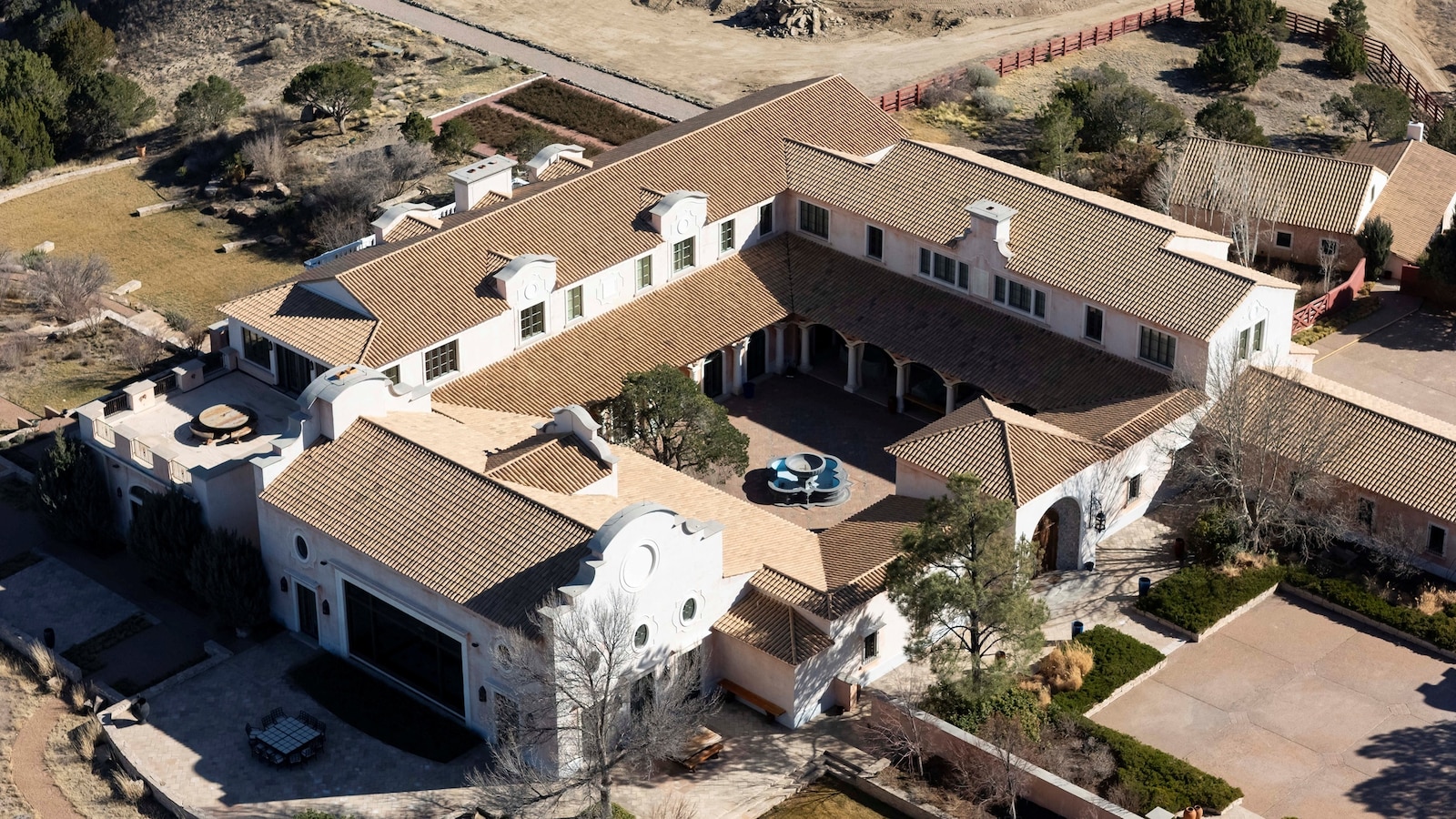

The Renewed Search of Jeffrey Epstein’s New Mexico Ranch: What We Know
A Delayed Investigation Finally Begins
Nearly a decade after questions first arose about Jeffrey Epstein’s activities, authorities in New Mexico have begun searching a sprawling ranch that once belonged to the late convicted sex offender. The property, formerly known as “Zorro Ranch,” is now under fresh scrutiny as state investigators seek answers about what may have occurred there during Epstein’s ownership. The search has reignited discussions about why federal authorities never thoroughly investigated the property when Epstein was first arrested on sex trafficking charges in July 2019, and why the site remained unexamined even after his death by suicide in a Manhattan jail cell just one month later. While the New Mexico Department of Justice has been tight-lipped about specific details of their current investigation, the renewed interest in this property has raised serious questions about potential oversights in the original federal investigation and whether crucial evidence may have been overlooked or ignored.
The timing of this search is particularly significant given that it comes years after Epstein’s death and the conclusion of federal proceedings against him. When Epstein was initially arrested, investigators examined many of his luxurious properties across the country, yet according to emails released by the U.S. Department of Justice earlier this year, the New Mexico ranch was apparently never searched. Even more troubling is the revelation that New Mexico had initiated its own investigation into the property in 2019, but this probe was put on hold at the request of federal authorities. This decision to pause the state investigation has left many wondering whether important evidence was lost or degraded during the intervening years, and whether victims of Epstein’s alleged crimes were denied justice by these delays.
The Federal Investigation That Never Happened
The fact that federal investigators never searched Zorro Ranch during their investigation of Epstein represents a puzzling gap in what was otherwise a wide-ranging probe into his alleged criminal activities. When Epstein was arrested in July 2019, authorities were focused on uncovering evidence related to sex trafficking charges that dated back years. The investigation touched multiple properties owned by Epstein, yet somehow the New Mexico ranch—a property spanning thousands of acres—escaped thorough examination. This oversight becomes even more perplexing when considering that Epstein’s death in August 2019 should have prompted investigators to broaden their scope and ensure that all potential sites connected to his activities were properly searched for evidence.
According to New Mexico Attorney General Raúl Torrez, the state had been ready to conduct its own investigation of the property in 2019, demonstrating that there was local concern about what might be found there. However, federal authorities requested that New Mexico pause its investigation, presumably to avoid interfering with the federal case. With Epstein’s subsequent death and the closure of the federal criminal case against him, it appears that the momentum to search the ranch was lost. This coordination failure between federal and state authorities has resulted in years of delay, during which the property changed hands and any potential evidence may have been compromised or disappeared entirely.
Disturbing Allegations and the Decision to Reopen
The catalyst for reopening the investigation appears to be information contained in previously sealed FBI files that were released earlier this year. While Attorney General Torrez has not specified exactly what “revelations” prompted the renewed investigation, the timing coincides with disturbing allegations that surfaced in those documents. Among the most serious claims is an unsubstantiated allegation that two bodies may be buried on the ranch property. This allegation came to light through documents showing that a local radio host received an anonymous email in November 2019 from someone claiming to have worked at the ranch. The email alleged that two “foreign girls” had been strangled and buried in the hills surrounding the property.
According to the FBI reports, the radio host was initially contacted by this anonymous individual who demanded one bitcoin in exchange for revealing the location of the bodies and providing seven videos allegedly showing sexual abuse. Rather than engaging with the extortion attempt, the radio host promptly contacted the FBI and shared the information. While FBI reports show that agents memorialized this tip and spoke with the radio host, there is no evidence that the claim was thoroughly investigated. The FBI report notes that the email account used to send the original tip was deactivated, which apparently contributed to the decision not to pursue the lead further. The released documents contain no evidence corroborating the claims beyond the initial email, leaving the question of whether these allegations have any basis in fact completely unanswered.
The New Mexico Commissioner of Public Lands, Stephanie Garcia Richard, wrote to both the U.S. Department of Justice and the New Mexico Department of Justice approximately one week before the state investigation was reopened, requesting that these “disturbing allegations” be thoroughly investigated. Her letter, obtained by media outlets, emphasized the serious nature of the claims and the need for a comprehensive examination of the property. This official request, combined with the release of the FBI files and growing public pressure for answers about Epstein’s activities, appears to have created the momentum necessary for New Mexico authorities to resume their investigation despite the years that have passed.
New Ownership and Current Cooperation
The ranch itself has undergone significant changes since Epstein’s ownership. In 2023, the property was purchased by Don Huffines, a Texas businessman and Republican politician who is currently the party’s nominee for Texas state comptroller—a position he is seeking with the endorsement of President Donald Trump. Huffines has been open about his awareness of the property’s troubling history when he purchased it, stating on social media that he understood the proceeds from the sale were intended to go to Epstein’s victims. He has renamed the property “San Rafael” and has stated his intention to transform it into a Christian retreat, describing his goal as “reclaiming it for Jesus” and attempting to remake the property’s legacy.
The New Mexico Department of Justice has publicly acknowledged and expressed appreciation for the cooperation of the current property owners in granting access for the search, and has also thanked the ranch staff for their professionalism during the investigation. This statement suggests that the search is being conducted with the consent of Huffines and his representatives, though it remains unclear whether authorities also obtained a search warrant for the property. The willingness of the current owners to cooperate stands in contrast to the years of inaction that preceded this search, and may reflect both Huffines’s stated desire to distance the property from its past and recognition of the seriousness of the allegations being investigated.
The Path Forward and Quest for Truth
The investigation is proceeding against a backdrop of broader efforts in New Mexico to understand how Epstein was able to avoid legal consequences for his activities for so many years. Last month, the New Mexico House of Representatives voted unanimously to establish an Epstein “Truth Commission” with a substantial $2 million budget and subpoena power to investigate Epstein’s activities within the state. This commission represents a commitment to uncovering the full scope of what occurred and identifying any systemic failures that allowed Epstein to operate with apparent impunity. The combination of the Truth Commission and the renewed criminal investigation demonstrates that New Mexico authorities are attempting to provide answers that federal investigators failed to deliver.
Attorney General Torrez has been forthright about the challenges facing the investigation, acknowledging in a recent column that “Epstein has been dead for years. Zorro Ranch has changed ownership. Physical evidence may no longer exist, and the statute of limitations has likely run on many potential offenses.” These are significant obstacles that could prevent criminal charges from being filed even if evidence of wrongdoing is discovered. However, Torrez has promised that investigators will “follow the evidence wherever it leads and leave no credible question unexplored,” and has committed to issuing a public report about the findings regardless of whether criminal prosecutions are possible. This commitment to transparency is important for Epstein’s victims and for the public, who deserve to understand what happened at this property and why it took so long for it to be properly investigated. While the search may not lead to criminal accountability given the passage of time and Epstein’s death, it represents an important step toward establishing a historical record and potentially providing some measure of closure to those affected by Epstein’s crimes.