



Tragic Shark Attack Claims Young Life at Brazilian Beach
A Devastating Loss in Paradise
In a heartbreaking incident that has shaken Brazil’s coastal community, a 13-year-old boy lost his life on Thursday after being attacked by a shark while swimming at Chifre beach, one of the popular tourist destinations along Pernambuco’s picturesque eastern coastline. The State Committee for Monitoring Shark Incidents (CEMIT) confirmed the tragedy in an official statement, marking another somber chapter in the region’s ongoing struggle with shark attacks. The young victim, identified by Brazilian news outlet G1 as Deivson Rocha Dantas, was enjoying what should have been an ordinary day at the beach when the unthinkable happened. According to witnesses and family members, the attack was swift and severe, leaving fellow beachgoers scrambling to help pull the injured boy from the water. Despite the quick response from both bystanders and medical professionals, the severity of his injuries proved insurmountable, and the young life was tragically cut short.
The Attack and Desperate Rescue Efforts
The details of the attack paint a harrowing picture of the terrifying moments that unfolded in the waters off Chifre beach. According to the boy’s cousin, Lídia Emanuele, who spoke with TV Globo, the shark inflicted catastrophic injuries, essentially consuming nearly the entire right leg of the young victim. The violent nature of the attack left witnesses stunned and horrified as they watched the nightmare scenario play out before their eyes. In a remarkable display of courage, other beachgoers—many of them around the same age as the victim—rushed into the water to pull the severely injured boy to safety. Their quick thinking and bravery in the face of such a terrifying situation potentially prevented an even worse outcome, though tragically, it would not be enough to save young Deivson’s life.
Once on shore, emergency responders immediately began working to stabilize the boy and rushed him to the nearest hospital. Dr. Levy Dalton, the attending physician who treated the victim, later spoke to reporters about the desperate attempts to save the teenager’s life. According to UOL Notícias Brasil, Dr. Dalton explained that the boy had suffered a bite to his right thigh that resulted in catastrophic blood loss, leading to a cardiorespiratory arrest. “Unfortunately, we were unable to resuscitate him,” Dr. Dalton told reporters with evident emotion, adding, “unfortunately we couldn’t do much for him.” The statement reflected the medical team’s helplessness in the face of such severe trauma, despite their best efforts to save the young life that had been so violently interrupted.
A Region Haunted by Shark Encounters
The tragic death of Deivson Rocha Dantas is far from an isolated incident in the Pernambuco region, which has earned an unfortunate reputation as one of Brazil’s shark attack hotspots. According to CEMIT’s records, more than 80 shark attacks have been documented along the Pernambuco coastline since 1992, with 26 of these encounters proving fatal—a number that now rises to 27 with Thursday’s tragedy. These statistics paint a sobering picture of the ongoing challenge faced by this tourist destination, where the beauty of turquoise waters and pristine beaches stands in stark contrast to the very real dangers that lurk beneath the surface. The frequency of these attacks has prompted authorities to implement various safety measures over the years, though as this latest incident demonstrates, the threat remains ever-present.
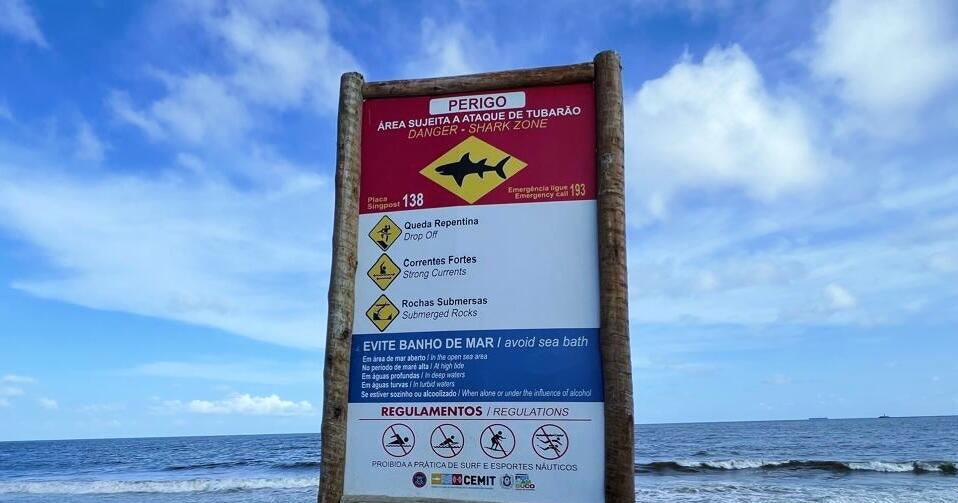
In response to the persistent danger, dozens of beaches along Pernambuco’s stunning coastline have been issued shark warnings, with authorities posting cautionary signs to alert swimmers and surfers to the potential risks. Chifre beach, where Deivson lost his life, had no fewer than four such warning signs posted for beachgoers, according to CEMIT officials. However, the presence of these warnings raises difficult questions about beach safety, public awareness, and the challenges of balancing tourism with public safety. Despite these precautions, people continue to enter the water, whether due to unfamiliarity with the risks, underestimation of the danger, or simply the human tendency to believe that tragedy won’t strike them personally. The result is a heartbreaking pattern of preventable deaths that continues to claim young lives.
Enhanced Monitoring and Prevention Efforts
In the wake of this latest tragedy, CEMIT has announced plans to significantly strengthen its shark monitoring and prevention programs along the Pernambuco coast. The organization stated that it would be beefing up surveillance efforts and, perhaps most significantly, bringing back a previously suspended program designed to track sharks using microchip technology. This tracking system, when operational, allows researchers and safety officials to monitor shark movements and patterns, potentially providing real-time data that could be used to warn swimmers when sharks are detected in popular swimming areas. The decision to resurrect this program suggests that authorities are taking the latest attack seriously and are willing to invest resources in preventing future tragedies, though some might argue that such measures should have remained in place continuously given the region’s history of attacks.
The microchipping program represents one of several technological approaches being employed worldwide to mitigate human-shark encounters. By tagging sharks with electronic devices, scientists can gather valuable data about their migration patterns, feeding behaviors, and preferred habitats. This information can then be used to identify high-risk areas and times, allowing for more targeted warning systems and beach closures when necessary. However, critics of such programs often point out that they can only track the specific sharks that have been tagged, leaving countless untagged individuals swimming freely without detection. Additionally, the effectiveness of such programs depends heavily on consistent funding, maintenance, and public compliance with warnings—challenges that many coastal regions struggle to address adequately.
A Global Pattern of Shark Attacks
The tragedy in Brazil is part of a concerning recent pattern of fatal shark attacks occurring around the world, reminding us that these incidents are not confined to any single region or coastline. Just last week, another young victim—a 12-year-old boy who was bitten by a shark in Australia’s Sydney Harbor—succumbed to his injuries, according to statements from his family. Earlier this month, a 56-year-old woman from Minnesota died following a shark attack in the U.S. Virgin Islands. These incidents, occurring in quick succession across different continents and involving victims of varying ages, have captured international attention and sparked renewed discussions about beach safety, shark conservation, and the complex relationship between humans and these apex predators. While shark attacks remain statistically rare compared to other causes of injury or death in coastal areas, their dramatic and often fatal nature makes them particularly frightening to the public imagination.
Understanding the context of these attacks requires acknowledging both the rarity and the reality of shark encounters. Marine biologists frequently emphasize that sharks do not typically target humans as prey, and most attacks are cases of mistaken identity or defensive behavior. However, when attacks do occur, they can be devastating due to the power and predatory capabilities of these animals. Factors contributing to shark attacks can include water temperature, time of day, proximity to fishing areas, swimming in groups, and the presence of bait fish. Climate change and shifting ocean conditions may also be altering traditional shark migration patterns, potentially bringing these creatures into closer contact with human recreation areas. As coastal populations grow and beach tourism expands worldwide, the potential for human-shark interactions inevitably increases, making comprehensive safety measures and public education more critical than ever.
The loss of 13-year-old Deivson Rocha Dantas serves as a tragic reminder of nature’s power and the inherent risks that come with ocean recreation. For his family, friends, and community, the grief is immeasurable—a young life full of potential cut short in the most horrific circumstances imaginable. As authorities in Pernambuco work to enhance their monitoring and prevention programs, and as communities worldwide grapple with similar challenges, the hope is that lessons learned from these tragedies can help prevent future losses. Yet the fundamental tension remains: how to allow people to enjoy the beauty and recreation of coastal waters while adequately protecting them from dangers that, while rare, can strike with devastating consequences. For now, a family mourns, a community grieves, and the turquoise waters of Pernambuco serve as both a stunning natural attraction and a sobering reminder of the ocean’s unpredictable dangers.