


The Fall of “The King of the South”: How a Soccer-Obsessed Drug Lord’s Empire Finally Crumbled
A Years-Long Chase Comes to an End
After years of living in the shadows and playing a deadly game of cat-and-mouse with international law enforcement, Sebastian Marset’s luck finally ran out on a Friday afternoon in Bolivia. The 34-year-old Uruguayan, who had earned a reputation as one of South America’s most elusive and dangerous drug traffickers, was arrested in an upscale neighborhood of Santa Cruz, Bolivia’s bustling economic capital. The operation was massive in scope, mobilizing hundreds of police officers who descended on the area in a coordinated effort that had been months in the planning. Within hours of his capture, Marset found himself on a U.S. airplane, handed over to agents from the Drug Enforcement Administration at the Santa Cruz airport. The swift deportation, carried out under a court order from the U.S. justice system, marked the end of a manhunt that had spanned multiple countries and involved cooperation among numerous international law enforcement agencies. For the authorities who had been tracking him, this arrest represented a major victory in the ongoing battle against the powerful drug cartels that have plagued Latin America for decades.
The Man Behind the Empire
Sebastian Marset wasn’t your typical drug lord. While he commanded a criminal enterprise responsible for moving ton quantities of cocaine from South America to Europe and generating tens of millions in cash, he harbored an unusual obsession that would become his trademark: soccer. The soccer-loving kingpin didn’t just watch the beautiful game from the sidelines—he actively participated in it, using his ill-gotten gains to purchase and sponsor lower-level professional soccer teams across Latin America and Europe. In a bizarre twist that speaks to both his ego and his passion for the sport, Marset would actually put himself in the starting lineups of these teams. According to reports, he paid as much as $10,000 in cash for the privilege of wearing the number 10 jersey, the same iconic number worn by football legends Pelé, Diego Maradona, and Lionel Messi. This wasn’t just about vanity—it was about living out a fantasy while simultaneously laundering the enormous proceeds from his drug trafficking operations. His criminal career had deep roots, dating back to his imprisonment in Uruguay for drug trafficking between 2013 and 2018. After his release, he didn’t go straight; instead, he expanded his operations and moved around South America, establishing bases in Bolivia and Paraguay while building what U.S. authorities describe as a large-scale drug trafficking organization.
The Criminal Network and Its Methods
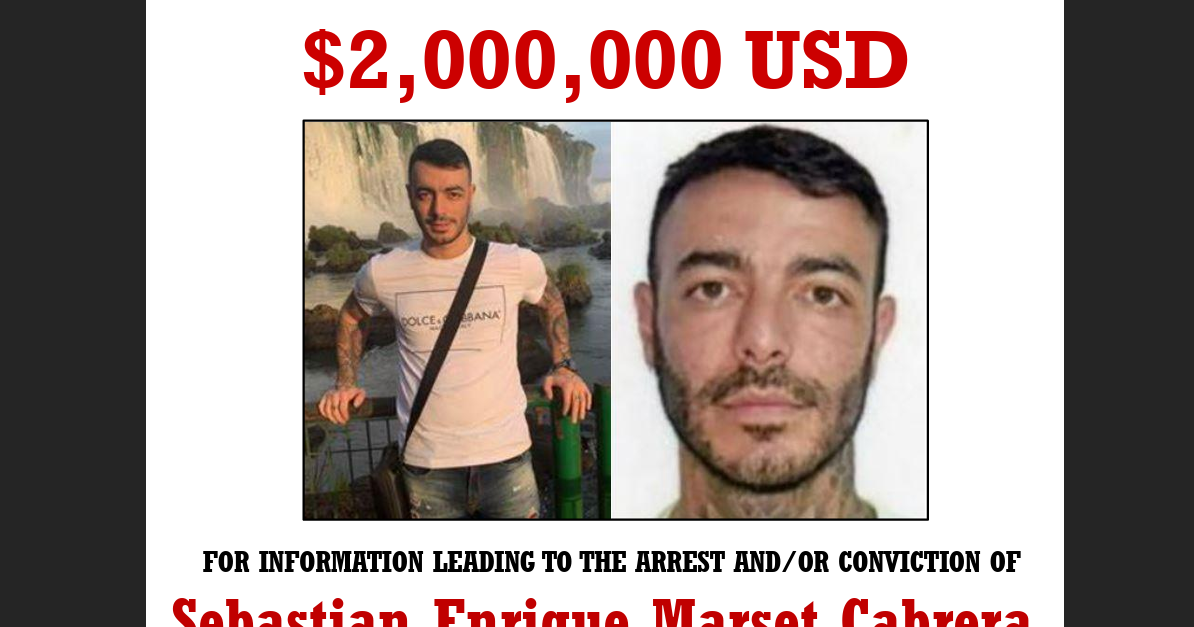
The scope of Marset’s criminal enterprise was staggering. According to the indictment unsealed in the Eastern District of Virginia, he led an organization believed to be responsible for importing more than 16 tons of cocaine into Europe. His methods were both sophisticated and ruthlessly efficient. Marset stamped his drug shipments with the grandiose nickname “The King of the South,” a moniker that reflected his dominance in the southern region of South America’s drug trade. His organization employed creative concealment techniques, hiding cocaine in shipments of seemingly innocent products like cookies and soybeans, making it harder for customs officials to detect the illegal cargo. The Paraguayan investigation into his activities revealed the darker side of his operations—text messages in which he allegedly sought advice on how to dispose of the bodies of murdered enemies. This chilling detail underscored the violent reality behind the glamorous facade of soccer sponsorships and luxury living. The United States had placed a $2 million bounty on his head for alleged money laundering, recognizing him as a priority target in the fight against international drug trafficking. Both Bolivia and Paraguay had issued warrants for his arrest, and he had been on the U.S. most-wanted fugitives list, making him one of the most sought-after criminals in the hemisphere.
Life on the Run and Near Misses
Marset’s ability to evade capture for so long demonstrated both his resourcefulness and the challenges law enforcement faces in pursuing international criminals who can move freely across porous borders. He had been living openly in Santa Cruz until July 2023, when he managed to flee his home on the eve of a massive police operation designed to capture him. For nearly two years after that narrow escape, he remained at large, presumably moving between safe houses and relying on a network of allies and corrupt officials to stay one step ahead of the authorities. His life on the run likely involved constant movement, false identities, and the ever-present paranoia that comes with being hunted by law enforcement agencies from multiple countries. The fact that he was eventually found back in Santa Cruz, in an upscale neighborhood no less, suggests either a remarkable confidence in his ability to hide in plain sight or perhaps a belief that he had sufficient protection to remain undetected. The United States had issued a reward for his capture last year, describing the case as “the largest and most consequential organized crime investigation against cocaine trafficking in Paraguayan history.” The final operation that led to his arrest involved not just Bolivian authorities but also international cooperation from neighboring countries and continental organizations, highlighting how his capture required a coordinated, multi-national effort.
A Shifting Political Landscape
The timing of Marset’s arrest is significant and reflects broader changes in Bolivia’s political landscape and its relationship with the United States. Bolivia’s center-right President Rodrigo Paz, who won office last year, has been actively working to strengthen ties with the United States, marking a dramatic shift from the previous two decades of socialist rule under Indigenous coca farmer Evo Morales. Paz publicly thanked “international organizations from various neighboring countries and the continent” for their cooperation in Marset’s capture, signaling his administration’s commitment to collaborating with international partners in fighting drug trafficking. The arrest came just days after Bolivia, along with 16 other countries, joined an anti-cartel military alliance launched by President Trump, demonstrating a renewed commitment to combating the powerful drug organizations that operate throughout the region. This political shift has created an environment more conducive to aggressive law enforcement operations against drug traffickers. Bolivia, as the world’s third-largest producer of cocaine (made from coca leaves), faces enormous challenges in combating the drug trade, which is deeply embedded in parts of its economy and culture. The willingness to extradite Marset so quickly to U.S. authorities represents a significant statement about the Paz administration’s priorities and its desire to demonstrate that Bolivia will no longer serve as a safe haven for international criminals.
The Broader War on Cartels
Marset’s arrest is part of a larger pattern of recent successes against major Latin American drug lords. He became the second notorious narco boss to be killed or captured in under a month, following the death of Nemesio Rubén Oseguera Cervantes, known as “El Mencho,” who was killed during a military operation in the western Mexican state of Jalisco. El Mencho, who had a $15 million U.S. bounty on his head, died in a shootout with military forces, marking another significant blow to the cartel networks that have terrorized communities throughout Latin America. U.S. intelligence played a crucial role in Marset’s capture, as it has in numerous other high-profile arrests and killings of cartel leaders. Four other individuals were arrested during the raids that netted Marset, suggesting that authorities may have dismantled at least part of his support network in Bolivia. These back-to-back successes represent important victories in the ongoing struggle against organized crime, but they also raise questions about what comes next. History has shown that removing a cartel leader doesn’t necessarily eliminate the organization—often, it simply creates a power vacuum that leads to violent succession battles or the splintering of the organization into smaller, sometimes even more violent groups. Nevertheless, these arrests send a powerful message that even the most wanted and well-protected criminals are not beyond the reach of law enforcement when international cooperation is robust and political will exists to pursue them aggressively. For the communities terrorized by drug violence and the families destroyed by addiction to the products these organizations traffic, each arrest represents a small measure of justice and hope that the tide may finally be turning in the long war against the cartels.