



Ukrainian President Zelenskyy Meets with UK Leadership Amid Shifting Global Focus
A Critical Diplomatic Mission to London
Ukrainian President Volodymyr Zelenskyy touched down in London this Tuesday for high-stakes discussions with British Prime Minister Keir Starmer, marking another crucial chapter in Ukraine’s ongoing struggle to maintain international support for its defense against Russian aggression. The timing of this visit carries particular significance as global attention has increasingly shifted toward the escalating conflict in the Middle East involving Iran, threatening to overshadow the grinding war that has devastated Ukraine for over three years now. The meeting at the iconic 10 Downing Street will also include NATO Secretary-General Mark Rutte, underscoring the multilateral nature of efforts to support Ukraine while keeping pressure on Russia through continued sanctions. For European leaders, this gathering represents more than just another diplomatic meeting—it’s a strategic effort to ensure that the world doesn’t forget about Ukraine’s plight even as other crises compete for headlines and resources. The discussions are expected to focus on pathways toward peace in Ukraine and, perhaps most importantly, maintaining the economic sanctions that have squeezed Russia’s ability to fund its military operations. As international attention becomes increasingly fragmented across multiple global hotspots, Ukraine finds itself fighting not just on the battlefield but also in the arena of international diplomacy to secure the ongoing support that has proven essential to its survival.
The Sanctions Dilemma and Washington’s Controversial Decision
The London meeting takes place against the backdrop of a controversial American policy shift that has sent ripples of concern through Kyiv. Just days before Zelenskyy’s arrival in Britain, the United States temporarily waived certain Russian oil sanctions in what Washington described as a necessary move to ease pressure on global oil supplies. This decision came in response to market disruptions triggered by the widening Middle East conflict, which erupted following joint U.S.-Israeli military strikes on Iran that began on February 28th. For Ukraine, this American pivot represents a deeply troubling development. Zelenskyy didn’t mince words in his criticism of Washington’s decision, arguing that easing sanctions would provide Moscow with an unexpected financial windfall that would directly fund continued attacks on Ukrainian cities and infrastructure. The Ukrainian president’s frustration is understandable—after years of building an international sanctions regime designed to starve Russia’s war machine of resources, any loosening of these restrictions feels like a betrayal to a nation still under daily bombardment. Meanwhile, President Donald Trump continues to advocate for a peace deal that would end what he’s called Europe’s largest conflict since World War II, though his approach has left many European leaders deeply unsettled about what such a deal might entail for Ukraine’s territorial integrity and future security.
The Iran War’s Impact on Ukraine’s Defense Capabilities
Perhaps the most immediate and tangible threat to Ukraine from the Middle East conflict isn’t diplomatic—it’s material. Defense experts like Ed Arnold from the Royal United Services Institute in London have identified Ukraine as potentially the “ultimate loser” from the Iran war, and the reasoning is grimly practical. The ongoing conflict is rapidly depleting American stockpiles of advanced air defense missiles, the very same systems that Ukraine desperately needs to protect its cities from Russian missile barrages. Every interceptor missile fired in the Middle East is one less available for Ukrainian air defenses, and the American defense industry cannot manufacture replacements fast enough to meet demand on two fronts simultaneously. Beyond the hardware shortage, the Middle East crisis has diverted Washington’s attention and diplomatic energy away from the painstaking U.S.-brokered negotiations between Russian and Ukrainian delegations. These talks, which had already produced little substantive progress on key issues before the Iran conflict erupted, have now lost virtually all momentum. For Ukraine, this represents a double blow: fewer defensive weapons arriving even as diplomatic efforts to end the war grind to a halt, leaving the country in an increasingly precarious position as it faces continued Russian attacks with potentially diminishing international support and dwindling defensive capabilities.
Ukraine’s Strategic Pivot and Drone Technology Diplomacy
Recognizing these emerging challenges, Ukraine has begun a strategic diplomatic pivot, with Zelenskyy and his teams recently visiting Gulf countries to discuss mutual security interests and potential partnerships. This outreach reflects a sophisticated understanding of the new geopolitical landscape and Ukraine’s unique position within it. After more than three years of intensive warfare featuring extensive drone combat, Ukraine has developed some of the world’s most advanced and battle-tested drone and counter-drone technologies. François Heisbourg, a special adviser at the Foundation for Strategic Research in Paris, has identified this as a potential game-changer for Ukrainian diplomacy. The country is now positioned to offer Gulf states—many of which face their own drone threats from Iranian-backed forces—access to cutting-edge air defense systems in exchange for Ukrainian anti-drone expertise and technology that has proven effective in actual combat conditions. This represents a potentially significant shift in Ukraine’s international position, transforming it from purely a recipient of military aid to a valued security partner with unique expertise to offer. Interestingly, President Trump has so far rejected Zelenskyy’s offers to help the United States and its Persian Gulf allies defend against Iranian drones, despite Ukraine’s emergence as one of the world’s leading producers of sophisticated, combat-proven drone interceptors—a decision that has puzzled many defense analysts who see obvious synergies between American interests in the Middle East and Ukrainian technological capabilities.
The UK-Ukraine Defense Partnership and Innovation Agreement
The centerpiece of Zelenskyy’s London visit is a comprehensive new defense partnership agreement with the United Kingdom that signals Britain’s continued commitment to Ukrainian security despite the shifting global focus. According to Starmer’s office, the deal will combine Ukraine’s hard-won battlefield expertise with Britain’s substantial industrial manufacturing base to produce and supply drones and other innovative military capabilities. This partnership represents more than just another arms deal—it’s a recognition that modern warfare has fundamentally changed, with drones, electronic warfare, and rapid battlefield innovation now sitting at the center of both national security and economic competitiveness. Prime Minister Starmer emphasized this point explicitly, noting that the ongoing conflict in the Middle East has only magnified the importance of these technologies. Britain is also funding an “AI Center of Excellence” in collaboration with the Ukrainian Ministry of Defense, an investment that could yield benefits for both nations well beyond the current conflict. British officials have noted that Russia and Iran are actively collaborating on drone technology and tactics in the Middle East, making the UK-Ukraine partnership all the more strategically valuable. In a remarkable development, drone combat experts from both Britain and Ukraine have been deployed to the Middle East region to help Iran’s neighbors develop defenses against drone attacks, turning Ukraine’s tragic experience into exportable expertise that serves broader Western security interests while potentially opening new diplomatic and economic opportunities for Kyiv.
The Ongoing Battle on Multiple Fronts
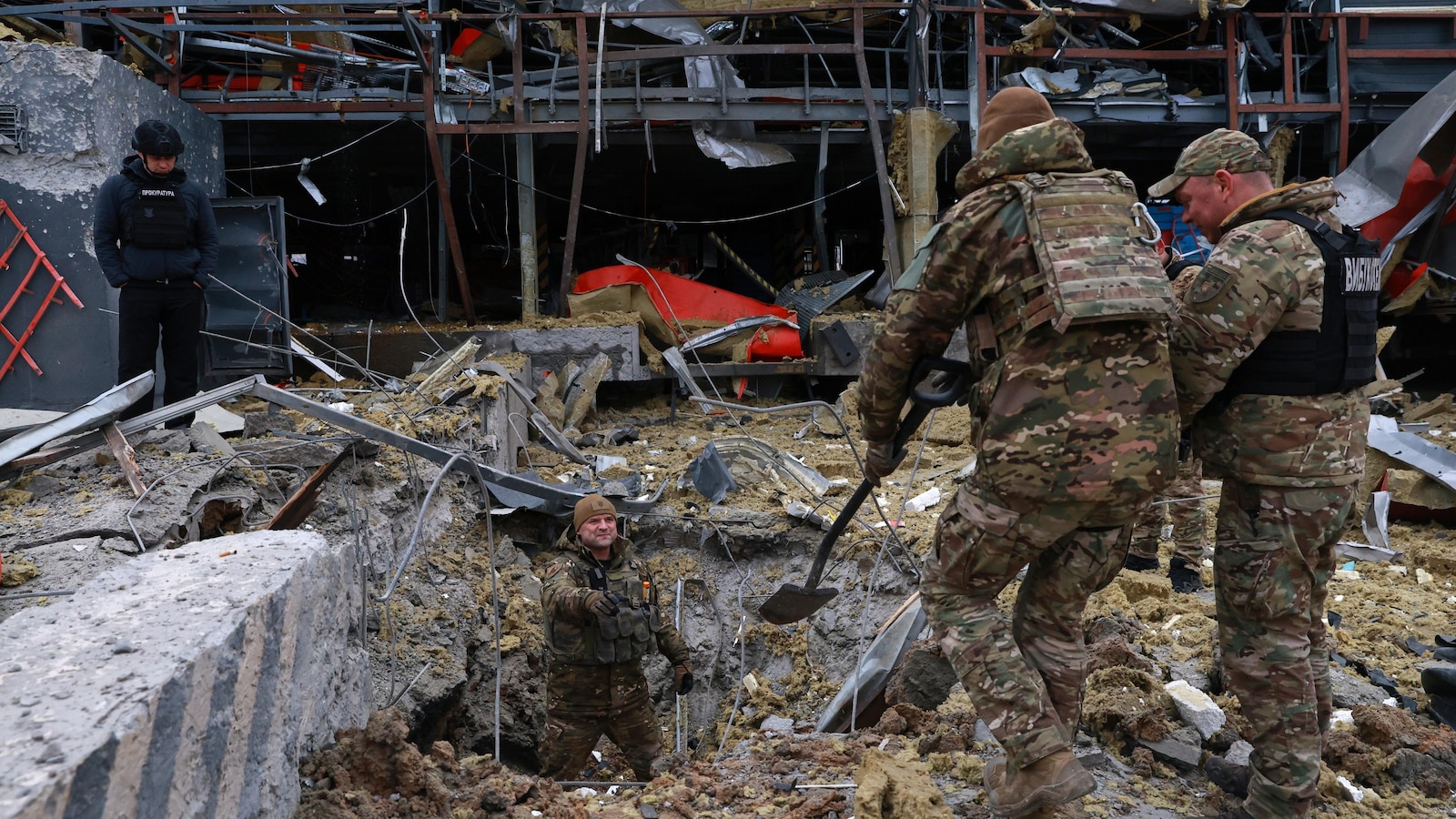
Even as Zelenskyy engaged in diplomacy in London, the war back home continued with undiminished intensity, illustrating why these international partnerships remain literally a matter of survival for Ukraine. Russia’s Defense Ministry reported on Tuesday that its air defenses intercepted and destroyed 206 Ukrainian drones overnight across Russian regions, the annexed Crimean Peninsula, and over the Azov Sea, with 40 drones specifically targeting Moscow. When asked about the increased Ukrainian drone attacks on the Russian capital, Kremlin spokesman Dmitry Peskov dismissed them as “absolutely futile resistance,” though the very fact that Ukrainian forces can now regularly strike targets in Moscow suggests otherwise. Zelenskyy countered with his own assessment late Monday, claiming that Ukrainian counterattacks at eastern and southern points along the front line have disrupted Moscow’s plans for a major March offensive. While his comments couldn’t be independently verified, the Institute for the Study of War, a respected Washington-based think tank, corroborated that Ukrainian counterattacks appear to be “constraining” some Russian offensive operations. The violent exchange continued with Ukraine’s air force reporting that Russia launched 178 long-range drones of various types across the country overnight, with Ukrainian defenses managing to intercept or jam 154 of them, though 22 still reached their targets. In the southern city of Zaporizhzhia, a Russian strike damaged a major delivery company terminal, wounding eight people—a grim reminder of the daily reality facing Ukrainian civilians. As Zelenskyy stated upon announcing his arrival in London, his priorities remain clear: “more security and opportunities for Ukraine,” goals that require both the advanced defense systems being negotiated in meetings like this one and the sustained international attention that becomes harder to maintain with each passing month and each new global crisis.