
A Toddler’s Triumph: How Love, Medicine, and Family Saved a Two-Year-Old’s Life
A Parent’s Worst Nightmare Becomes Reality
For Nicole and Chad Dearth, what started as a seemingly routine case of the flu quickly spiraled into every parent’s deepest fear. Their youngest child, Crew, was just eleven months old when he came down with what appeared to be a typical childhood illness. But as the days passed, something felt wrong—his symptoms weren’t improving the way they should have been. Concerned and seeking answers, Nicole brought Crew in for further medical examination, including imaging tests that would forever change their family’s trajectory. The results were devastating: doctors discovered an enlarged liver with a cancerous mass growing in his tiny abdominal area. “I was shocked, overwhelmed—just deep sadness. I just couldn’t believe it,” Nicole recalled, her voice still carrying the weight of that moment. “Me and my husband Chad, we just could not believe that this is what we were facing with our 11-month-old at the time.” In March 2025, little Crew was officially diagnosed with a rare and aggressive form of liver cancer called hepatoblastoma—specifically, a high-grade Stage 4 version that had already metastasized to his right lung. For a family with four children, this news turned their world completely upside down, launching them into a medical journey none of them could have imagined.
Understanding the Rare Enemy: Hepatoblastoma
Hepatoblastoma is an uncommon type of cancer that develops in the tissues of the liver, and according to the National Cancer Institute, it represents the most common form of liver cancer found in children. This disease typically targets the youngest and most vulnerable patients, usually affecting children under the age of three. The symptoms can be subtle at first, which makes early detection particularly challenging for parents and physicians alike. Warning signs may include a noticeable lump in the abdomen, swelling in the abdominal region, pain or discomfort in the stomach area, unexplained weight loss despite normal eating habits, loss of appetite, and frequent nausea and vomiting. In Crew’s case, these signs were initially masked by what appeared to be flu symptoms, demonstrating just how deceptive this disease can be. The rarity of hepatoblastoma means that many families have never heard of it before their child is diagnosed, adding to the shock and confusion of an already traumatic situation. For the Dearth family, learning about this disease, understanding the treatment options, and navigating the complex medical landscape became an immediate and urgent priority as they fought to save their baby’s life.
The Long Battle: Chemotherapy and the Search for Solutions
Once diagnosed, Crew’s treatment began immediately with multiple rounds of what his mother described as “aggressive” chemotherapy. For a child not even a year old, these treatments were incredibly harsh on his tiny body, yet necessary to combat the rapidly spreading cancer. The chemotherapy protocols for pediatric hepatoblastoma are intensive and designed to shrink the tumor, prevent further spread, and ideally prepare the patient for curative surgery. Throughout these grueling months of treatment, Crew demonstrated remarkable resilience, though his parents watched helplessly as their baby endured side effects and complications that no child should have to face. As Crew underwent treatment at Cleveland Clinic Children’s, his medical team began discussing the possibility that he might need a liver transplant—a major surgical intervention that would require finding a suitable donor. This added another layer of complexity and concern to an already overwhelming situation. The family learned that without a transplant, Crew’s chances of long-term survival would be significantly diminished. The question then became: where would they find a liver donor compatible with their toddler? The traditional route would involve being placed on the national transplant waiting list, where patients can wait days, months, or even years for a suitable organ to become available—time that a critically ill child like Crew might not have.
An Aunt’s Extraordinary Gift of Love
When the Dearth family learned that Crew would likely need a liver transplant, his aunt Taylor Dearth—Nicole’s sister-in-law and a mother of three herself—felt something stirring inside her heart. “I just felt like it would be meant to be if I was the one that would be able to do it for him,” Taylor explained when recounting her decision to get tested as a potential living donor. The concept of living liver donation is both remarkable and complex: a healthy person can donate a portion of their liver to someone in need, and both the donor’s remaining liver and the recipient’s transplanted portion will regenerate to near-normal size over time. It’s a procedure that literally saves lives but requires the donor to undergo major surgery with its own risks and recovery period. For Taylor, the decision wasn’t made lightly—she had her own three children to consider and the responsibilities that come with being a mother. Yet her love for Crew and her desire to help her family overrode any hesitation. After undergoing extensive testing to determine compatibility, Taylor received news that felt like divine intervention: she was a “perfect” match for Crew. This meant that the family could move forward with a living donor transplant rather than waiting on the transplant list, potentially saving precious time in Crew’s fight against cancer.
Surgery, Recovery, and Ringing the Bravery Bell
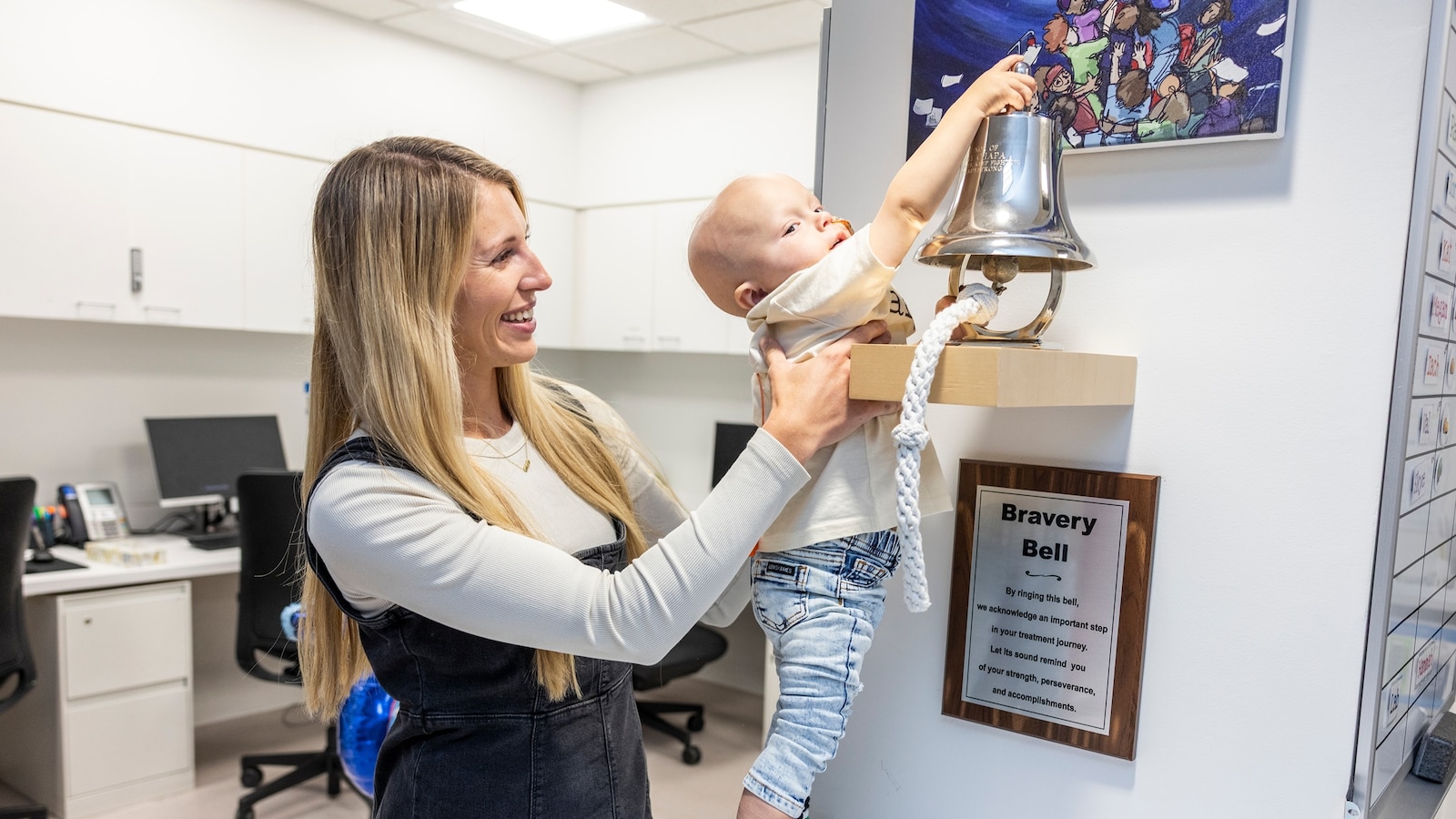
At the end of June 2025, both Crew and his Aunt Taylor underwent their respective surgeries at Cleveland Clinic Children’s. For Taylor, a portion of her healthy liver was carefully removed by skilled surgeons. Simultaneously, in another operating room, Crew’s diseased liver was removed and replaced with the healthy tissue from his aunt. The procedures were complex and carried significant risks, particularly for tiny Crew, whose surgery was far more extensive and invasive than Taylor’s. “The first thing that I just wanted to know [after surgery] was if Crew was OK, because I know his surgery was way more intense than mine. So to hear that he was doing well just meant everything,” Taylor recalled, capturing the selfless nature of her sacrifice. The recovery period was long and challenging, requiring careful monitoring and continued medical intervention. But slowly, steadily, Crew began to heal. His new liver began functioning properly, his body started to recover from the trauma of both cancer and surgery, and the aggressive treatments finally began showing the results everyone had prayed for. Nine months after the transplant surgery—over a year after his initial diagnosis—Crew reached a milestone that seemed impossible just months before: he no longer needed any treatment. In October 2025, Crew and his family gathered at Cleveland Clinic Children’s for an emotional ceremony captured on video and shared with Storyful. Together, they rang the “bravery bell”—a tradition at many children’s hospitals that marks the end of a patient’s cancer treatment, symbolizing victory, courage, and hope.
Life After Cancer: Spreading Awareness and Hope
Today, if you encountered Crew without knowing his medical history, you would simply see a typical, energetic two-year-old boy. “If someone from the outside didn’t know his story and what he has been through, you never would know what major things that he has gone through, because he acts like a normal toddler,” Nicole said with evident relief and joy. The transformation from a critically ill infant fighting for his life to a thriving toddler is nothing short of miraculous, though it came at a tremendous cost—months of fear, pain, and uncertainty for the entire family. Nicole describes her son’s recovery as “a miracle,” and it’s hard to argue with that assessment given the severity of his diagnosis and the remarkable chain of events that led to his cure. Now, the Dearth family has turned their painful experience into a mission to help others. They’re speaking out about pediatric cancer and the option of living organ donation, hoping to raise awareness and potentially save other children’s lives. “I want people to know that pediatric cancer is not rare. It’s actually common,” Nicole emphasized, challenging the misconception that childhood cancer is an exceptionally unusual occurrence. The statistics support her statement—thousands of children are diagnosed with various forms of cancer each year, making it more prevalent than many people realize. Furthermore, the family wants to highlight the option of living donation, which can dramatically reduce wait times and improve outcomes for patients in need of transplants. “I want people to be aware that [being a] living donor is an option for people. You don’t have to wait and be on the list for days, months, years, if there’s a match … and it’s a great option,” Nicole explained. Taylor added her perspective as someone who has been through the process: “I never expected that I would have the opportunity to do this for somebody, and so, I think it’s just letting people know that they can become knowledgeable on organ donation and think about the impact that they could make.” Their story is a powerful testament to the incredible advances in pediatric oncology and transplant medicine, the strength of family bonds, and the extraordinary courage of both patients and donors. For the Dearth family, the journey isn’t completely over—Crew will need ongoing monitoring to ensure the cancer doesn’t return and that his transplanted liver continues functioning properly. But for now, they’re embracing every normal moment, every milestone, and every day of watching Crew simply be a kid—running, playing, and living the life that so many people fought so hard to give him.