
A Young Warrior’s Victory Dance: How One Boy Celebrated Beating Cancer
The Viral Moment That Captured Hearts Everywhere
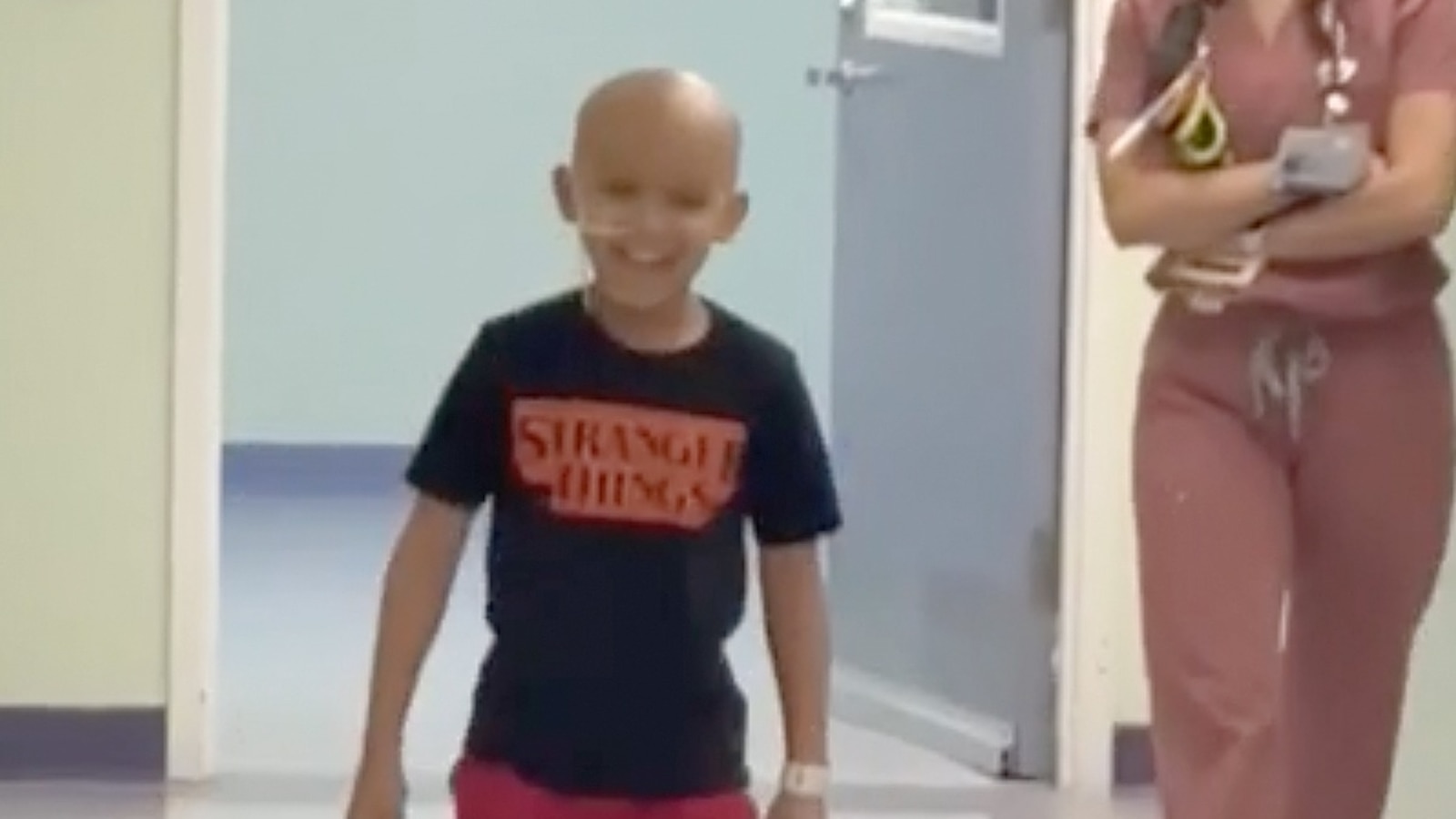
In a heartwarming display of pure joy and resilience, 8-year-old Royce transformed a sterile hospital corridor into his own personal celebration stage, marking one of the most significant moments of his young life. The scene at Cook Children’s Medical Center in Fort Worth, Texas, was nothing short of magical as Royce danced, cartwheeled, and strutted down the hallway before ringing the ceremonial bell that signals the end of cancer treatment. His mother, Joryal Hudson, captured the precious moment on video on March 20th and shared it with the world, giving us all a glimpse into what triumph looks like through the eyes of a child. The footage shows Royce moving with unbridled enthusiasm, his energy and spirit completely uncontained by the hospital walls that had been his second home for months. This wasn’t just any dance—it was a declaration of victory, a celebration of life, and a testament to the incredible strength that children possess even in the face of the most daunting challenges. The video quickly resonated with viewers everywhere, reminding us all of the power of hope and the importance of celebrating every milestone, no matter how small or large.
A Family’s Journey Through Childhood Leukemia
Royce’s journey began in July 2025 when he received a diagnosis that no parent ever wants to hear: acute lymphoblastic leukemia (ALL), type B. This particular form of cancer affects the blood and bone marrow and is unfortunately one of the most common types of childhood cancer in the United States, accounting for approximately 25% of all pediatric cancer cases. For the Hudson family, life changed dramatically overnight. What followed were months of intensive treatment that required Royce to stay in the hospital for extended periods, undergoing therapies that would test his physical and emotional strength in ways no child should have to endure. The treatment process for ALL typically involves a combination of approaches, including chemotherapy, radiation therapy, stem cell transplants, immunotherapy, and various medications, all working together to fight the aggressive cancer cells. Throughout this challenging period, the family faced heartbreaking separations, including Royce having to miss his younger sister’s 3rd birthday celebration—a sacrifice that weighed heavily on everyone involved. While his brother could visit him during his hospital stay, his younger sister couldn’t, making the separation even more difficult for the family to bear.
The Sweetness of Remission and Coming Home
After months of treatment, tests, and uncertainty, the day finally came that the Hudson family had been praying for. Royce’s doctor delivered the news every cancer family dreams of hearing: he was in remission and could be discharged from the hospital. The relief and joy that washed over the family in that moment is difficult to put into words. Joryal Hudson described her son’s emotional state on that milestone day, explaining that Royce was “extremely happy” because he could finally go home and be reunited with all of his siblings under one roof again. The anticipation of seeing his younger sister, whom he hadn’t been able to visit with during his entire hospital stay, made the homecoming even more special. This reunion represented more than just the end of treatment—it symbolized a return to normalcy, to family dinners, to bedtime stories, and to all the small moments that make up a childhood. The bell-ringing ceremony, a tradition at many children’s hospitals, serves as a public acknowledgment of a patient’s completion of treatment and a moment of celebration not just for the patient and their family, but for the entire medical team and hospital community who have been part of the journey.
Life After Treatment: A New Normal
Now back home, Royce is adjusting to life beyond hospital walls, though his journey to complete normalcy continues. Currently, he’s being homeschooled as a precautionary measure before he can safely return to in-person classes with his peers. This transition period is important for his recovery and allows his body to continue healing while protecting him from potential illnesses that could be more serious for someone whose immune system is still rebuilding after intensive cancer treatment. Despite the limitations, Royce is doing what many 8-year-olds love to do: creating TikTok videos and gaming with friends online. These activities, which might seem trivial to some, represent important steps in his return to a typical childhood. They show that beyond being a cancer survivor, Royce is just a regular kid who enjoys the same things his peers do. His ability to engage in these normal activities is a victory in itself, demonstrating that while cancer may have temporarily interrupted his childhood, it didn’t steal it away completely. The resilience he’s shown throughout this ordeal speaks volumes about his character and the strength of the human spirit, especially in children who often handle adversity with more grace than adults.
A Mother’s Powerful Message to Other Parents
Joryal Hudson’s experience navigating her son’s cancer diagnosis has given her unique insight that she feels compelled to share with other parents and caregivers. Her message is simple but profound: listen to your children when they tell you something doesn’t feel right. Hudson emphasizes the importance of being an advocate for your child and taking their concerns seriously, no matter how young they are. In Royce’s case, it was actually the 8-year-old himself who first noticed that something was wrong with his body. He was persistent about his symptoms and insisted on getting the tests that eventually led to his diagnosis. This early detection, prompted by Royce’s self-awareness and his mother’s willingness to listen, likely played a crucial role in his treatment success. Hudson’s advice challenges the sometimes dismissive attitude that can occur when children complain about how they feel, reminding parents that children often have an intuitive understanding of their bodies that shouldn’t be ignored. Her advocacy message extends beyond just listening—it’s about fighting for your child in medical settings, asking questions, seeking second opinions when necessary, and never settling for answers that don’t feel right. This empowerment of parents to trust their instincts and their children’s instincts can literally be lifesaving.
The Broader Picture: Childhood Cancer Awareness and Hope
Royce’s story, while uniquely his own, represents the experiences of thousands of families who face childhood cancer diagnoses each year. According to the National Cancer Institute, acute lymphoblastic leukemia is the most common cancer in children, affecting a significant portion of pediatric cancer patients across the United States. Behind these statistics are real children with dreams, families with hope, and medical teams working tirelessly to improve survival rates and quality of life for young patients. The visibility of stories like Royce’s serves multiple important purposes: they raise awareness about childhood cancer, they provide hope to families currently battling the disease, and they celebrate the incredible advances in pediatric oncology that have dramatically improved survival rates over the past several decades. While any child facing cancer is a tragedy, the fact that many can now ring that ceremonial bell and dance down hospital hallways is a testament to medical progress and the dedication of researchers, doctors, nurses, and support staff who refuse to give up on young patients. Royce’s victory dance is not just his celebration—it’s a celebration for every child who has fought cancer, every family who has walked this difficult path, and every medical professional who has dedicated their career to giving children like Royce a future. His joy reminds us all of what we’re fighting for: childhoods filled with cartwheels, laughter, and the simple freedom to be a kid.