


Artemis II Moon Mission: Humanity’s Historic Return to Lunar Exploration
A Triumphant Return After Five Decades
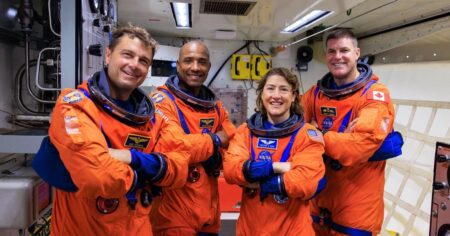
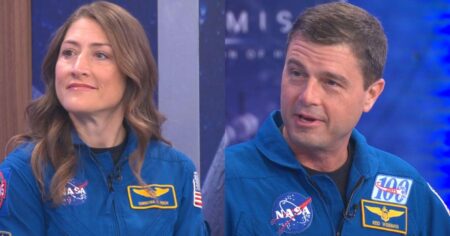
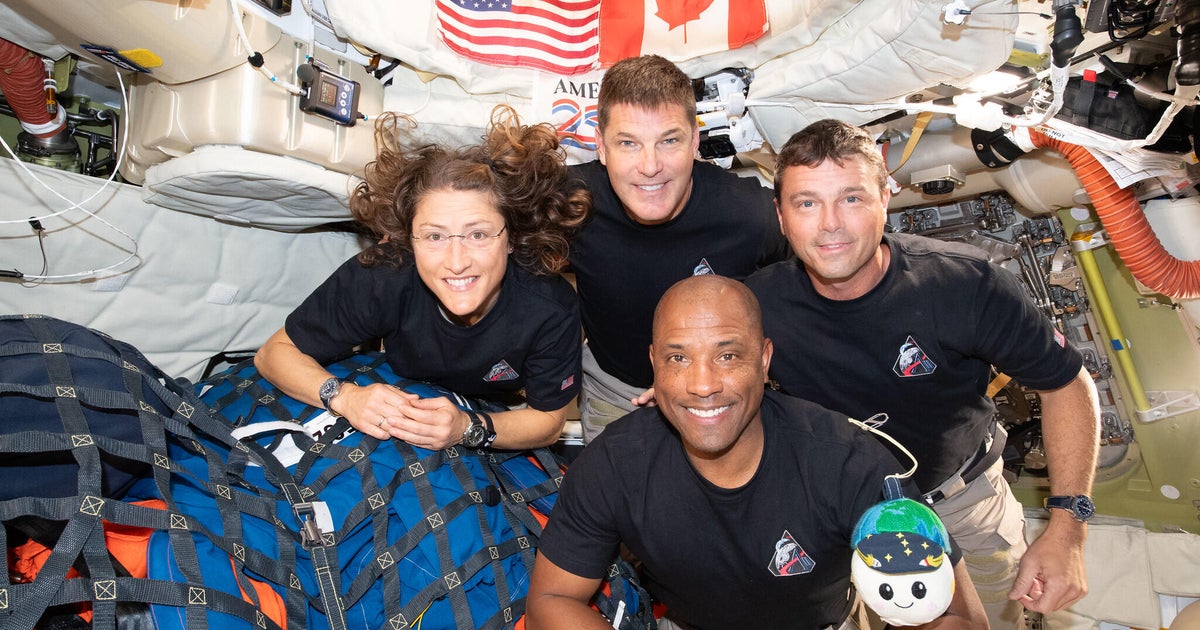
After ten remarkable days in space, the Artemis II mission concluded with a dramatic splashdown in the Pacific Ocean on Friday evening, marking a momentous achievement in human space exploration. The four-person crew—commander Reid Wiseman, pilot Victor Glover, mission specialist Christina Koch, and Canadian astronaut Jeremy Hansen—successfully completed humanity’s first crewed journey to the moon in over half a century. Their voyage took them farther from Earth than any human has ever traveled, surpassing even the legendary Apollo 13 mission’s distance record by more than 4,000 miles. Americans and people around the world watched with bated breath as these modern pioneers pushed the boundaries of human exploration, looping around the moon and venturing into the deepest reaches of space that humans have ever experienced. The mission launched on Wednesday, April 1st, from Florida’s Kennedy Space Center at 6:35 p.m. ET, with a picture-perfect liftoff that illuminated the evening sky. This spectacular launch represented not just a technical achievement, but a symbolic moment—the first piloted moonshot since the Apollo program ended 53 years ago. What made this launch particularly nerve-wracking was that the Orion capsule and NASA’s massive Space Launch System rocket had never before flown with people aboard, having completed just one unmanned test flight. The successful launch set the stage for a journey that would captivate the world and redefine what humans could achieve in space.
Testing Systems and Breaking Records in the Void
The crew’s first full day in space proved crucial for the mission’s success. Rather than immediately heading to the moon, Wiseman, Glover, Koch, and Hansen spent approximately 24 hours orbiting Earth, methodically testing the Orion capsule’s systems. This careful checkout period was essential because about 90% of Orion’s life-support system had never been tested in the harsh environment of space. As Wiseman explained before launch, the crew needed to verify that the environmental control systems could scrub carbon dioxide from the air, provide drinkable water, and essentially keep them alive before venturing into deep space. Glover took the opportunity to test the capsule’s manual controls, preparing for future missions that would require even more precise maneuvering. Once NASA confirmed all systems were functioning properly, the crew received the green light to continue their historic journey toward the moon. The four-day transit to Earth’s celestial companion gave the astronauts time to appreciate the magnitude of their undertaking, with Wiseman noting how inspiring it was to wake up and see the full moon directly ahead through the spacecraft’s windows, leaving no doubt about their destination.
Emotional Moments and Unprecedented Views
As the Artemis II crew journeyed toward the moon, they shared breathtaking images with those of us back on Earth—the first photographs of our full planet taken from the Orion capsule in over 50 years. Commander Wiseman captured the first released image on April 3rd, prompting pilot Glover to reflect emotionally on humanity’s shared home. “Trust us. You look amazing. You look beautiful,” Glover said while gazing at Earth. “No matter where you’re from or what you look like, we’re all one people.” This perspective-shifting view has historically inspired astronauts to see beyond earthly divisions and recognize our common humanity. The crew celebrated Easter Sunday while hurtling through space, and Hansen received his gold astronaut wings, commemorating his first journey beyond Earth’s atmosphere. In one of the mission’s most emotional moments, Hansen revealed that he, Koch, and Glover had named a small lunar crater “Carroll” in honor of Commander Wiseman’s late wife, Carroll Taylor Wiseman, who had died of cancer in 2020. The tribute left Wiseman and his crewmates in tears as Hansen explained they chose a bright spot on the moon for this memorial. Wiseman later called it “the most deeply profound moment of the mission,” revealing that his fellow astronauts had proposed this touching gesture while the crew was in medical quarantine just days before launch. “That was an emotional moment for me, and I just thought that was just a total treasure,” Wiseman shared during a space-to-ground news conference.
The Far Side and Record-Breaking Achievement
The mission reached its pinnacle on Monday, April 6th, when Orion passed behind the moon and went dark for 40 tense minutes. During this radio silence, the crew experienced something only a handful of humans have ever witnessed—the moon’s far side, perpetually hidden from Earth’s view. Just after 7 p.m. ET that evening, the crew set a new record for the farthest distance any human has traveled from our home planet: 252,756 miles from Earth, eclipsing Apollo 13’s 1970 record. Before this historic moment, CBS News asked Koch what would be going through her mind as she became one of only four people on the opposite side of the moon while the rest of humanity looked at the near side. Her one-word answer spoke volumes: “Gratitude.” She elaborated, suggesting that by thinking about what it means to be together and apart from loved ones during such moments, humanity might reach profound realizations. The crew described glimpses of the far side as looking fundamentally different from what we see from Earth—a perspective-altering experience that Wiseman said “really put our place in the universe in perspective.” The astronauts captured stunning photographs during their lunar flyby, including an extraordinary image of the moon eclipsing the sun—a celestial event visible only to them and not observable from Earth. Glover described the hourlong spectacle as almost beyond human comprehension, saying the photos couldn’t do it justice because “humans probably have not evolved to see what we’re seeing.”
Scientific Wonder and Journey Home
The images transmitted from Orion weren’t just inspirational—they held significant scientific value. Kelsey Young, the Artemis science flight operations lead, emphasized that behind the emotional impact of these photographs lay important scientific data. Among the most striking images was a shot taken as the crew flew over the terminator—the boundary between light and darkness on the moon’s surface. The astronauts described this dividing line as “anything but a straight line,” revealing the moon’s complex topography in ways that photographs from orbit cannot fully capture. Glover spoke of craters that appeared to be “endless, bottomless pits,” conveying the otherworldly landscape they witnessed. As the crew began their journey home, with the moon shrinking behind them and Earth growing larger ahead, they reflected on their extraordinary experience. Hansen recalled the 40 minutes of complete radio silence while behind the moon with particular intensity: “Wow, I’m actually getting chills right now just thinking about it, my palms are sweating, but it is amazing to watch your home planet disappear behind the moon.” The crew shared group hugs inside Orion, bonded by an experience that fewer than two dozen humans in history have ever had—traveling to the moon and seeing Earth from a quarter-million miles away.
The Fiery Return and Mission Success
The Artemis II mission’s conclusion proved as dramatic as its beginning. As Orion approached Earth, it encountered the upper atmosphere approximately 75 miles above the Pacific Ocean while traveling at an astonishing 24,000 miles per hour—a speed sufficient to fly from Los Angeles to New York in roughly six minutes. The physics of atmospheric reentry subjected the capsule’s 16.5-foot-wide heat shield to temperatures reaching approximately 5,000 degrees Fahrenheit—about half as hot as the sun’s visible surface. During the six-minute period when peak heating occurred, communications with the crew went dark, creating anxious moments for mission control and viewers worldwide. Then, right on schedule, Orion emerged from the communications blackout, its parachutes deploying perfectly to slow the capsule for a controlled splashdown off the coast of San Diego, California. The successful recovery of all four astronauts marked the triumphant conclusion of a mission that demonstrated NASA’s capability to return humans to deep space and set the stage for future Artemis missions. These subsequent missions will eventually land astronauts on the lunar surface for the first time since 1972, establishing a sustained human presence on and around the moon. Artemis II proved that the technology, training, and teamwork necessary for these ambitious goals are all in place, reigniting humanity’s age of lunar exploration and taking the first concrete steps toward even more distant destinations like Mars.