


A Small Town’s Big Heart: How an Entire School Learned Sign Language for One Deaf Student
When Silence Became Understanding
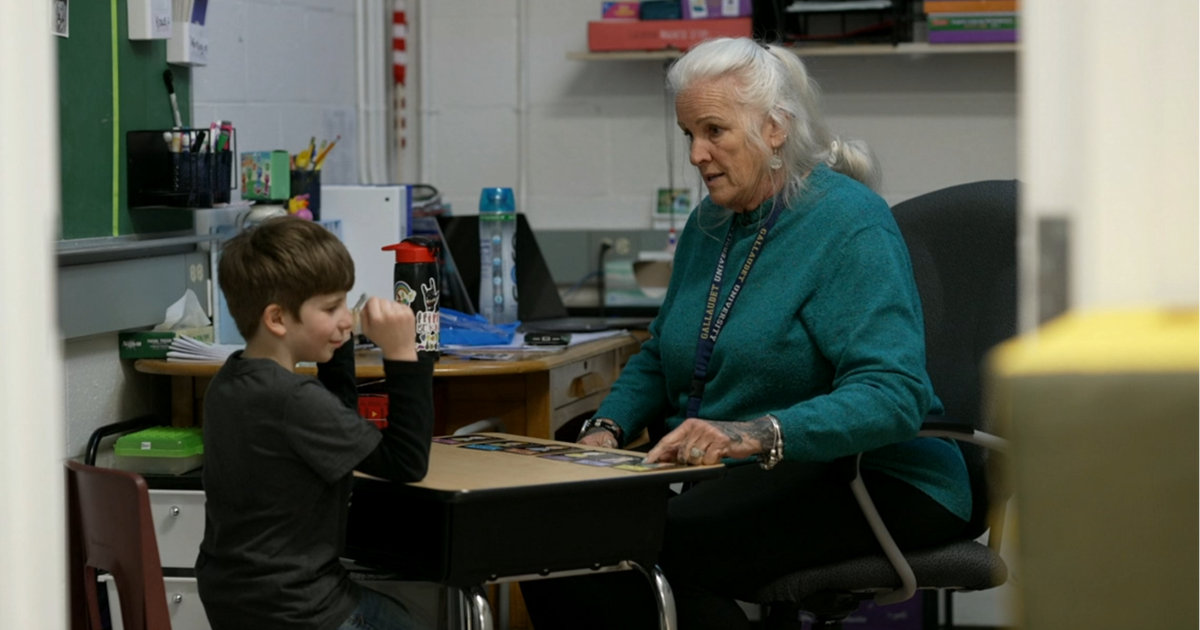
In the quiet town of Campton, New Hampshire, a remarkable story of compassion and community has unfolded that reminds us what education and humanity are truly about. Seven-year-old Ben O’Reilly, a first-grader at Campton Elementary School, is deaf and faces additional special needs that make navigating childhood even more challenging. For a while, Ben’s world was a lonely one. According to his aide, Cheryl Ulicny, who works closely with him every day, Ben experienced profound isolation despite being surrounded by classmates and teachers. “He didn’t have relationships with his peers or teachers, for that matter,” Ulicny explained with evident concern. “He was very alone. And he acted very alone.” This isolation wasn’t due to any lack of kindness or caring from those around him—it was simply a matter of communication. Ben existed in a silent bubble within a hearing world, unable to connect with those around him in meaningful ways. The situation was particularly challenging because New Hampshire is among the rare states in America without a dedicated school for deaf students. Ben holds the distinction of being the only deaf student in his entire school district, which meant that aside from Ulicny, there was essentially no one in the school community who could communicate with him using sign language. For a young child trying to make friends, learn, and find his place in the world, this presented an almost insurmountable barrier to belonging.
A Friendship That Changed Everything
The transformation in Ben’s life began with something beautifully simple—the curiosity and kindness of children. Some of Ben’s classmates, including a boy named Reid Spring, started paying attention to how Ben communicated. Rather than seeing his differences as barriers, they saw them as bridges waiting to be built. Reid and a few other students began picking up signs, learning the basics of sign language so they could interact with their classmate. “If he’s your friend, you can play with him, and he’s my friend,” Reid said with the straightforward logic that children possess, cutting through all the complications that adults might see. For Reid, it was simple: Ben was his friend, and friends find ways to talk to each other. This small act of reaching across the communication divide would spark something much larger. What started with a handful of curious students quickly grew into something much more significant. The rest of Ben’s class noticed what Reid and the others were doing, and they wanted to be part of it too. Soon, the entire class decided collectively to learn sign language. This wasn’t a school requirement or a mandated curriculum change—it was a grassroots movement driven by children who simply wanted to include their classmate in their games, conversations, and daily school life. The ripple effect continued to spread beyond just Ben’s immediate classroom, touching hearts and minds throughout the entire school building.
An Entire School Learns a New Language
What happened next at Campton Elementary School is nothing short of extraordinary and speaks to the power of community and collective compassion. Teachers in other grades observed what was happening in Ben’s classroom and were inspired to join the effort. They began taking sign language classes themselves, committing their personal time and energy to learning a new form of communication. But perhaps the most touching aspect of this schoolwide movement was that these teachers and students didn’t reserve their signing only for interactions with Ben. They began using sign language with each other, even when Ben wasn’t around, normalizing it as just another way of communicating within their school community. “It’s fun communicating with Ben and playing with him,” Reid explained, capturing the joy that had replaced what could have been seen as an obligation. The children didn’t view learning sign language as extra work or a burden—they saw it as an exciting opportunity to connect with their friend and to learn something new and valuable. For the adults in the building, the commitment ran even deeper, as they recognized the profound impact their efforts could have on one child’s life and on the school culture as a whole. The hallways of Campton Elementary began to fill with both spoken words and signed conversations, creating a uniquely inclusive environment.
Parents Overwhelmed by Community Support
For Ben’s adoptive mothers, Etta and Marlaina O’Reilly, discovering the extent of their son’s acceptance and inclusion at school was an emotional experience that left them almost speechless. Parents of children with special needs often face an uphill battle, advocating constantly for accommodations, understanding, and basic inclusion. They become accustomed to fighting for their children’s rights and sometimes steeling themselves against disappointment. So when Etta O’Reilly learned about what the Campton school community had done for Ben, her reaction was one of overwhelming gratitude and disbelief. “It’s incredible,” she told CBS News, her voice filled with emotion. “I could barely breathe. Like it was just so overwhelming.” These weren’t just polite words—they reflected the deep relief and joy of parents who had watched their son struggle with loneliness and were now witnessing him finally being embraced by his community. The O’Reillys understood better than anyone how much their son needed connection, friendship, and the sense of belonging that every child deserves. Watching an entire school reorganize itself around Ben’s needs, not out of obligation but out of genuine care, was a gift they never expected to receive. Today, the reality at Campton Elementary is that just about every student and staff member knows at least some sign language, creating an environment where Ben is no longer the outsider struggling to fit in, but rather a valued member of a community that has adapted to include him fully.
The Profound Impact on Ben’s Development
The changes at Campton Elementary have had transformative effects on Ben that extend far beyond simple social interaction. According to his mothers, the schoolwide effort to learn sign language sparked something crucial in their son’s development and self-understanding. “It clicked for him that the sign language had value,” Etta O’Reilly explained, highlighting a revelation that many deaf children struggle to reach, especially when they’re isolated in hearing communities. When Ben saw not just one or two people but an entire school learning his language, using it with each other, and treating it as valuable and important, it fundamentally changed how he viewed himself and his place in the world. He was no longer the one who was different and needed special accommodation—he was someone whose language and way of communicating was worth learning and adopting. This shift in perspective is enormously powerful for a young child’s developing identity and self-esteem. Cheryl Ulicny, who has worked with Ben throughout this transformation, witnessed firsthand the dramatic changes in her young student. “You could just watch his world open up with communication. It was amazing,” she said, describing the visible evolution in Ben’s demeanor, confidence, and ability to engage with the world around him. Where there had once been a withdrawn, isolated child, there now emerged a boy who could express himself, make friends, participate in games, and experience the normal joys of childhood. The gift that Campton Elementary gave Ben wasn’t just the ability to communicate—it was the gift of belonging, of being seen and valued, and of knowing that his community cared enough about him to learn his language.
Lessons in Humanity and Inclusion
The story of Ben O’Reilly and Campton Elementary School offers profound lessons about inclusion, community, and what education can be at its best. In an era when divisions seem to dominate headlines and differences are often viewed as problems to be solved rather than opportunities for growth, this small New Hampshire school demonstrates what’s possible when people choose connection over convenience. The students and staff at Campton didn’t wait for mandates, special programs, or outside experts to tell them how to include Ben—they simply saw a need and filled it with compassion and action. The children, in particular, showed the adults around them what inclusion really means: not tolerating differences or making accommodations grudgingly, but enthusiastically embracing new ways of communicating and being together. Their example reminds us that children often understand instinctively what adults overthink—that friendship transcends barriers when we’re willing to make the effort. This story also highlights the critical importance of inclusive education and the challenges faced by deaf students, particularly in states like New Hampshire that lack dedicated schools for the deaf. While specialized schools offer important resources and community, Ben’s experience shows that with commitment and creativity, mainstream schools can also become genuinely inclusive spaces. The key is not just placing students with disabilities in regular classrooms but fundamentally changing the culture to welcome and value all forms of communication and learning. Campton Elementary has created something rare and precious: a community where difference is not just accepted but celebrated, where a child’s needs can inspire an entire school to grow and change, and where the simple act of learning to communicate with one lonely boy has enriched the lives of everyone involved.