
Music as a Beacon of Hope: Women Lead Peace Festival in War-Torn Goma
A Powerful Stage in the Heart of Conflict
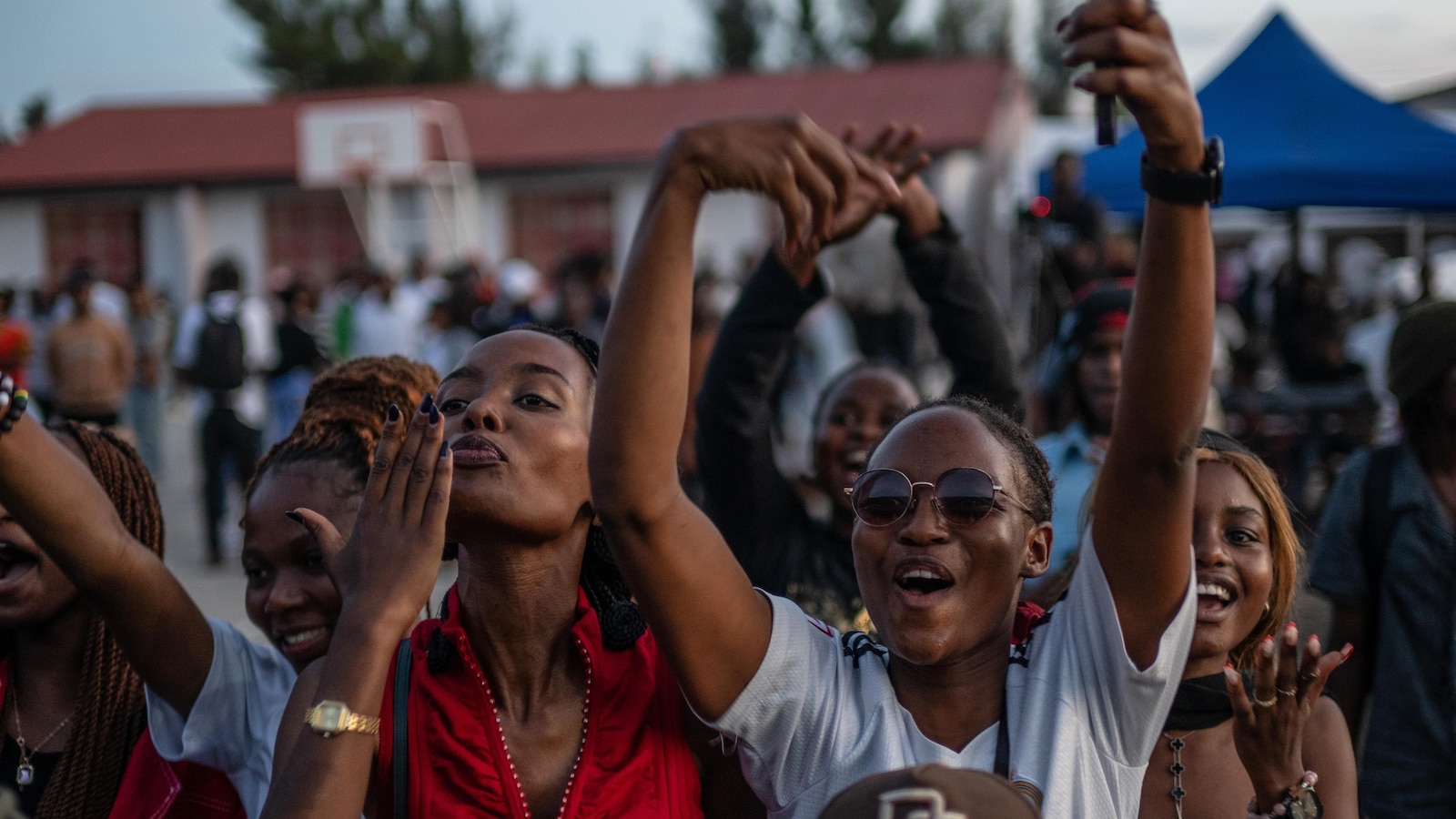
In the embattled city of Goma, Congo, where the sounds of artillery fire have become tragically familiar, a different kind of sound echoed through the streets this past weekend. Congolese rapper Clem Cléopâtre commanded the stage on the final evening of “Musika na Kipaji,” a three-day music festival that brought nearly 3,000 people together in celebration, defiance, and hope. Her rapid-fire lyrics about social cohesion, peace, and unity resonated deeply with a crowd that has lived through unimaginable hardship. As she performed, the audience swayed to her rhythms, sang along with her verses, and blew kisses toward the stage, while dancers in vibrant, colorful costumes brought additional energy to the performance. This wasn’t just entertainment—it was an act of resistance, a declaration that even in the darkest times, the human spirit refuses to be extinguished. The festival, now celebrating its seventh year, represents far more than music and dance; it stands as a bold campaign against gender-based violence and a platform to showcase the remarkable talents of women in a region where their voices are too often silenced by conflict and patriarchal structures.
Rising Above Unimaginable Circumstances
The context in which this festival takes place cannot be understated. Goma, a strategically important city in mineral-rich eastern Congo, fell under the control of the Rwanda-led M23 rebel group in January 2025, when the militant organization launched a coordinated offensive that captured key cities throughout the eastern region. What followed has been a brutal and sustained conflict between M23 forces and the Congolese military, transforming daily life into a constant struggle for survival. Despite a peace agreement brokered by U.S. President Donald Trump—an attempt to end decades of cyclical violence that has plagued the region—fighting has continued to erupt with devastating regularity. The United Nations has documented the ongoing use of heavy artillery, and reports from the ground paint a picture of a population caught between armed groups with little respite. In this environment of perpetual instability, the humanitarian crisis has reached staggering proportions, with at least 7 million people displaced throughout eastern Congo, making it one of the world’s largest displacement crises. Yet amid this suffering, the people of Goma have found ways to maintain their humanity, and this festival represents one of the most powerful examples of that resilience.
Women’s Voices in a Landscape of Violence
Sexual violence has surged alongside the military conflict, with women and girls bearing a disproportionate burden of the war’s horrors. In conflict zones throughout the world, sexual violence is often used as a weapon of war, and eastern Congo has been no exception. Against this backdrop, the festival’s organizers saw an urgent need to create a space where women could reclaim their narratives, showcase their talents, and advocate collectively for peace. For Cléopâtre, one of the festival’s standout performers, the motivation is deeply personal and rooted in lived experience. “I come from a place where war breaks out at any moment, ever since we were little. And for me, that’s a real motivation,” she told The Associated Press in an interview. Her words capture the paradox of growing up in a conflict zone—where violence becomes normalized yet simultaneously fuels a determination to create something better. “I encourage young people not to feel alone, especially women, because they are often forgotten, and for me, it’s a real motivation to make music just to prove to these women that they are not alone,” she continued. Her message resonates with countless women across the region who have felt marginalized, traumatized, and overlooked by both the warring parties and the international community’s insufficient response to their plight.
Culture as a Tool for Rebuilding Social Fabric
What makes “Musika na Kipaji” particularly significant is its role in rebuilding the social bonds that conflict inevitably tears apart. In situations of prolonged violence, communities fragment along ethnic, political, and geographic lines. Trust erodes, and the everyday interactions that constitute the fabric of society become strained or impossible. This festival offers a counterpoint to that fragmentation—a space where people from different backgrounds can gather safely, celebrate shared cultural heritage, and remember their common humanity. Jean Luc Maroy, one of the festival attendees, articulated this sentiment powerfully: “Today, we are all together as young people. A year ago, that was impossible because of the war. Here, we can express our frustration … and see young people united around culture and women.” His observation underscores how the festival functions as more than entertainment; it serves as a critical venue for social healing and reconciliation. In a city where checkpoints, curfews, and armed patrols have become routine, the simple act of gathering for music takes on profound political and social significance. The festival becomes a temporary autonomous zone where normalcy can be experienced, where young people can envision a future beyond conflict, and where the divisions that fuel violence can be momentarily set aside in favor of collective celebration.
The Resilience of Hope in Impossible Conditions
Perhaps the most remarkable aspect of this story is the persistence of hope among Goma’s residents despite conditions that would seem to justify complete despair. Living under occupation by a rebel group, surrounded by displaced populations living in makeshift camps, and facing daily uncertainty about safety and survival, the people attending this festival demonstrated an extraordinary capacity for optimism and determination. This resilience isn’t naive or uninformed—these are people who have lived through decades of cyclical violence, who have lost family members, who have been displaced multiple times, and who understand intimately the costs of conflict. Yet they continue to invest energy in cultural expression, in building community, and in advocating for peace through creative means. The festival’s seven-year history is itself a testament to this persistence; organizers have continued to bring the event to life annually despite the enormous logistical, security, and financial challenges involved. This determination reflects a broader truth about human resilience: that even in the most difficult circumstances, people find ways to assert their dignity, celebrate their culture, and work toward a better future. The nearly 3,000 attendees who came together for this year’s festival represent not just an audience but a community refusing to be defined solely by the violence that surrounds them.
Looking Forward: Music, Gender Justice, and Peace
The “Musika na Kipaji” festival represents an important model for how cultural expression can serve multiple purposes in conflict-affected regions. By centering women’s voices and explicitly addressing gender-based violence, the festival tackles one of the most pervasive yet underreported aspects of the conflict in eastern Congo. By bringing together diverse groups of young people around music and dance, it creates opportunities for social cohesion that are increasingly rare in fragmented conflict zones. And by simply happening—by insisting on celebration and cultural expression in the face of violence—it makes a powerful statement about the values and aspirations of ordinary Congolese people who want peace, security, and the opportunity to live normal lives. As international attention to the crisis in eastern Congo remains inconsistent, and as peace agreements continue to be violated, grassroots initiatives like this festival become all the more crucial. They demonstrate that solutions to conflict cannot come solely from military victories or diplomatic negotiations; they must also include the painstaking work of rebuilding social trust, addressing gender inequalities, and creating spaces where communities can imagine and work toward alternative futures. Clem Cléopâtre’s lyrics about peace and unity, the colorful dancers on stage, and the thousands of people who gathered to celebrate together all point toward a vision of Congo’s future that stands in sharp contrast to the violence of its present—a future that these festival organizers and participants are actively working to create, one song and one gathering at a time.