
Making Birding Accessible: How Nature Enthusiasts Are Opening the Outdoors to Everyone
A New Kind of Birding Experience
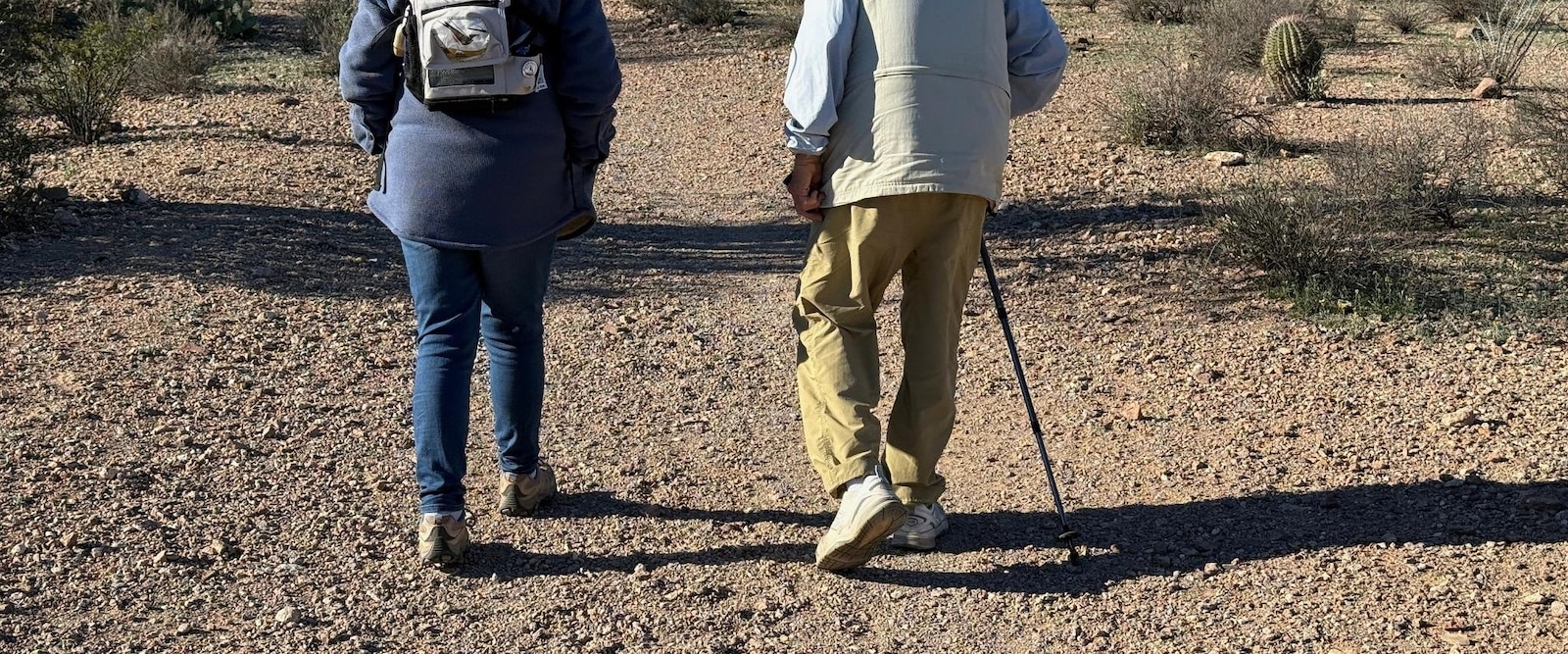
In the warm Arizona sunshine, Marcia O’Bara leads a group of nature lovers through the trails of Tucson, moving at a gentle, unhurried pace. What makes this birding excursion different is O’Bara herself—she wears an oxygen pack on her back to manage her COPD, and she understands firsthand the challenges that come with physical limitations. The group she guides carries walking sticks as they traverse carefully selected flat trails, free from the pressure to spot the most birds or compete with one another. This is “Birding for Every BODY,” a monthly program offered by the Tucson Bird Alliance in partnership with Arizona’s Pima County, and it represents a beautiful shift in how we think about experiencing nature. These excursions are part of a growing national movement dedicated to ensuring that people with physical limitations, chronic illnesses, and various disabilities can fully participate in the joy of birding and connecting with the natural world. The emphasis isn’t on the number of species spotted or the distance covered—it’s on creating a welcoming, inclusive environment where everyone can enjoy the simple pleasure of watching birds at their own pace.
Thoughtful Planning Makes All the Difference
O’Bara, a retired nurse who has been leading these accessible outings for three years, brings both professional expertise and personal understanding to her role. Her background working in rehabilitation gives her insight into what participants might need before they even realize it themselves. Before each walk, she meticulously checks every detail that might affect someone with mobility challenges or other health concerns. She ensures that all trails are easily traversable, confirms that bathrooms are not only available but spacious enough to accommodate wheelchairs and mobility scooters, and verifies the availability of drinking water, shade, and benches along the route. Once the group sets off, O’Bara remains attentive, regularly checking that everyone is keeping up comfortably and adjusting the pace as needed. Her approach stands in stark contrast to traditional birding outings, where competitive birders often race ahead, focused on checking off the maximum number of species from their lists. Disabled participants in those settings frequently struggle to keep pace and may feel left behind or unwelcome. Interestingly, while the walks are fully equipped to accommodate wheelchairs and mobility scooters, people using these devices rarely attend—perhaps because they’ve been disappointed by inaccessible nature programs in the past or assume they won’t be able to keep up. O’Bara wants to change that perception and actively encourages anyone with mobility devices to join.
The Simple Joy of Being Present in Nature
During a February walk through a Tucson-area park, O’Bara’s group paused to observe a phainopepla—a slender, crested bird perched elegantly on a mesquite tree, enjoying the bright red berries of desert mistletoe clustered on the branches. Nearby, mallards and other ducks quacked cheerfully as they swam in ponds or pecked at the ground. The atmosphere was relaxed and contemplative. Among the participants was Rhea Guertin, a retired Rhode Islander who spends four months each winter in Tucson as a snowbird. Using a walking pole for stability, she appreciates the unhurried nature of these outings. “It’s nice to just be outside and not think of anything else,” she explained, adding with refreshing honesty, “I’m just slow.” Another participant, Evelyn Spitzer, a retired teacher from the Tucson area, also relied on a walking pole due to a heart condition and the lingering effects of recent surgery. For both women and many others like them, these accessible birding walks offer something precious: the opportunity to connect with nature without feeling rushed, judged, or physically overwhelmed. It’s a chance to simply be present, to notice the small wonders around them, and to share that experience with others who understand what it’s like to navigate the world with physical limitations.
The National Movement Toward Inclusive Birding
The organized effort to make birding accessible to people with disabilities gained significant momentum in 2018 when Virginia Rose, a retired Texas teacher who has used a wheelchair since suffering a spinal injury at age 14, founded the nonprofit organization Birdability. Rose’s personal experience gave her unique insight into the barriers that prevent disabled people from fully participating in nature activities. Cat Fribley, Birdability’s executive director, who herself uses a mobility scooter for multiple disabilities, articulates the organization’s mission clearly: “Our vision is that birding be truly for everybody and every BODY, regardless of disability.” The range of participants includes people with mobility issues, blindness or low vision, chronic illnesses, intellectual or developmental disabilities, mental illness, those who are neurodivergent, deaf or hard of hearing, and people with various other health concerns. Fribley’s own birding practice demonstrates the versatility of accessible birding—she can cover five or six miles on the accessible paths in her Iowa City, Iowa residential community when weather permits, and in winter, she simply birds from her back deck with her morning coffee. The organization emphasizes that accessible birding can take many forms: watching from a car, paddling quietly in a canoe on a river, or simply observing through a kitchen window. Birdability has created valuable resources including a crowdsourced map of accessible birding locations nationwide developed in partnership with the National Audubon Society, and they offer guidance to able-bodied birders on how to be more welcoming and inclusive toward disabled participants.
Adaptive Tools and Training for Better Access
Beyond organizing accessible outings, advocates are also focusing on adaptive equipment and education to break down barriers. Birdability’s website features numerous resources and adaptive devices that make birding more accessible, such as car-window mounts for cameras that allow people with limited mobility to photograph birds from their vehicles, and specialized apps that enable blind people and others to identify and record birdsong using sound recognition technology. Occupational therapist Freya McGregor, who has a permanent knee injury and runs Access Birding, recommends binocular harnesses that strap around the back and chest rather than traditional binoculars that hang around the neck, which can cause strain on the shoulders and neck—particularly problematic for people with certain disabilities or chronic pain conditions. McGregor’s organization takes a proactive approach by training nature organizations such as state parks and local Audubon chapters on how to make their trails and programs genuinely accessible. This education component is crucial because well-meaning organizations sometimes lack the knowledge or perspective to understand what true accessibility requires. It’s not enough to simply say everyone is welcome; organizations must actively remove physical, sensory, and social barriers that prevent disabled people from participating. This might mean installing accessible parking close to trailheads, creating firm, level trail surfaces, providing accessible restrooms, offering alternative formats for educational materials, training staff on disability awareness, and fostering a culture that genuinely values diverse participation.
Breaking Isolation Through Birds and Community
For many people with disabilities, birding offers more than just a pleasant outdoor activity—it provides a vital connection to community and the natural world that can combat the isolation that often accompanies disability. Jerry Berrier, a 73-year-old Massachusetts birder who has been blind since birth, captures this sentiment beautifully: “It really brings you joy. There is happiness from being out in nature.” Berrier’s journey with birding began in college when he learned to identify a huge number of bird calls and songs to satisfy the lab requirement for a biology class—a challenge that opened up an entirely new world for him. He later taught blind and blind-deaf people how to use laptops and cellphones at the Perkins School for the Blind in Watertown, Massachusetts, combining his passion for accessibility with practical technology training. Now, he captures avian songs and calls for his website, www.birdblind.org, helping other blind bird enthusiasts record and share their own observations. Last year, he launched the “Any Bird, Any Body” podcast with his friend Gary Haritz, creating yet another platform for the accessible birding community. Perhaps most significantly, Berrier helped organize the first national bird-a-thon for blind enthusiasts in the United States, which drew several hundred participants who reported the birdcalls they heard over a 24-hour period. The event proved so successful that it’s going international this year on May 3-4. As Berrier notes, “We encourage people to reach out to local organizations to help blind people with the bird-a-thon. A disability can be very isolating.” Through these initiatives, birding becomes more than a hobby—it becomes a bridge connecting people across different abilities, ages, and backgrounds, united by their appreciation for the natural world and the simple joy of hearing a bird’s song on a beautiful day.