
Afroman Wins Major Legal Battle Over Music Videos About Police Raid
Celebrating Freedom of Speech in Fur and Stars and Stripes
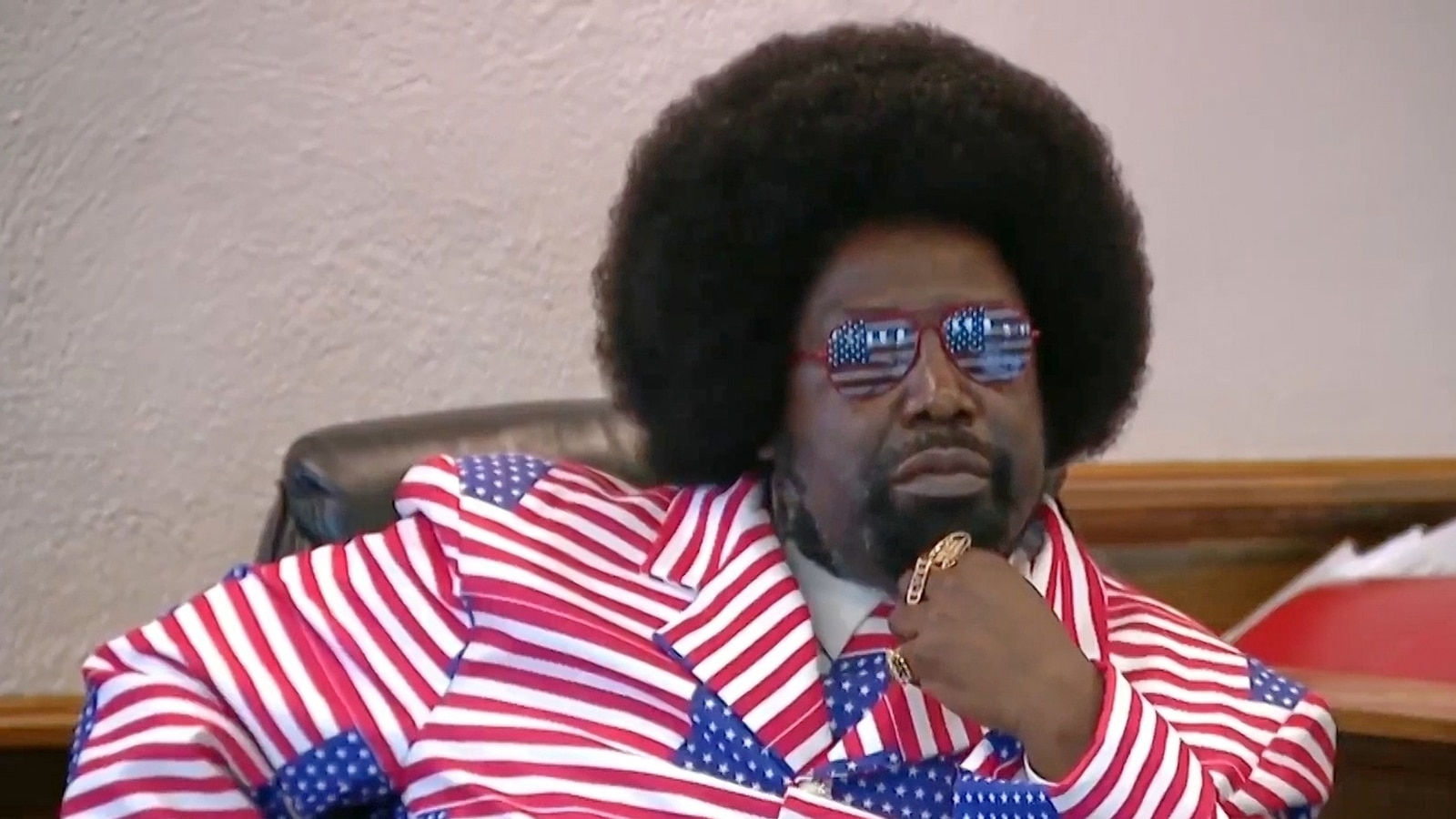
In a moment that felt as much about American values as it was about music and comedy, rapper Afroman emerged victorious from an Ohio courtroom this week, wrapping himself literally and figuratively in the flag. The 51-year-old artist, whose real name is Joseph Edgar Foreman and who became a household name with his 2001 hit “Because I Got High,” took to Instagram wearing a fur coat and an American flag-printed suit to celebrate after a jury found him not liable on defamation claims brought by seven Ohio sheriff’s deputies. Surrounded by cheering supporters, the Grammy-nominated rapper enthusiastically proclaimed, “We did it America! Yeah! We did it! Freedom of speech! Right on! Yeah! God bless America! Yeah! Power to the people!” His jubilant social media posts emphasized that this wasn’t just a personal victory—it was a win for free expression in America. The following day, he doubled down on the celebration, promoting upcoming concert dates with the caption “LET’S CELEBRATE AMERICA,” making it clear he saw this legal victory as something worth sharing with his fans across the country.
How a Home Raid Became a Legal Showdown
The legal drama began in August 2022 when Adams County sheriff’s deputies executed a search warrant on Afroman’s home based on allegations that would ultimately prove groundless. The warrant stemmed from what police claimed was a tip from a confidential informant who alleged seeing large quantities of marijuana and cash at the rapper’s residence. Even more seriously, the informant claimed that Afroman was keeping women locked in his basement—an allegation that sounds almost too outrageous to believe. When deputies raided the home, Afroman wasn’t there, but his wife was, and she captured portions of the search on her phone. The house also had security cameras that recorded clear footage of the officers as they conducted their search. In the end, no one was found locked in any basement, no charges were ever filed, and the whole incident might have faded away—except Afroman decided to turn the experience into art. He created several music videos and social media posts that featured footage from the raid, poking fun at the situation and the deputies involved. What he saw as creative expression and social commentary, the deputies saw as defamation and exploitation.
When Law Enforcement Officers Become Unwilling Content Stars
In March 2023, seven deputies—Shawn D. Cooley, Justin Cooley, Michael D. Estep, Shawn D. Grooms, Brian Newland, Lisa Phillips, and Randolph L. Walters Jr.—filed their lawsuit against Afroman. They claimed that the rapper had used their likenesses, names, and “personas” in his music videos and social media content without permission and for commercial gain. According to their complaint, Afroman used the footage to promote his live performances, music releases, merchandise, and overall brand. The deputies argued that as a result of being featured in these videos, which portrayed them in a mocking and ridiculing light, they had been subjected to public harassment and humiliation. They sought millions of dollars in damages, claiming their reputations had been damaged and their privacy violated. From their perspective, they were simply doing their jobs when they executed a legally obtained search warrant, and they shouldn’t have to become the butt of jokes in music videos that would be seen by potentially millions of people. The case raised interesting questions about where the line exists between a public figure’s right to comment on their own experiences and an individual’s right to privacy and protection from defamation.
Afroman Fights Back: The Countersuit
Afroman wasn’t content to simply defend himself—he went on the offense with a counterclaim that painted a very different picture of the August 2022 raid. His legal response denied all of the deputies’ allegations and turned the tables by accusing the officers of causing significant damage during their search. According to Afroman’s counterclaim, the deputies broke two doors in his home during the raid, and the damage didn’t stop there. He alleged that officers ripped his security system’s DVR off the wall and disconnected all the wiring, requiring expensive repairs. Perhaps most seriously, Afroman claimed that money was taken from his home during the search, and when it was eventually returned to him, an employee of the Adams County Sheriff’s Department admitted that the returned funds were “$400 short” of what had been taken. During closing statements this week, Afroman’s attorney David Osborne emphasized this point, telling the jury that the rapper “never got back all his money.” These allegations added another dimension to the case—not only was Afroman defending his right to create art based on his own experiences, but he was also suggesting that the deputies’ conduct during the raid itself was questionable and caused him real harm.
The Defense: Public Officials and the Price of Criticism
At the heart of Afroman’s legal defense was a fundamental principle of American democracy: public officials must accept a higher degree of public scrutiny and criticism than private citizens. David Osborne, Afroman’s lawyer, made this argument forcefully during the trial, telling jurors that deputies are public officials whose work is inherently subject to public commentary and even mockery. “That’s just what happens when you’re a public official,” Osborne argued, adding that “No reasonable person would expect a police officer not to be criticized. They’ve all been called names before.” He characterized the criticism as part of the job description for law enforcement, something officers must accept as they carry out their duties in the public sphere. Crucially, Osborne also argued that Afroman’s music videos should be understood as satire and humor, not as statements of fact. “There are certain things you take and you move on. It’s part of the job,” he told the jury, suggesting that the deputies’ lawsuit represented an overreaction to what was essentially just comedy. The defense positioned Afroman’s creative work within a long American tradition of artists using humor and satire to comment on their interactions with authority figures, and suggested that allowing the deputies to prevail would have a chilling effect on artistic expression and political speech.
A Victory for More Than Just One Rapper
After the jury delivered its verdict finding Afroman not liable on any of the claims brought by the deputies, the rapper’s celebration framed the outcome as something bigger than himself. In an interview with ABC affiliate WCPO, Afroman put it succinctly: “I didn’t win. America won.” He continued, “America still has freedom of speech, it’s still for the people, by the people.” This framing suggests that Afroman understood the stakes of the case extended beyond his personal circumstances or even his career as an entertainer. The case touched on fundamental questions about the relationship between citizens and law enforcement, about the right to comment on and criticize the actions of public officials, and about where the boundaries of acceptable speech lie in our society. Had the jury sided with the deputies, it could have established a precedent that would make artists, journalists, and ordinary citizens more hesitant to share their experiences with law enforcement or to criticize police conduct, even in humorous or satirical ways. The verdict instead reaffirmed that public officials must accept a robust level of public commentary and criticism, even when that criticism is uncomfortable or unflattering. As Afroman prepares to take his victory celebration on tour, promoting upcoming concert dates and presumably performing the very songs that sparked this legal battle, the case serves as a reminder that the First Amendment’s protection of speech extends to creative expression that challenges and mocks those in positions of authority—a principle that remains as relevant today as it was when the Bill of Rights was ratified.