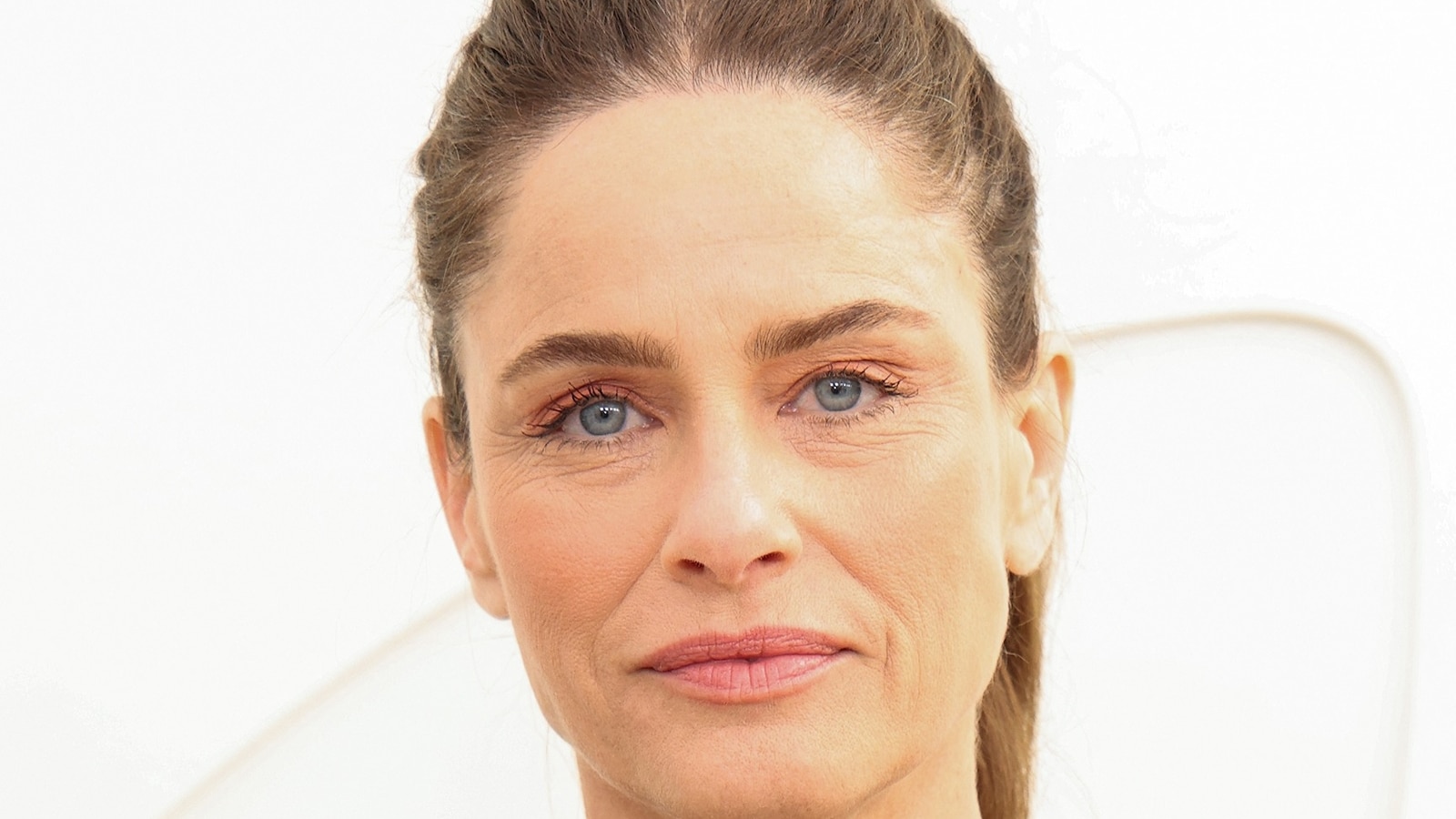

Amanda Peet Opens Her Heart About Facing Cancer While Saying Goodbye to Her Parents
A Perfect Storm of Heartbreak and Hope
Life has a way of testing us when we least expect it, and for actress Amanda Peet, that test came in the form of a devastating triple blow. In a deeply moving personal essay published in The New Yorker, Peet shared one of the most challenging chapters of her life—receiving a breast cancer diagnosis while simultaneously losing both of her parents to hospice care. The 53-year-old actress, known for her roles in films and television, pulled back the curtain on this intensely private time, offering readers an intimate glimpse into the raw, complicated emotions that come with facing your own mortality while watching your parents confront theirs. Her story is one that resonates with anyone who has ever felt overwhelmed by life’s timing, reminding us that strength isn’t about never falling apart—it’s about picking up the pieces and moving forward, even when the ground beneath you feels like it’s crumbling.
The Long Road of Vigilance and the Moment Everything Changed
For years, Amanda Peet had been living with heightened awareness about her breast health. Having what doctors described as “dense” and “busy” breasts meant that routine screenings weren’t enough—she required extra monitoring and had been seeing a breast surgeon every six months for regular checkups. This kind of vigilance becomes part of your life, a background hum of caution that you learn to live with, hoping it’s just precaution and never becomes necessity. But in late August, during what should have been just another routine scan, something changed. The ultrasound showed an unusual result, prompting her doctor to perform a biopsy. The tumor they discovered appeared small, but as Peet would soon learn, appearances can be deceiving when it comes to cancer. An MRI was ordered to determine “the extent of the disease”—clinical language that can never fully capture the fear that comes with those words. Suddenly, the careful monitoring that had been a precaution became a lifeline, catching something that would require immediate attention and treatment.
When Grief Compounds: Losing Both Parents While Fighting for Your Own Life
As if processing a cancer diagnosis wasn’t enough, Peet found herself thrust into another nightmare scenario. Her parents, who had been long divorced and lived on opposite coasts, both entered hospice care around the same time she was beginning to plan her treatment. The timing was cruel and unexpected. Her mother’s hospice care had begun in June, but her father’s had only started a week before his death. The family hadn’t expected him to go first, which made his sudden passing even more shocking. Peet flew to New York immediately, racing against time and hoping to make it in time to say goodbye. She didn’t make it before her father took his last breath, but she was able to see his body before it was removed from his apartment—a small mercy that allowed her some semblance of closure, even if it wasn’t the goodbye she had hoped for. It’s the kind of regret that stays with you, the “almost made it” that haunts quiet moments, even as you understand that sometimes life doesn’t give us the perfect goodbye we desperately want.
The Rollercoaster of Medical Results and Learning to Live in Limbo
Upon returning to Los Angeles after her father’s death, Peet received her pathology results. The news was cautiously positive: her stage I cancer was “hormone-receptor-positive” and “HER2-negative.” For a brief, beautiful moment—about ten minutes, she estimated—she felt happier than she had been before her diagnosis, “when I was just a regular person who didn’t have cancer.” It’s a perfectly human reaction, that flood of relief when you hear news that’s better than the worst-case scenario your mind has been spinning. But cancer doesn’t offer simple answers or quick resolutions. After those ten minutes, reality set back in. She still needed the MRI, and the terror returned to its baseline level. Her doctor explained that the radiologist would also examine her lymph nodes and check the left side of her breast for any surprise findings, with results expected within a week. This is when Peet had a profound realization: “It was dawning on me that cancer diagnoses come in a slow drip.” Anyone who has been through serious medical issues knows this truth intimately—the waiting, the additional tests, the uncertainty that stretches out over days and weeks, each new piece of information bringing either relief or new concerns. Doctors eventually found another mass in her breast, which thankfully turned out to be benign, and her treatment plan was determined: a lumpectomy followed by radiation therapy.
A Wordless Goodbye: The Final Moments with Her Mother
While navigating her own health crisis, Peet still had to face saying goodbye to her mother, who had been battling Parkinson’s disease. In some of the most poignant passages of her essay, she described the final moments they shared together—moments that capture the profound simplicity of love when words become unnecessary. Her mother had been given morphine, but it was taking time to take effect. She lay in the rented hospital bed, looking at the ceiling and whimpering, clearly in distress. In a gesture that speaks to the primal bond between mother and child, Peet climbed onto the hospital bed to position herself in her mother’s line of vision. When their eyes locked, her mother quieted down, and the two simply stared at each other for what felt like several minutes. Peet wasn’t entirely sure if her mother truly recognized her or if she was simply a “constellation of interesting, disembodied shapes” in her fading consciousness. She said “howdy doodle”—the greeting her mother had often used with her—but then realized that her mother was communicating in a way that transcended words. Peet followed her lead into that wordless communion. “Time was running out,” she wrote, “and, besides, I had already told her everything.” It’s a reminder that sometimes the most important conversations happen in silence, and that presence—simply being there—can be the greatest gift we give to those we love.
Finding Strength in Vulnerability and Sharing the Journey
By choosing to share her story so openly and honestly, Amanda Peet has done something profoundly generous. In a culture that often expects us to suffer privately and only share our struggles once they’re safely in the past, she’s offered a raw, real-time account of navigating multiple crises simultaneously. Her essay doesn’t wrap things up neatly or offer false comfort. Instead, it acknowledges the messy reality of life—that good news and bad news can arrive in the same breath, that you can be grieving and fighting and hoping all at once, that strength doesn’t mean having all the answers or never breaking down. Her willingness to be vulnerable about her fear, her regrets, and her uncertainty provides a different kind of roadmap for others facing similar challenges. It says: you don’t have to be perfect or brave every moment. You just have to keep going. Peet’s story also highlights the importance of regular screenings and medical vigilance, particularly for women with dense breast tissue who require more comprehensive monitoring. Her tumor was caught early because she was being carefully watched, turning what could have been a more advanced cancer into a stage I diagnosis with a better prognosis. As she continues her treatment and processes the loss of both parents, Peet’s journey reminds us that healing—both physical and emotional—isn’t linear. It’s a slow drip, just like her diagnosis was. But with each day, each treatment, each memory honored, we move forward, carrying our losses and our hopes together, finding strength we didn’t know we had.