
American Woman Shares Harrowing Escape from Middle East as Regional Conflict Escalates
A Perilous Anniversary Trip Turns into a Desperate Escape
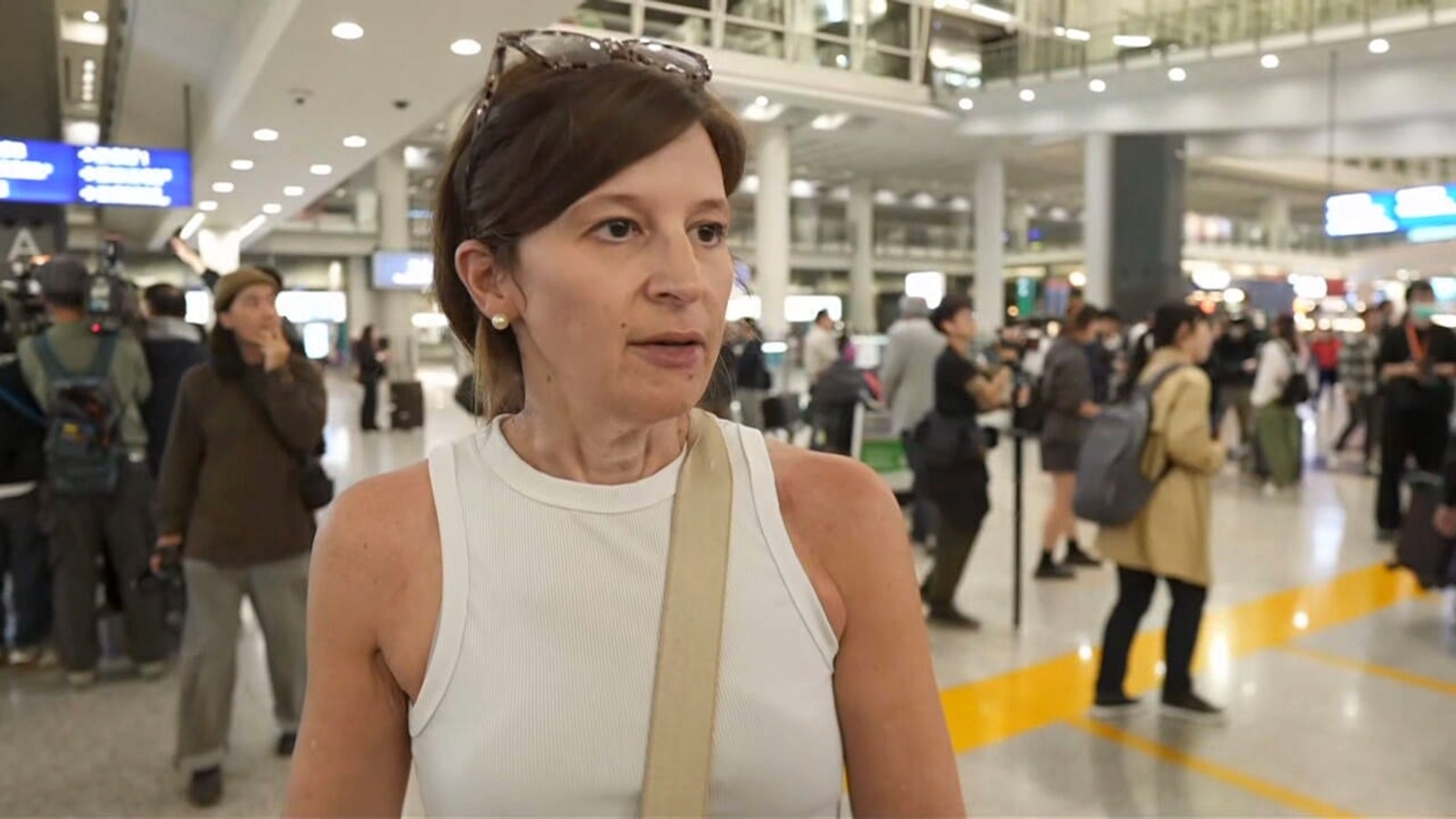
Sarah Mative, a Nashville, Tennessee resident, is among the thousands of Americans who found themselves caught in an increasingly dangerous situation as conflict in the Middle East intensifies. What was supposed to be a romantic celebration of her 20th wedding anniversary with her husband turned into a nightmare scenario when escalating tensions from the war in Iran began spreading across the region. After four anxious days of trying to arrange travel, Mative finally managed to board one of the few flights departing from Dubai in the United Arab Emirates. On Wednesday, she touched down in Hong Kong, her relief palpable as she recounted her experience to reporters. Though grateful to have escaped, Mative was careful to note that Dubai shouldn’t be vilified for circumstances beyond its control, while expressing overwhelming relief at having made it out of what has become an increasingly volatile situation affecting Americans across 14 different countries in the Middle East.
Widespread Travel Chaos and Government Warnings
The situation across the Middle East has deteriorated so rapidly that the U.S. State Department has issued Level 3 travel advisories for multiple countries in the region, including the United Arab Emirates where Mative had been staying. These advisories carry serious weight, urging American citizens to “reconsider travel” to affected areas “due to the threat of armed conflict and terrorism.” The government has taken the extraordinary step of ordering non-essential government staff and their family members to evacuate the UAE and other affected nations. The list of countries under urgent evacuation recommendations extends far beyond the Emirates, encompassing Egypt, Iran, Iraq, Israel, Jordan, Kuwait, and Saudi Arabia among others. This widespread advisory affects thousands of American travelers, workers, and residents who now find themselves in a desperate race against time to secure transportation out of the region as commercial flight options dwindle and the security situation continues to deteriorate.
Criticism of State Department Response
Perhaps one of the most troubling aspects of Mative’s account is her frustration with the lack of assistance she received from official U.S. government channels when she needed help most. Like many Americans would do in such a crisis, Mative and her husband contacted the U.S. State Department helpline seeking guidance on how to get home to their three children safely. What they received instead was a dismissive response that left them feeling abandoned by their own government. “We called the number, and they said, ‘Sorry, there’s nothing we can do,'” Mative recounted, her disappointment evident. She didn’t mince words when describing her experience: “It’s very disappointing, extremely disappointing that the State Department gave us zero help.” This sentiment is particularly striking given that the couple was simply trying to celebrate a milestone anniversary and found themselves caught in circumstances completely beyond their control, desperately trying to return to their family while receiving what amounted to a bureaucratic brush-off from the very agency tasked with helping Americans abroad during emergencies.
The Long Journey Home Continues
Even after managing to escape Dubai, Mative’s ordeal is far from over. The couple now faces an exhausting multi-leg journey that illustrates just how complicated travel has become due to the regional crisis. From Hong Kong, they plan to fly across the Pacific Ocean to San Francisco on the West Coast of the United States, and then undertake yet another cross-country flight from California to their home in Nashville, Tennessee. What would normally be a more direct route from the Middle East to the American South has turned into a grueling around-the-world journey, adding numerous hours of travel time and undoubtedly significant additional expense. This circuitous routing reflects the reality that direct flights from the Middle East to the United States have become scarce or impossible to book, forcing evacuating Americans to piece together whatever connections they can find. For parents separated from their children and facing the stress of escaping a conflict zone, such an extended journey adds both physical and emotional strain to an already traumatic experience.
Government Evacuation Efforts and Ongoing Challenges
To its credit, the State Department maintains that it is working continuously to address the crisis and assist stranded Americans. Officials claim the department has been working “around the clock” to arrange charter flights specifically for Americans wishing to leave the Middle East region. According to their statements, more than 10,000 U.S. citizens have already received assistance, the first charter flight has successfully departed, and additional charter flights were scheduled to leave on Thursday. These efforts represent a significant logistical undertaking given the number of people affected and the complexity of operating in a conflict zone. However, the gap between these official claims and the experience reported by people like Sarah Mative raises questions about the effectiveness and accessibility of this assistance. The reality on the ground appears to be that many Americans are being forced to fend for themselves, navigating a chaotic travel landscape where commercial flights are being canceled en masse and the few remaining seats on departing aircraft are nearly impossible to secure.
The Human Cost of Escalating Conflict
The experiences of Americans like Sarah Mative and Blaga Trankaroff underscore the human dimension of geopolitical conflict that often gets lost in discussions of military strategy and international relations. Trankaroff, still stranded and searching for any available flight, told reporters with evident despair: “Honestly, at this point, I’m really starting to lose hope that we’ll be home soon.” Her words capture the anxiety and helplessness felt by thousands of ordinary people whose lives have been upended through no fault of their own. These are not diplomats or military personnel trained and prepared for crisis situations; they are tourists celebrating anniversaries, business travelers, people visiting family, and expatriate workers simply trying to return home to safety and loved ones. The images of Emirates aircraft taking off from Dubai International Airport represent both hope and frustration—hope for those lucky enough to secure a seat, and crushing disappointment for the many more who watch flights depart without them. As the conflict continues to reverberate across the Middle East, these personal stories remind us that behind every advisory, every flight cancellation, and every diplomatic statement are real people experiencing fear, separation from family, financial strain, and an uncertain timeline for when they might see home again.