



Artemis II Mission: Historic Lunar Flyby Brings Moments of Connection and Wonder
Finding Peace in the Communication Blackout
As the Artemis II spacecraft hurtles toward its historic lunar encounter, an unexpected element of the mission has highlighted the profound human experience of space exploration. According to retired NASA astronaut and U.S. Navy SEAL Chris Cassidy, the planned 40-minute communication blackout during Monday evening’s lunar flyby represents more than just a technical challenge—it’s actually a welcome respite for both the astronauts aboard and Mission Control back on Earth. Speaking with CBS News, Cassidy explained that these communication gaps serve a dual purpose, offering ground crews a rare opportunity to step back after ensuring everything is perfect before the signal is lost, while simultaneously giving the astronauts an irreplaceable chance to be fully present in one of humanity’s most extraordinary experiences.
During this window of radio silence, the Artemis II crew will be completely on their own, serving as the sole guardians of their spacecraft’s safety. Cassidy noted that the astronauts will feel the full weight of this responsibility while simultaneously experiencing something few humans have ever witnessed—an uninterrupted, intimate encounter with the moon. These are the moments, he explained, when crew bonds strengthen most profoundly, when they can capture photographs without interruption, and when they can simply absorb the magnitude of their journey. During the communication blackout, the crew is scheduled to make their closest approach to the lunar surface, set a new record for the farthest distance humans have traveled from Earth, and witness Earthset—the breathtaking moment when our home planet appears to sink beneath the moon’s horizon, a view that reverses the familiar sunset experience we take for granted on Earth.
Childlike Wonder at 250,000 Miles from Home
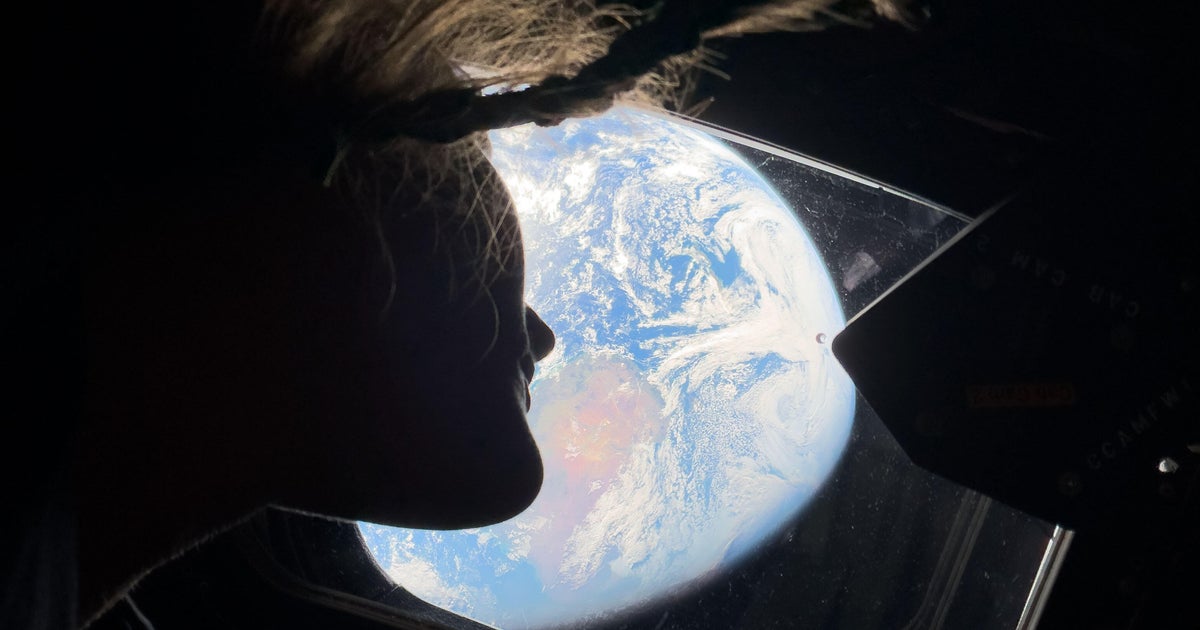
The human element of this mission has been beautifully captured in the words of Artemis II commander Reid Wiseman, who radioed Mission Control early Monday morning with a message that perfectly encapsulates the emotional power of space exploration. Despite their extensive training, advanced degrees, and professional composure, Wiseman described how he and his three crewmates—pilot Victor Glover and mission specialists Christina Koch and Jeremy Hansen—were responding to the view outside their windows with the pure, unfiltered excitement of children. “The four of us have looked at this our entire lives,” Wiseman shared, his voice carrying across the vast expanse between the spacecraft and Earth. “And the way we are responding to what we’re seeing out the window, it’s just like we’re a bunch of little kids up here. We cannot get enough of this. It’s amazing. Thank you for the privilege.”
This transmission reveals something essential about human space exploration that often gets lost in discussions of technical specifications and mission objectives. These are highly trained professionals who have dedicated their lives to reaching this moment, yet when confronted with the reality of traveling through space toward the moon, they experience the same sense of wonder that children feel when first learning about the cosmos. Wiseman’s gratitude—thanking Mission Control for “the privilege”—underscores how these astronauts understand the weight of what they’re doing. They’re not just representing their own dreams but carrying the aspirations of countless people who have gazed at the moon and wondered what it would be like to travel there. This human connection between the spacecraft and Earth makes the mission more than a technological achievement; it becomes a shared experience for all of humanity.
New Views of an Ancient Companion
The Artemis II crew has been treating observers back on Earth to stunning new perspectives of our celestial neighbor. NASA released an image captured by the crew on Monday showing the moon through the Orion spacecraft’s window, taken before the astronauts settled in for sleep on the fifth day of their journey. The photograph was captured at a significant moment in the mission—shortly after the crew “entered the lunar sphere of influence” at 12:37 a.m. ET on Monday. This milestone marked the point where the moon’s gravitational pull became stronger than Earth’s, effectively making the astronauts more beholden to the moon’s gravity than to our planet’s. It’s a moment that’s easy to overlook but represents a profound transition: for the first time in their lives, these four humans were no longer primarily under Earth’s gravitational dominance.
Even more remarkable was an earlier image released by NASA on Sunday, showing the far side of the moon as captured on the fourth day of the mission. The photograph presents the moon in an unusual orientation, with its South Pole facing upward and portions of its far side—the hemisphere that never faces Earth—clearly visible. Particularly significant in this image is the Orientale basin, a massive impact crater that’s extremely difficult to observe from Earth due to its position along the lunar edge. The Artemis II mission marks the first time human eyes have seen this geological feature in its entirety, a fact that adds scientific value to what is primarily a test mission for NASA’s deep space exploration systems. The Orientale basin will continue to be studied by the crew, providing scientists with unprecedented human observations of this ancient scar on the lunar surface.
Breaking Records and Making History
Monday represents the mission’s most dramatic day, filled with historic achievements and breathtaking experiences. The crew is scheduled to wake at 10:50 a.m. ET, preparing for a series of milestones that will literally rewrite the record books. After a briefing with Mission Control at 1:30 p.m. to review flyby procedures, the spacecraft will reach 248,655 miles from Earth just 26 minutes later—and then continue traveling outward. This distance represents the current human spaceflight record, set by Apollo 13 astronauts Jim Lovell, Fred Haise, and Jack Swigert on April 15, 1970, under dramatically different circumstances. While Apollo 13 reached that distance during their famous crisis—when an oxygen tank explosion forced them to loop around the moon to return home—Artemis II is breaking this record as part of a carefully planned mission, demonstrating how far human spaceflight capabilities have advanced.
The lunar flyby itself begins at 2:45 p.m., with the spacecraft observing both the familiar near side and the mysterious far side of the moon. At approximately 7 p.m., Artemis II will make its closest approach to the lunar surface—just 4,070 miles away. At this distance, NASA explains, the moon will appear to the astronauts about the size of a basketball held at arm’s length, providing an unprecedented perspective on our natural satellite. The crew may become the first humans to see certain portions of the far side with unaided eyes, without the need for telescopes or cameras. Minutes after closest approach, they’ll reach their maximum distance from Earth—252,760 miles, establishing a new record for the farthest humans have ever traveled from our planet. The astronauts will also witness and attempt to photograph “Earthrise,” recreating the famous Apollo 8 image that gave this phenomenon its name, and experience an hour-long solar eclipse as Earth blocks the sun. The flyby is scheduled to conclude at 9:20 p.m., capping off a day that will be remembered in the annals of space exploration history.
Easter Celebrations in Space
Even amid their historic journey, the Artemis II crew took time to mark earthly traditions, celebrating Easter Sunday with their own unique twist on the holiday. The astronauts sent Easter greetings back to Earth and organized their own version of an egg hunt aboard the spacecraft. Mission specialist Christina Koch shared with Mission Control that the crew had hidden eggs around the cabin—though these were the dehydrated scrambled egg variety rather than the chocolate or decorated eggs familiar to Earth-based celebrations. Despite the unconventional nature of their Easter eggs, Koch reported that the entire crew was “pretty happy with them,” highlighting how small touches of normalcy and tradition help maintain morale and connection to home during extended space missions.
Koch also provided an update on their journey’s progression, noting that overnight Saturday, the crew had switched their reference point from measuring their increasing distance from Earth to tracking their decreasing distance to the moon. This shift represents both a practical navigation adjustment and a psychological transition—the point where the moon becomes the destination rather than Earth being the origin. The mission specialist noted that the journey had already yielded unexpected detail in observations of the lunar surface, providing scientists back on Earth with valuable data and wetting their appetites for what will come when the spacecraft passes over the far side of the moon on Monday. These Easter celebrations, combined with the crew’s evident excitement and wonder at their experience, underscore an essential truth about long-duration spaceflight: maintaining human connection, observing traditions, and finding moments of levity and joy are just as critical to mission success as technical proficiency and scientific objectives.
The Human Future in Deep Space
The Artemis II mission represents far more than a test flight for new spacecraft systems or a record-breaking journey. It embodies humanity’s enduring drive to explore, to push boundaries, and to see what lies beyond the familiar. The reactions of these four astronauts—their childlike wonder, their careful observations, their Easter celebrations, and their appreciation for moments of communication silence—remind us that space exploration is fundamentally a human endeavor. While we celebrate the technological achievements that make such missions possible, it’s the human experience that gives them meaning. As Artemis II continues its journey around the moon and begins the return trip to Earth, it paves the way for the Artemis III mission, which will return humans to the lunar surface for the first time since 1972. Each transmission from the crew, each photograph they capture, and each record they break brings humanity one step closer to becoming a truly spacefaring species, one that doesn’t just visit other worlds but eventually establishes a permanent presence beyond Earth.