

Iran Seizes Control of Critical Oil Gateway as Global Energy Crisis Deepens
The Strait of Hormuz Becomes Tehran’s Strategic Weapon
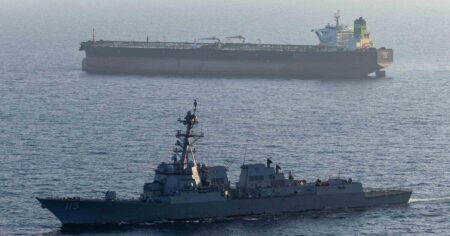
In a dramatic escalation that has sent shockwaves through global energy markets, Iran’s Revolutionary Guard Corps has effectively closed one of the world’s most vital oil shipping routes. The Strait of Hormuz, a narrow waterway that typically carries about 20% of the world’s crude oil supply, is now under strict Iranian control, with Tehran permitting passage only to vessels that receive explicit authorization. This strategic move has transformed what was once a busy international shipping lane into a heavily controlled corridor where Iran dictates who comes and who goes. The immediate impact was felt worldwide as oil prices skyrocketed past $110 per barrel—a staggering increase from the $70 per barrel price that prevailed before the United States and Israel launched military operations against Iran just one month ago. This price surge represents more than just numbers on a trading screen; it translates directly to higher costs at gas pumps, increased shipping expenses, and inflationary pressure on everything from groceries to medications for ordinary people around the world.
The Iranian military made its intentions unmistakably clear this week by forcibly turning back three major commercial vessels attempting to navigate the strait. In a pointed social media statement, the Revolutionary Guard mocked recent assertions by U.S. leadership that the waterway remained open, noting that three container ships of various nationalities had attempted to pass through what Iran now considers authorized traffic corridors, only to be warned off and forced to retreat. Maritime tracking data painted a vivid picture of this new reality: two massive container ships owned by COSCO, China’s largest shipping company—the CSCL Indian Ocean and CSCL Arctic Ocean—executed sharp U-turns after approaching Iran’s strategically positioned Larak Island. By Friday, both vessels remained stuck in the Persian Gulf, unable to complete their intended journeys. A third vessel, the Hong Kong-owned Lotus Rising, suffered the same fate a day earlier, forced to abandon its transit attempt in the face of Iranian warnings.
Larak Island: Iran’s Tollbooth in a Global Chokepoint
Iran’s strategy centers on Larak Island, a small piece of land sitting just miles off the Iranian coast that maritime intelligence experts have aptly described as Tehran’s “tollbooth.” This island has become the focal point of Iran’s stranglehold on international shipping, with the Revolutionary Guard forcing vessels to pay substantial fees—reportedly as much as $2 million per ship, according to Iranian state media—for the privilege of safe passage. The numbers tell a striking story about how completely Iran has redirected maritime traffic: in the second half of March alone, analysts tracked 33 ship transits past Larak Island, while the traditional, more southern route through the broader Strait of Hormuz saw exactly zero passages. This shift illustrates how Iran has taken what was already considered a global chokepoint and tightened it further, creating a chokepoint within a chokepoint where they exercise absolute control.
The Iranian Revolutionary Guard has been explicit about its criteria for passage, stating that any ship traveling “to and from” ports belonging to allies and supporters of what they term “Zionist-American enemies” is categorically prohibited, regardless of destination or intended route. This sweeping policy effectively weaponizes the strait, turning geography into geopolitics and transforming a natural waterway into a tool of economic warfare. For the thousands of ships that typically transit this route carrying not just oil but countless other goods essential to global commerce, the message is clear: Iran now decides who trades and who doesn’t, creating an unprecedented level of disruption to international maritime commerce and potentially reshaping global trade patterns in ways that could persist long after any military conflict concludes.
The Threat Expands: A Second Strategic Waterway in the Crosshairs
As if closing the Strait of Hormuz weren’t enough to send global markets into a tailspin, recent statements from Iranian military officials have raised the alarming prospect that a second critical waterway could become the next target. The Bab el-Mandeb Strait, which serves as the southern gateway from the Red Sea into the Arabian Sea and channels approximately 10% of the world’s oil supply, has been mentioned as a potential next pressure point. This waterway, bordered by Djibouti on one side and Yemen on the other, represents another vulnerable link in the global energy supply chain. Yemen’s significance in this equation cannot be overstated—it’s home to the Houthi rebel group, one of Iran’s most capable and battle-hardened proxy forces.
The Houthis control vast swathes of Yemeni territory where they function essentially as a shadow government, complete with their own Humanitarian Operations Coordination Center that manages Red Sea navigation. While Houthi leadership has issued reassurances through this coordination center, stating there is “no cause for concern” and emphasizing Yemen’s commitment to safeguarding navigation and free trade flow, history suggests these promises may be contingent on Iran’s needs and desires. The Houthis have demonstrated their willingness and capability to attack shipping in these waters before, most recently during their campaign against vessels they deemed connected to Israel during the Gaza conflict. With dozens of vessels, including oil tankers, transiting the Bab el-Mandeb strait daily under normal circumstances, any disruption here would compound the crisis already unfolding at the Strait of Hormuz, potentially creating a double stranglehold on Middle Eastern energy exports that would have catastrophic implications for global energy security and economic stability.
Economic Shockwaves and Unprecedented Price Predictions
The economic implications of Iran’s actions are being felt immediately and could grow far worse in the coming months. Financial analysts at Macquarie, a major Australian investment bank and financial services firm, have issued a startling warning: they now assess a 40% probability that oil prices could reach $200 per barrel by June—a price point never before achieved in oil market history. Such a price level would represent not just an economic challenge but a fundamental shock to the global economic system, affecting everything from transportation costs to manufacturing expenses, agricultural production, and consumer prices across virtually every sector. The ripple effects would be felt by every household, in every country, as the cost of energy permeates every aspect of modern life.
Meanwhile, Iran appears to be moving to formalize and legitimize its control over Strait of Hormuz transit. According to state-run media reports, the Iranian parliament is drafting legislation to make the fees it charges ships “official,” with plans apparently targeting finalization in early April. This move suggests Iran views its current stranglehold not as a temporary wartime measure but as a potentially permanent new arrangement—a disturbing prospect for international maritime law and the principle of freedom of navigation that has underpinned global trade for generations. The transition from extortion to official policy represents an audacious challenge to international norms, one that tests whether the global community will accept a fundamental reordering of who controls access to vital waterways.
International Response: Building a Coalition for Hormuz Security
The international response is beginning to take shape, led by the United Arab Emirates, which has found itself bearing the brunt of Iranian aggression since the conflict began. The UAE is now pushing dozens of countries to join a proposed “Hormuz Security Force” specifically designed to reopen and defend the strait against Iranian interference. This diplomatic initiative recognizes that no single nation, not even the United States, can unilaterally resolve this crisis without broad international support and cooperation. The formation of such a coalition would represent a significant escalation in the confrontation with Iran, potentially bringing dozens of navies into close proximity in highly contested waters where miscalculation could easily trigger broader conflict.
Sultan Ahmed Al Jaber, head of the UAE’s Abu Dhabi National Oil Company and a influential figure in global energy circles, traveled to Washington this week for discussions with Vice President JD Vance, using the platform to deliver a forceful condemnation of Iran’s actions. In a speech delivered just before his meeting with Vance, Al Jaber characterized Iran’s behavior as nothing less than “economic terrorism,” arguing that “when Iran holds Hormuz hostage, every nation pays the ransom.” His words struck at the heart of the matter: this isn’t just a regional conflict or a Middle Eastern problem—it’s a crisis that affects every person on the planet. “At the gas pump, at the grocery store, at the pharmacy, every household” feels the impact, Al Jaber emphasized, making the case that “no country can be allowed to destabilize the global economy in this way. Not now, not ever.” His framing of the issue as economic terrorism rather than merely a military or geopolitical challenge reflects the recognition that Iran has found a pressure point that transcends traditional warfare, one that causes widespread civilian suffering without firing a single shot at non-military targets. As nations grapple with how to respond to this unprecedented challenge, the world watches anxiously, knowing that the decisions made in the coming days and weeks will shape not just the outcome of this particular conflict, but potentially the rules governing international commerce and maritime security for years to come.