
Major Blow to Mexico’s Most Powerful Cartel: The Capture of “El Jardinero”
A Strategic Victory in Mexico’s War on Cartels
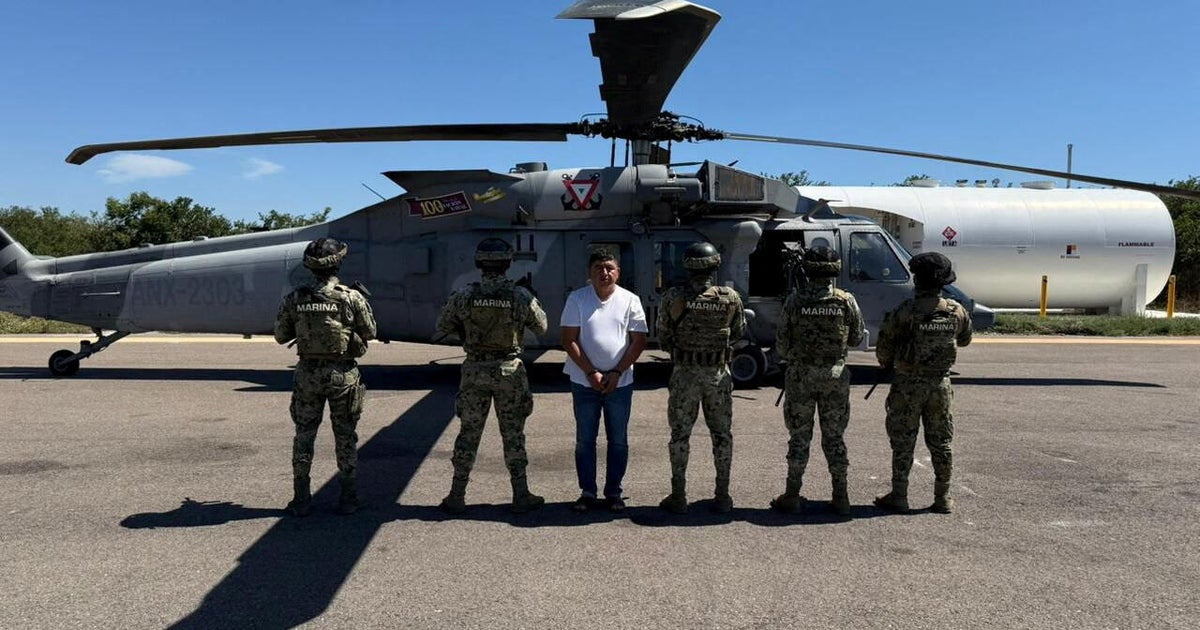
The ongoing battle against organized crime in Mexico scored a significant victory on Monday when Mexican military forces successfully apprehended Audias Flores Silva, better known by his chilling nickname “El Jardinero” (The Gardener). This high-ranking commander of the notorious Jalisco New Generation Cartel was discovered hiding in a roadside ditch near El Mirador in Nayarit state, marking another critical setback for what has become Mexico’s most formidable criminal organization. The arrest was executed with impressive precision—involving reconnaissance aircraft, six helicopters, four planes, and over 100 ground troops—yet remarkably resulted in no casualties or injuries. Security Secretary Omar Garcia Harfuch shared dramatic footage on social media showing the moment a man emerged from an underground hiding spot as authorities took him into custody. The United States had placed a substantial $5 million bounty on Flores Silva’s head, reflecting his importance within the cartel’s hierarchy and the threat he posed to both nations. His capture represents more than just another arrested criminal; it symbolizes a crucial disruption to the leadership structure of an organization that had been scrambling to reorganize following recent devastating losses.
The Power Vacuum and Succession Crisis
Flores Silva’s arrest comes at a particularly vulnerable moment for the Jalisco New Generation Cartel, occurring just two months after the dramatic killing of the organization’s founder and supreme leader, Nemesio Oseguera Cervantes, known throughout Mexico as “El Mencho.” The February military operation that ended El Mencho’s reign triggered an explosive wave of retaliatory violence that shocked the nation—cartel gunmen launched coordinated attacks on businesses, set vehicles ablaze, erected road blockades, and engaged in confrontations that ultimately claimed more than 70 lives, including 25 National Guard members who died defending their country. In this chaotic aftermath, Flores Silva emerged as one of the leading candidates to assume control of the cartel’s vast criminal empire. His role went far beyond simple muscle; he served as the head of security for El Mencho himself and played a central part in orchestrating the cartel’s drug production and trafficking operations across multiple critical states, including Nayarit, Jalisco, Mexico State, and Zacatecas. The loss of both the organization’s visionary leader and now one of its most capable operational commanders within such a short timeframe has left the CJNG in a precarious position, struggling to maintain cohesion while facing aggressive government pressure.
The President’s Calculated Gamble
The successful capture reflects a deliberate shift in strategy under Mexican President Claudia Sheinbaum, who has adopted a more aggressive approach toward cartel operations than many of her predecessors. This hardline stance partially responds to mounting pressure and threats of intervention from U.S. President Donald Trump, who last year escalated the confrontation by officially designating the Jalisco New Generation Cartel and five other Mexican criminal organizations as foreign terrorist organizations—a classification that carries serious diplomatic and legal implications. For President Sheinbaum’s administration, the killing of El Mencho and subsequent capture of Flores Silva represent tangible proof that Mexico can effectively combat its most dangerous criminal enterprises without external intervention. However, this success comes at a price. Following Flores Silva’s arrest, local news organizations in Nayarit reported immediate retaliatory actions, with cartel members torching vehicles and businesses in a show of force that has become their signature response to leadership losses. These reactions serve as grim reminders that even successful operations against cartel leadership often trigger cycles of violence that impact innocent civilians caught in the crossfire between criminal organizations and government forces.
International Cooperation and Justice
The capture has strengthened the partnership between Mexican and American law enforcement agencies, with U.S. Ambassador to Mexico Ronald Johnson publicly praising the operation as an “important step” in the ongoing fight against fentanyl trafficking—a crisis that continues to devastate communities on both sides of the border. The ambassador emphasized that “actions like this strengthen security and help dismantle criminal networks that threaten our communities,” highlighting how collaborative efforts produce results that enhance safety for both nations. Flores Silva’s criminal history spans both countries; at a young age, he was arrested in the United States and served a five-year prison sentence for drug trafficking before returning to Mexico. His criminal career continued after his release—in 2016, Mexican authorities arrested him for allegedly participating in an ambush against police officers in Jalisco, but he was released just three years later, a troubling pattern that critics argue demonstrates weaknesses in Mexico’s judicial system. Since 2021, the United States has actively sought his extradition to face charges of drug conspiracy and firearms possession. With Security Secretary Harfuch confirming that American authorities are seeking extradition, Flores Silva may soon find himself back in the U.S. legal system, where the consequences for his alleged crimes could prove far more severe and permanent than anything he faced in Mexico.
The Resilient Nature of Criminal Networks
Despite the apparent success of recent operations against the Jalisco New Generation Cartel, security analysts caution against premature celebration or assumptions that the organization has been fatally wounded. David Saucedo, a respected Mexican security analyst, acknowledges that Flores Silva’s arrest represents a “significant blow” to the CJNG leadership, particularly as the organization was still struggling to reorganize following the death of its founder. However, Saucedo offered a sobering assessment to The Associated Press, noting that criminal organizations “can quickly reinvent themselves despite the arrest of their leaders” and that even when suffering major setbacks, “they can continue” their criminal activities with surprising resilience. This observation reflects decades of experience with Mexican cartels, which have repeatedly demonstrated an almost biological ability to adapt, evolve, and regenerate even after catastrophic losses. The Jalisco New Generation Cartel’s reach extends across an astonishing portion of Mexican territory—the U.S. Drug Enforcement Agency has confirmed CJNG presence in 21 of Mexico’s 32 states, surpassing even the infamous Sinaloa Cartel, which operates in an estimated 19 states. Some analysts believe the actual footprint may be even larger, with CJNG operations potentially active in 25 states, maintaining a particular stronghold in their home state of Jalisco. Beyond Mexico’s borders, the cartel has expanded its operations to approximately 100 countries, including extensive networks throughout the United States, demonstrating a level of organizational sophistication that rivals legitimate multinational corporations.
Ripple Effects Across Mexico’s Criminal Landscape
The impact of aggressive cartel enforcement isn’t limited to the Jalisco New Generation Cartel. Earlier the same day, authorities in the northeastern state of Tamaulipas arrested Alexander “N” (identified by Mexican news outlets as Alexander Benavides Flores, known as “R9”), a member of a criminal gang operating near the U.S.-Mexico border and reportedly the head of Los Metros, one of several factions of the weakened Gulf Cartel. His capture immediately provoked at least eight highway blockades erected by criminal groups on roads surrounding Reynosa, a city of 690,000 inhabitants situated directly across the river from McAllen, Texas. The proximity to the American border adds particular concern, as violence and instability in these border regions can quickly spill across international boundaries, affecting American communities and commerce. Tamaulipas security forces reported successfully reestablishing control and confirmed that no one was wounded during the confrontations, though such incidents underscore how deeply these criminal organizations have embedded themselves in local communities and how quickly they can mobilize to respond to threats against their leadership. The Gulf Cartel, though considerably weakened over the past decade following the capture of numerous leaders, still maintains the capability to launch coordinated operations that can paralyze entire cities. These simultaneous operations against different cartels in different regions of Mexico suggest a coordinated national strategy that aims to maintain constant pressure on criminal organizations, preventing them from consolidating power or recovering from previous losses. Whether this approach will ultimately prove successful in dismantling these resilient criminal enterprises or merely trigger endless cycles of violence and retaliation remains one of the most pressing questions facing both Mexican and American policymakers as they navigate the complex challenge of transnational organized crime.