
Baz Luhrmann and Austin Butler Reunite for Groundbreaking Elvis Concert Film Premiere
A Hollywood Reunion Four Years in the Making
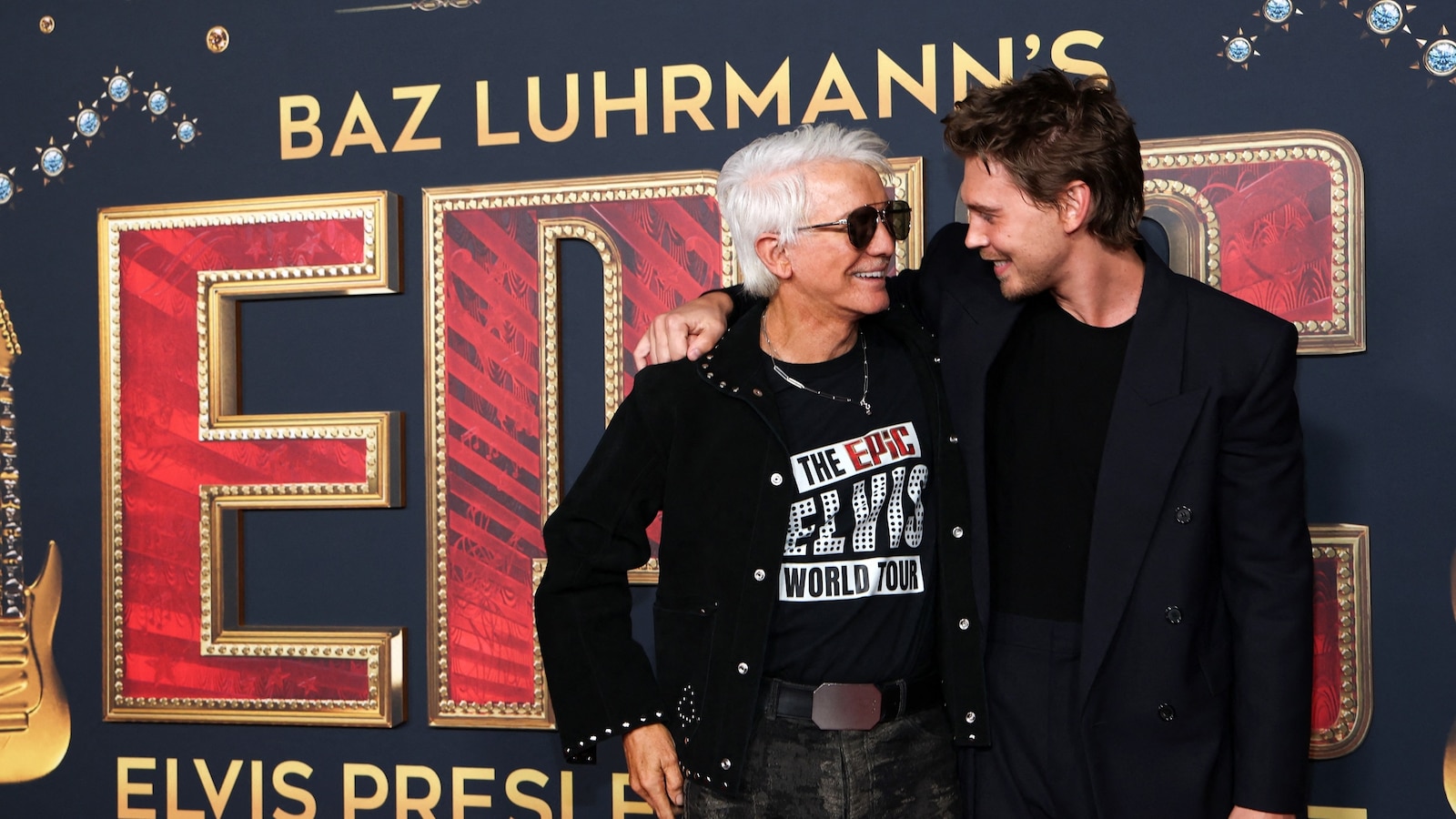
The glittering lights of Hollywood’s iconic Chinese Theatre set the stage for a special reunion this week as director Baz Luhrmann and actor Austin Butler came together once again to celebrate the King of Rock and Roll. Four years after their critically acclaimed collaboration on the biographical film “Elvis” captured hearts worldwide and earned eight Oscar nominations, the dynamic duo reunited for the premiere of Luhrmann’s latest project, “EPiC: Elvis Presley in Concert.” The Wednesday night event saw Butler, who delivered a transformative performance as Elvis Presley in the 2022 film, walking the red carpet alongside the visionary Australian filmmaker. The pair shared warm moments together, posing for photographs and clearly demonstrating the bond they formed during their previous collaboration. This new film represents not just a continuation of Luhrmann’s exploration of Elvis’s legacy, but also a remarkable discovery that brings previously unseen footage of the legendary performer to modern audiences in a way that feels both fresh and historically significant.
An Archaeological Discovery in an Unexpected Place
The story behind “EPiC: Elvis Presley in Concert” reads like something out of an adventure film itself. While working on his 2022 biographical drama “Elvis,” Luhrmann and his dedicated team made an extraordinary discovery in what might seem like the most unlikely of locations—a salt mine in Kansas City. Hidden away in this subterranean vault were 65 boxes containing approximately 58 hours of previously unseen film negatives featuring Elvis Presley’s electrifying 1970s Las Vegas concert performances and candid interviews. Luhrmann himself compared the experience to “Raiders of the Lost Ark,” emphasizing the almost cinematic nature of stumbling upon such a treasure trove of cultural history. What makes this discovery particularly significant is not just the quantity of footage, but its quality and content. Among the reels of concert footage, the team uncovered something truly special—30 minutes of Elvis speaking candidly about his own life, career, and experiences in his own words. This kind of intimate, autobiographical material from one of the 20th century’s most iconic figures is extraordinarily rare and provides audiences with an unprecedented window into the man behind the legend.
The Restoration Process: Bringing Elvis Back to Life
Discovering the footage was only the beginning of what would become a complex and time-consuming restoration journey. The film negatives and audio recordings had been sitting in storage for decades, and bringing them up to modern viewing standards required an enormous effort from a dedicated team of specialists. According to Luhrmann, it took two full years just to locate and restore the original sound that accompanied the video footage. The director explained that they had to work with separate audio tracks for Elvis’s voice and the band’s instrumentation, then painstakingly synchronize and restore everything to create a cohesive viewing experience. Producer Jeremy Castro provided additional insight into the restoration process, describing the footage as being “in its most rawest state” when they first began working with it. The team spent over eight and a half months in the studio, meticulously editing, remastering, and enhancing both the visual and audio elements. The process involved not just technical restoration but also creative decisions about how to present the material in a way that would honor Elvis’s artistry while providing modern audiences with an immersive, epic theatrical experience worthy of IMAX presentation.
A Multi-Dimensional Portrait of the King
What sets “EPiC: Elvis Presley in Concert” apart from typical concert films is the way it presents multiple facets of Elvis Presley’s personality and artistry. Luhrmann emphasized that audiences will see many different sides of the performer—from his carefully crafted public image to moments of genuine compassion, vulnerability, and playfulness. The film captures Elvis in his element, interacting with his musicians and demonstrating the spontaneous creativity that made his live performances so legendary. The director noted that the band members were always watching Elvis carefully because “you never knew what he was going to do on stage,” highlighting the improvisational and experimental nature of his performances. The concert footage showcases Elvis performing some of his most beloved hits, including “Suspicious Minds” and “Can’t Help Falling in Love,” alongside creative covers of songs by other artists. One particularly noteworthy example that Luhrmann mentioned is Elvis’s transformation of Simon and Garfunkel’s folk ballad “Bridge Over Troubled Water” into what the director described as “an incredible gospel powerhouse number.” These performances demonstrate Elvis’s remarkable ability to reinterpret material and make it entirely his own, showcasing the musical genius that often gets overshadowed by his status as a cultural icon.
A Star-Studded Premiere Celebrating a Legend
The Los Angeles premiere of “EPiC: Elvis Presley in Concert” drew an impressive array of celebrities, industry professionals, and people with personal connections to Elvis Presley’s life and legacy. Among the attendees were Tallulah and Scout LaRue Willis, actress Jane Seymour, and performer Dita von Teese, all of whom came out to celebrate this new chapter in preserving Elvis’s artistic legacy. Particularly meaningful was the presence of songwriter Mike Stoller, who co-wrote some of Elvis’s most iconic hits including “Hound Dog” and “Kansas City,” representing the songwriting talent that helped shape the King’s musical catalog. Perhaps most significantly, Jerry Schilling—Elvis’s close friend and former business partner—attended the premiere and offered his perspective on what makes this film special. Schilling, who knew Elvis personally and has dedicated much of his life to preserving his friend’s legacy, praised Luhrmann’s approach to the material, specifically highlighting how the director “let Elvis present himself in his own voice.” Schilling noted that it’s exceptionally rare to hear Elvis speak candidly about his feelings regarding his career, his philosophy on life, and his aspirations for the future. He also pointed out something that many casual fans might not realize—that Elvis was “one of the great underrated producers in music history,” and that this film helps illuminate that aspect of his creative genius.
Bringing Epic Entertainment to Theater Audiences
“EPiC: Elvis Presley in Concert” represents a carefully planned theatrical release strategy designed to give audiences the most immersive experience possible. The film is currently available exclusively in IMAX theaters, taking advantage of that format’s superior sound and visual capabilities to showcase the restored footage in all its glory. This exclusive IMAX engagement will continue for one week before the film expands to other theater formats beginning February 27, allowing it to reach a wider audience while still emphasizing the premium theatrical experience. The decision to present this material as a theatrical event rather than simply releasing it for home viewing or streaming speaks to Luhrmann’s understanding of Elvis as a performer who was meant to be experienced on a grand scale. The IMAX presentation allows modern audiences to feel something approximating the experience of attending one of Elvis’s legendary Las Vegas performances during the 1970s—a period when he was at the height of his showmanship, even as he struggled with personal challenges. By combining cutting-edge restoration technology with the immersive IMAX format, Luhrmann has created an experience that honors both the historical significance of the footage and Elvis’s enduring power as an entertainer who can still command attention and move audiences more than four decades after his death.