
Trump Names David Cummins to Lead TSA Amid Agency Crisis
A New Leader for Transportation Security
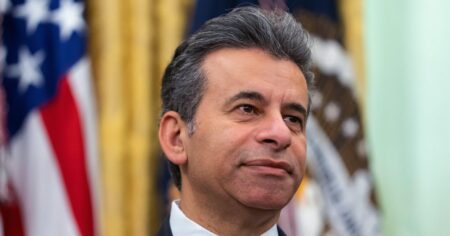
President Trump has announced his intention to nominate David Cummins as the next administrator of the Transportation Security Administration, a critical appointment that comes at a particularly challenging time for the agency responsible for safeguarding America’s transportation systems. Cummins brings a wealth of experience from both the private and public sectors, currently serving as senior vice president of citizen services at Serco, a prominent government services contracting firm. His professional background spans multiple leadership positions in transportation and large-scale operations management, including a notable role as director for the Salt Lake City Winter Olympics, where he demonstrated his ability to manage complex security and logistical challenges on an international stage. While the nomination has not yet been formally announced through official channels, sources close to the decision confirm that Cummins is the administration’s choice to take the helm of an agency that employs nearly 50,000 workers and touches the lives of millions of American travelers every single day. The current acting administrator, Ha Nguyen McNeill, will reportedly assist with the leadership transition, ensuring continuity during what promises to be a critical period for the agency. Cummins will need to navigate the Senate confirmation process, a procedure that can be rigorous and time-consuming even under the best circumstances, but which becomes even more complicated given the current political climate and the operational challenges facing the TSA.
An Agency Under Unprecedented Pressure
The timing of this nomination couldn’t be more critical, as the Transportation Security Administration finds itself grappling with a perfect storm of challenges that threaten its ability to fulfill its core mission of keeping American travelers safe. The agency is currently dealing with significant funding instability, severe staffing shortfalls, and mounting operational pressure that has only intensified as travel volumes across the United States continue to surge beyond pre-pandemic levels. Making matters considerably worse, Cummins’ confirmation process will unfold against the backdrop of the longest partial government shutdown in American history, a situation that has created unprecedented strain on federal agencies across the board. The TSA has been particularly hard-hit by this shutdown, with real-world consequences that extend far beyond bureaucratic inconvenience. In recent congressional testimony, Acting Administrator McNeill painted a sobering picture of an agency under siege, warning lawmakers that prolonged funding lapses have severely strained both the workforce and day-to-day operations. She described rising absenteeism rates among TSA officers, increasing attrition that sees experienced personnel leaving the agency, and long checkpoint wait times at airports around the country that frustrate travelers and create potential security vulnerabilities. The acting administrator emphasized that the agency is struggling mightily to hire and retain officers during this period of budget uncertainty, a recruitment and retention crisis that couldn’t come at a worse time given that TSA must prepare for major global events on the horizon, including the 2026 FIFA World Cup, which will bring hundreds of thousands of international visitors to American cities.
The Human Cost of Government Shutdowns
Perhaps the most alarming statistic emerging from this crisis is the exodus of experienced TSA officers from the agency during the current Department of Homeland Security shutdown. More than 780 TSA officers have submitted their resignations during the ongoing funding lapse, choosing to leave federal service rather than continue working without reliable paychecks or clarity about their employment future. This figure is deeply concerning to DHS officials, who fear that the number could climb even higher in the coming weeks and months if the shutdown continues. Historical precedent gives weight to these concerns—the previous shutdown in 2025 drove nearly 1,100 officers to leave the agency, demonstrating that federal workers have limits to their patience and financial resilience when asked to work without pay or during periods of extreme uncertainty about their agency’s future. For a workforce of just under 50,000 employees, these staffing shortages represent far more than a temporary inconvenience or a line item in a budget report. The departures have profound long-term implications for both recruitment and retention, as the TSA’s reputation as an employer takes a hit and the remaining workforce becomes increasingly demoralized and overburdened. Each officer who leaves takes with them years of training, experience, and institutional knowledge that cannot be quickly or easily replaced. New hires require extensive training and time to develop the skills and judgment necessary to effectively screen passengers and cargo, meaning that today’s staffing losses will create operational challenges that persist long after any shutdown ends and funding is restored.
Leadership Transition at a Critical Moment
The transition from Acting Administrator Ha Nguyen McNeill to nominee David Cummins represents a significant shift in leadership at a moment when the TSA can least afford disruption or uncertainty about its direction. McNeill has been serving in the acting administrator role and brings considerable credentials to her position, having previously held senior roles both within TSA and across the broader national security community. Throughout her tenure, she has consistently emphasized the critical need for stable funding and operational continuity, making the case to Congress and the public that the TSA cannot function effectively as a start-and-stop operation subject to the whims of budget battles and political standoffs. Her warnings about workforce challenges and operational strain have been prescient and urgent, yet the agency continues to operate in crisis mode. The last Senate-confirmed TSA administrator was David Pekoske, who was confirmed to serve a second five-year term in 2022, providing a period of stable leadership that is now ending. As Cummins prepares to potentially take the reins, he will inherit not just an agency facing immediate operational challenges, but one whose workforce is exhausted, demoralized, and uncertain about the future. The transition itself must be managed carefully to avoid any additional disruption to operations or further erosion of workforce morale, which is why McNeill’s role in assisting with the leadership handoff will be crucial to maintaining whatever continuity is possible during this difficult period.
The Challenges Awaiting the New Administrator
If confirmed by the Senate, David Cummins will step into one of the most challenging leadership positions in federal service, with a daunting array of problems demanding immediate attention and long-term strategic thinking. His first priority will necessarily be addressing the staffing crisis, which threatens the TSA’s ability to fulfill its basic security screening mission at airports across the country. This will require not just hiring new officers to replace those who have resigned, but fundamentally rethinking the agency’s approach to recruitment, retention, compensation, and career development to make TSA employment more attractive and sustainable. Beyond staffing, Cummins will need to secure stable, predictable funding for the agency, making the case to Congress and the administration that the TSA cannot operate effectively on continuing resolutions and amid recurring shutdown threats. He will also need to prepare the agency for upcoming challenges, including the massive security operation required for the 2026 FIFA World Cup and the continuing evolution of security threats in an era of advancing technology and changing terrorist tactics. His experience managing complex operations during the Salt Lake City Olympics may prove invaluable, but the scale and scope of the TSA’s mission dwarfs even that major event. Additionally, Cummins will need to rebuild trust and morale within a workforce that has endured years of being treated as political pawns in budget battles, working through shutdowns without pay, and dealing with the daily stress of a high-pressure security mission with inadequate resources and support.
Looking Ahead: TSA’s Future Hangs in the Balance
The nomination of David Cummins to lead the Transportation Security Administration represents both an opportunity and a test for the agency and for America’s approach to transportation security more broadly. If Cummins is confirmed and given the resources and political support necessary to address the TSA’s challenges, he could potentially stabilize an agency in crisis and position it for long-term success in fulfilling its critical mission. However, if the underlying problems of funding instability, political dysfunction, and workforce challenges are not addressed, even the most capable administrator will struggle to prevent further deterioration of the agency’s capabilities. The stakes extend far beyond bureaucratic concerns or airport convenience—the TSA serves as a crucial frontline defense against terrorism and other threats to transportation security, screening approximately 2.5 million passengers per day and securing not just airports but also mass transit systems, railways, and other transportation infrastructure. The American traveling public depends on the TSA to keep them safe, and businesses rely on secure, efficient transportation systems to move people and goods. As Cummins prepares for his confirmation hearing and potential assumption of leadership, the entire nation should be paying attention to whether our political system can move beyond partisan gridlock to provide this essential agency with the stable leadership, adequate funding, and workforce support it needs to succeed. The coming months will reveal whether this nomination represents a genuine turning point for the TSA or simply another chapter in an ongoing story of governmental dysfunction and crisis management.