
Tourists Trapped on Australian Cliff Face Rescued in Dramatic Three-Hour Operation
A Morning Walk Turns Into a Life-Threatening Situation
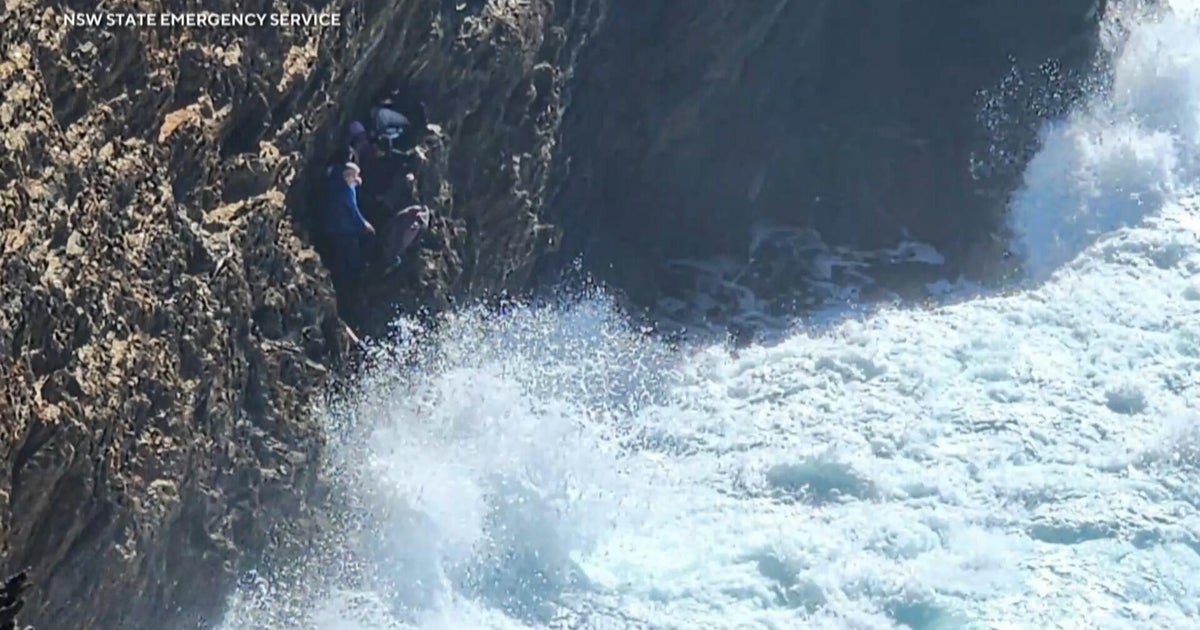
What started as a peaceful morning beach walk along Australia’s picturesque east coast quickly transformed into a terrifying ordeal for seven tourists when rising tides trapped them on a dangerous cliff ledge. The group, which included three young children, found themselves in an increasingly perilous situation as massive 16-foot waves crashed closer and closer to their precarious perch. As the ocean’s power became more apparent with each passing minute, the stranded tourists scrambled up the rocky cliff face to find whatever safety they could on a narrow ledge, watching helplessly as the water level continued to rise beneath them. The situation highlighted how quickly coastal conditions can change and how even experienced beachgoers can find themselves in dangerous circumstances when nature’s forces align.
Quick Thinking and Emergency Response Save Lives
Fortunately for the trapped group, they had managed to keep their mobile phones dry and were able to immediately contact local police for emergency assistance. Pete Collins, who commands the local emergency services in the area, later reflected on just how close the situation came to turning tragic. “If the waves had come up any higher and washed them off, that’s the worst,” he explained, acknowledging the very real danger the tourists faced. The narrow window of time available to rescue teams meant that every second counted, and the decision-making process had to be both quick and precise. Emergency responders arrived on scene knowing they were racing against both time and tide, with the ocean’s relentless advance leaving little room for error in planning and executing the rescue operation.
Helicopter Rescue Deemed Too Dangerous
When first responders assessed the situation, their initial instinct was to attempt an aerial rescue using a helicopter, which would typically be the fastest method to extract people from such a difficult location. However, after careful evaluation of the conditions, rescue coordinators made the crucial decision that helicopter extraction would actually increase the danger rather than reduce it. The concern centered on the powerful downdraft created by helicopter rotors, which in this particular situation would likely push the already vulnerable tourists off their precarious ledge and into the churning waters below. This assessment required experienced judgment and an understanding of both aviation physics and the specific conditions of the rescue site. The decision to abandon the helicopter approach, while potentially extending the rescue time, ultimately demonstrated the professionalism and thoughtful risk assessment that characterized the entire operation.
Specialized Equipment Makes the Difference
With aerial rescue ruled out, the emergency response team turned to specialized rope rescue techniques and equipment, including a piece of technology called the Arizona vortex that would prove essential to the operation’s success. This device, which was originally invented in northern Arizona to address similar rescue challenges in that region’s rugged terrain, solved a critical problem that could have otherwise compromised the entire rescue effort. Collins explained the importance of this equipment in straightforward terms: “So if we didn’t have that device, dragging the ropes over the cliff edge would be, you know, it would just absolutely destroy the ropes because of the sharp edges on the rocks.” The Arizona vortex essentially protects rescue ropes from being cut or severely damaged by sharp rock edges, a common problem in cliff rescue scenarios where standard ropes would quickly fray and potentially fail under the stress of supporting human weight while being dragged across jagged surfaces. This technological solution represented years of learning from rescue operations around the world and demonstrated how equipment innovation continues to improve emergency response capabilities.
Volunteer Heroes Complete Successful Rescue
Perhaps the most remarkable aspect of this dramatic rescue operation is that the skilled professionals who successfully brought all seven tourists to safety over the course of three intense hours were not paid emergency workers, but rather unpaid volunteers. These dedicated community members have committed their time and energy to training for exactly these kinds of scenarios, spending years practicing rope rescue techniques, studying coastal conditions, and preparing for the moment when their skills would be desperately needed. Their successful execution of this complex operation demonstrated not only their technical proficiency but also their dedication to protecting both residents and visitors in their coastal community. The three-hour operation required sustained focus, physical endurance, and the ability to work as a coordinated team under pressure, with lives literally hanging in the balance. These volunteer rescuers exemplify the spirit of community service that exists in many Australian coastal towns, where local residents recognize the dangers inherent in their beautiful but sometimes treacherous environment and step up to provide emergency response capabilities.
Lessons Learned and Coastal Safety Reminders
This incident serves as a powerful reminder of the unpredictable dangers that coastal environments can present, even to tourists who may believe they’re simply enjoying a routine beach walk. The rapid change in tidal conditions can trap unwary beachgoers against cliff faces, cut off access to safe exit routes, and create life-threatening situations within minutes. Coastal communities around the world regularly post tide schedules and warning signs, but visitors unfamiliar with local conditions may not fully appreciate how quickly circumstances can change or how powerful ocean forces can be. This rescue operation, while successful, represents significant resource expenditure and risk to rescue personnel, not to mention the trauma experienced by the tourists themselves, particularly the three children involved. Moving forward, this event highlights the importance of checking tide schedules before embarking on coastal walks, staying aware of changing conditions, having multiple planned exit routes, and respecting the power of the ocean. The successful rescue also validates the investment that communities make in training volunteer emergency responders and equipping them with specialized tools like the Arizona vortex system. While this story had a happy ending with all seven tourists safely rescued, it could have easily turned tragic, serving as a sobering reminder that nature’s beauty comes with inherent risks that must be respected and properly managed through awareness, preparation, and access to skilled emergency response capabilities.