
The Rise of Single-Session Therapy: A Modern Solution to Mental Health Care
Finding Relief in Just One Hour
As 2025 drew to a close, Julie Hart from Springfield, Virginia, found herself trapped in a mental loop she couldn’t escape. For years, she’d wrestled with a persistent issue that consumed her thoughts and made her second-guess every decision, word, and action from her past, present, and potential future. While traditional therapy seemed like the obvious answer, Hart decided to take a different path—one that required just sixty minutes of her time rather than an open-ended commitment to weekly sessions stretching into an uncertain future. The result surprised her. That single hour proved transformative, providing her with the clarity and tools she needed to move forward. “It helped me get unstuck, is how I would describe it, in a very positive, meaningful and effective way,” Hart explained. Her experience reflects a growing trend among people seeking mental health support: choosing focused, time-limited interventions over the traditional therapeutic model that has dominated the field for over a century.
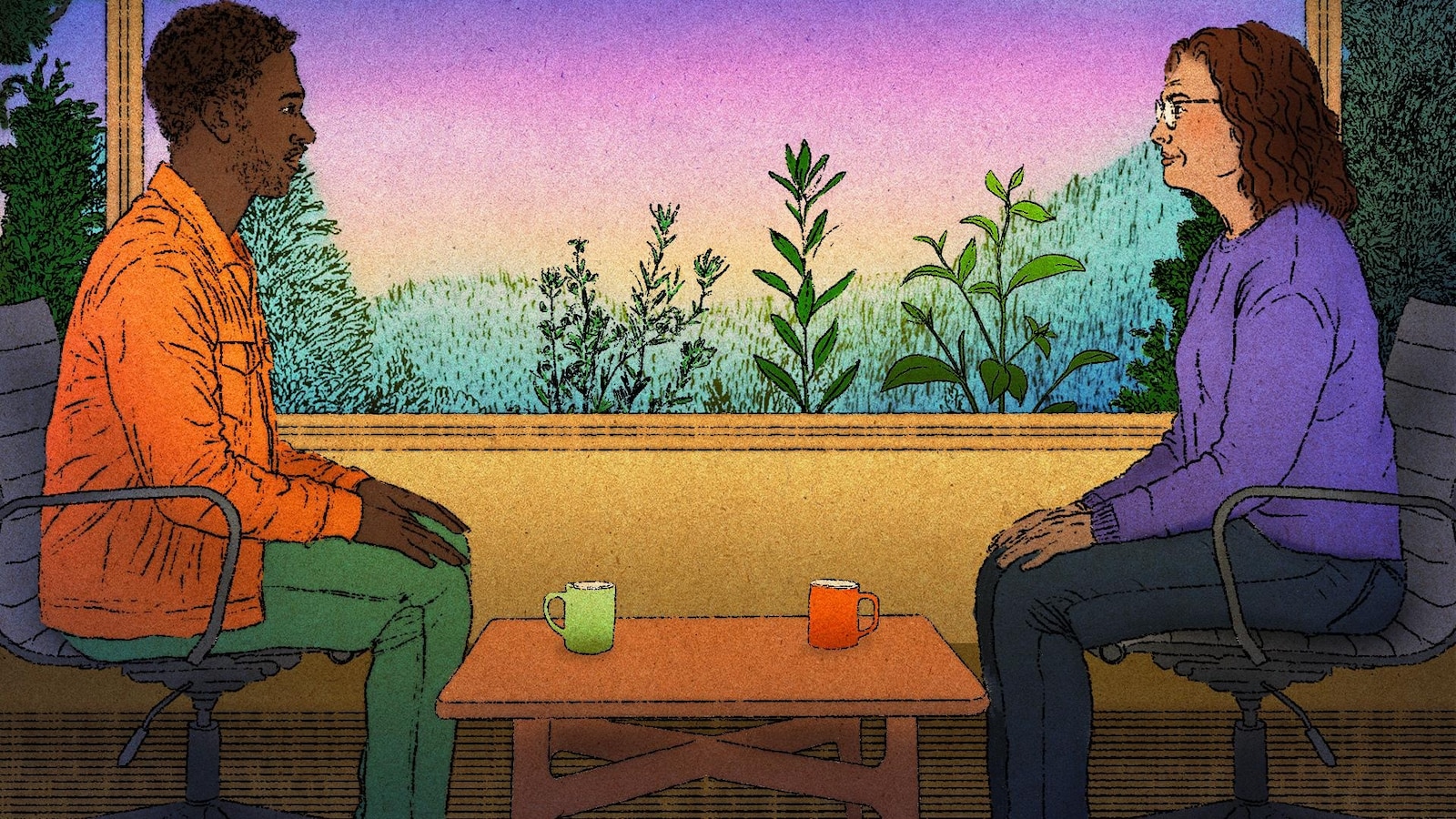
Hart’s decision to try single-session counseling places her among an expanding population of individuals who are reconsidering how they approach mental health treatment. Rather than signing up for the indefinite journey that conventional therapy often implies—one that might stretch across weeks, months, or even years—more people are opting for this streamlined alternative that promises targeted results. The concept is refreshingly straightforward: clients meet with a counselor for typically one hour, during which they work together to identify specific, actionable strategies for addressing a particular problem. The goal isn’t to completely resolve deep-seated issues or unpack a lifetime of experiences, but rather to equip clients with a practical toolkit they can use immediately to approach their challenges differently. As Hart discovered, sometimes the solutions are clearer than we think—we just can’t see them when we’re caught in the middle of our struggles. “Those strategies made all kinds of sense,” she noted. “But you can’t identify them when you’re in it.”
A Time-Tested Approach Gaining New Relevance
Single-session therapy isn’t actually a new innovation in the mental health field. In fact, Sigmund Freud, the father of psychoanalysis himself, famously offered this type of brief intervention. However, what’s changed dramatically is the frequency with which it’s being utilized and the reasons driving its increased adoption. According to Jessica Schleider, a psychology professor at Northwestern University and founding director of the Lab for Scalable Mental Health, this approach has emerged as an increasingly vital method for addressing significant gaps in mental health care accessibility—and the need has never been more acute. The financial barrier alone has become prohibitive for many Americans, with traditional therapy now costing several hundred dollars monthly. Even those fortunate enough to afford these fees or possess adequate insurance coverage face another formidable obstacle: extraordinarily long waiting lists that can delay treatment for weeks or months.
The supply-and-demand imbalance in mental health care has reached crisis proportions. “Even if we doubled miraculously the number of trained mental health professionals overnight, we still wouldn’t come anywhere close to meeting the need for mental health support,” Schleider emphasized. This shortage doesn’t even account for other substantial barriers that prevent people from accessing care, such as inflexible work schedules that make weekly therapy appointments impossible or childcare responsibilities that can’t be rearranged. Furthermore, research reveals a surprising pattern in traditional therapy: despite the model’s emphasis on ongoing treatment, the most common number of sessions people actually attend is just one. Many individuals begin the therapeutic process but never return for subsequent appointments, whether due to cost, scheduling conflicts, disappointment with the initial experience, or simply feeling they’ve gotten what they needed. “It’s a really elegant solution to get people support they need at the moment that need arises,” Schleider observed, highlighting how single-session therapy acknowledges and adapts to these realities rather than fighting against them.
How Single-Session Therapy Works Differently
Sharon Thomas, a psychologist who serves as director of single-session therapy at the Ross Center in Washington, D.C., explains that this therapeutic approach operates on a fundamentally different set of expectations than traditional therapy. Both counselor and client enter the session with a shared understanding: meaningful change is possible within this limited timeframe, and they expect to see measurable improvements in the client’s sense of self-efficacy and a reduction in symptoms after just one visit. This mindset shift is crucial to the process. Rather than conducting the comprehensive assessment of a client’s personal history and current life circumstances that typically characterizes initial therapy sessions, the counselor focuses laser-like attention on one specific problem the client wants to address. By the session’s conclusion, the client leaves with something tangible—a written plan outlining concrete steps they can take to alleviate their issue.
This focused approach offers particular appeal to those who find traditional therapy daunting or unnecessary for their needs. “Not everyone wants to discuss childhood trauma,” Thomas pointed out, acknowledging that the deep excavation of past experiences isn’t always what people seek or need. Instead, single-session therapy remains “very much focused on what the client wants to focus on in that moment.” Arnold Slive, a psychology professor at Our Lady of the Lake University in Texas who helped pioneer walk-in single-session therapy clinics in Canada during the 1990s, believes most people can benefit from this approach, whether they’re navigating a temporary difficult situation like workplace conflict or managing something more persistent like anxiety. However, he’s careful to note that counselors still maintain their professional obligation to screen for self-harm risk, and individuals dealing with chronic mental health conditions may still require traditional long-term therapy or medication. “It’s not meant to replace all those other things that mental health professionals do, but it can help people feel better,” Slive explained.
Who Benefits and Why It Works
The single-session model operates on an empowering premise: every client already possesses inherent strengths and resources that can help them address their challenges. The counselor’s role isn’t to “fix” the client but rather to help them recognize and mobilize these existing capabilities. This approach also tends to attract a different demographic than traditional therapy, including people who might be skeptical about whether conventional therapeutic treatment is right for them or those hesitant to make an open-ended commitment to something unfamiliar. “It’s like putting a toe in the water,” Slive suggested, describing how the lower-stakes nature of a single session can make mental health support more accessible to those who might otherwise never seek help. For these individuals, knowing they’re committing to just one hour rather than an indefinite therapeutic relationship can make the crucial difference between seeking support and continuing to struggle alone.
The growing acceptance of single-session therapy isn’t based merely on anecdotal success stories or practical convenience—it’s increasingly supported by robust scientific evidence. Schleider noted that research on single-session interventions has “blossomed in the past five or 10 years to where this has become a more well-established form of mental health support.” Her laboratory conducted an extensive meta-analysis examining 415 clinical trials, and the results were compelling: in most cases, single-session approaches successfully reduced mental health difficulties across a wide spectrum of problems, including depression and anxiety, and these benefits applied to both young people and adults. This evidence base provides important validation for both clients considering this option and mental health professionals implementing it, demonstrating that meaningful change doesn’t always require lengthy treatment.
Lasting Impact and Future Possibilities
For Julie Hart, the benefits of her single-session experience have proven remarkably durable. Months after that initial sixty-minute appointment, she continues to feel better and reports increased confidence in her ability to manage challenges. Importantly, she also feels more secure knowing she has the option to return if needed—the door remains open without the pressure of an ongoing commitment. “I left feeling so optimistic,” Hart recalled, capturing the sense of hope and empowerment that effective single-session therapy can provide. Her experience illustrates how this approach can serve not as a lesser alternative to traditional therapy but as a genuinely effective intervention in its own right, one that respects clients’ autonomy, works within their constraints, and delivers practical results.
As mental health care continues to evolve in response to growing demand and persistent access barriers, single-session therapy represents an important expansion of available options. It acknowledges the reality that people seek mental health support for different reasons, with different needs, constraints, and preferences. For some, traditional long-term therapy remains the best path forward. For others, a focused, time-limited intervention provides exactly what they need to get unstuck and move forward with renewed clarity and confidence. By offering this alternative, mental health professionals can reach more people, at the moment they need help, with an approach that’s both evidence-based and pragmatically suited to the realities of modern life. As research continues to validate its effectiveness and more practitioners incorporate it into their offerings, single-session therapy is likely to become an increasingly mainstream component of comprehensive mental health care—proof that sometimes, profound change really can happen in just one hour.