


Trump Administration Installs Christopher Columbus Statue at White House Complex
A Controversial Monument Returns to Prominence
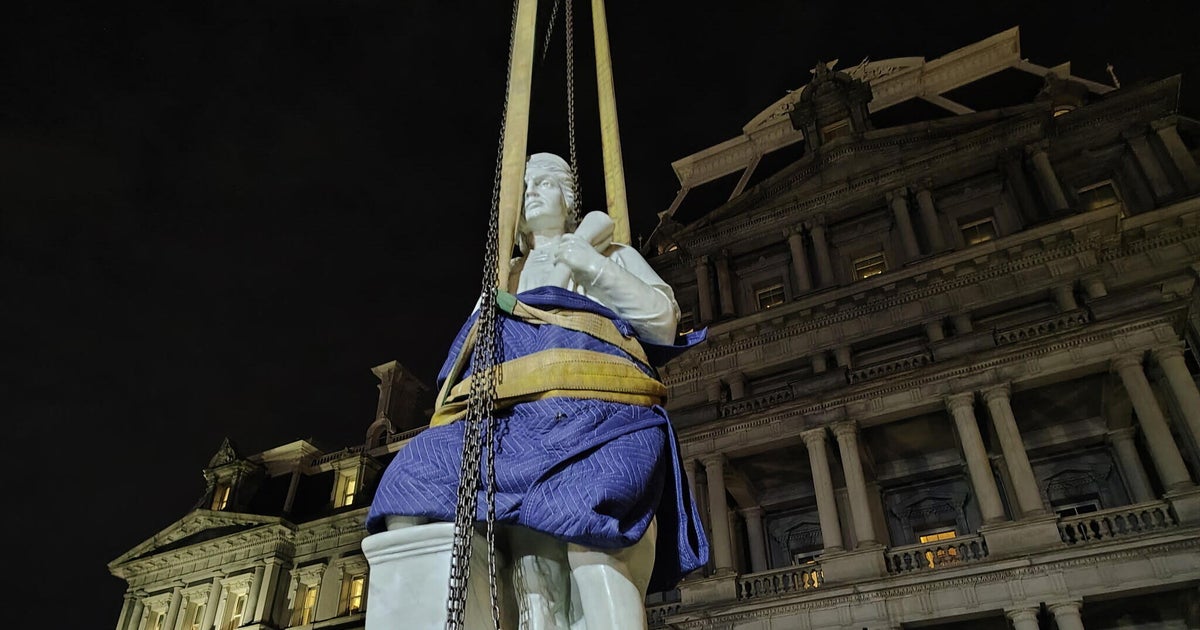
The Trump administration has made a bold symbolic statement by installing a statue of Christopher Columbus on the grounds of the Eisenhower Executive Office Building, which sits adjacent to the White House. This move represents the latest chapter in an ongoing cultural debate about how America should remember its history and which figures deserve public honor. What makes this installation particularly significant is that the statue is a replica of one that was dramatically toppled and thrown into Baltimore’s Inner Harbor during the summer of 2020, a period marked by intense nationwide protests against institutional racism and police brutality following George Floyd’s death. The White House didn’t mince words about its intentions, posting on social media platform X that “In this White House, Christopher Columbus is a hero, and President Trump will ensure he’s honored as such for generations to come.” This declaration signals more than just the placement of a statue—it represents a deliberate positioning in the ongoing culture wars about whose stories get told and celebrated in American public spaces.
The Journey from Harbor to White House
The statue itself has a fascinating and tumultuous history that reflects the divided opinions Americans hold about Columbus’s legacy. Created by sculptor Will Hemsley, who works from his studio in Centreville on Maryland’s Eastern Shore, the marble monument was originally displayed in Baltimore before protesters destroyed it on July 4, 2020. That Independence Day saw protesters pull down the statue and cast it into the waters of Baltimore’s Inner Harbor, joining dozens of other Columbus monuments across the nation that were vandalized or removed during that turbulent summer. The statue has now been reborn as a replica and found a new home in one of the most visible and protected locations in America. John Pica, a Maryland lobbyist who serves as president of the Italian American Organizations United, which owns the statue, expressed satisfaction with the arrangement. “We are delighted the statue has found a place where it can peacefully shine and be protected,” Pica said, highlighting the organization’s decision to loan the statue to the federal government specifically for placement at or near the White House, where it would be safeguarded from further acts of protest or vandalism.
Two Competing Historical Narratives
The placement of this statue crystallizes two fundamentally different ways of understanding Columbus and his role in world history. President Trump and his supporters embrace what they consider a traditional view of Columbus—one that celebrates his 1492 voyage as the pivotal moment that began European presence in the Americas and set in motion the development of the modern economic and political order that would eventually lead to the creation of the United States. From this perspective, Columbus represents courage, exploration, and the bridging of two worlds that had been separated for millennia. However, a growing number of Americans, particularly in recent years, have come to view Columbus through a dramatically different lens. Rather than a heroic explorer, they see him as a primary symbol of Western Europe’s violent conquest of the New World, the exploitation of its resources, and the subjugation, enslavement, and genocide of native peoples. This revisionist view doesn’t deny that Columbus crossed the Atlantic or that his voyages had world-changing consequences; rather, it questions whether those consequences deserve celebration, particularly given the catastrophic impact European colonization had on indigenous populations who saw their civilizations destroyed, their people enslaved or killed by disease and violence, and their lands stolen.
The Broader Cultural Battlefield
The dispute over Columbus statues forms just one front in a larger cultural and political battle over how Americans should understand their history. In recent years, numerous communities, institutions, and government entities have chosen to replace Columbus Day with Indigenous Peoples Day, a holiday that shifts focus from the European explorers to the native populations who inhabited the Americas long before 1492 and who have survived despite centuries of oppression. This movement reached a symbolic milestone in 2021 when President Joe Biden became the first U.S. president to officially mark Indigenous Peoples Day with a presidential proclamation. For many Americans, particularly those from indigenous communities and those who champion a more critical examination of American history, this shift represents long-overdue recognition of perspectives that have been marginalized or excluded from mainstream historical narratives. The renaming also reflects broader efforts to reckon with historical injustices and to acknowledge that the “discovery” of America from a European perspective represented the beginning of catastrophe from the perspective of the millions of people already living here. This cultural shift has extended beyond holidays to include the removal of numerous Confederate monuments and statues of other controversial historical figures from public spaces across the country.
Trump’s Cultural Counteroffensive
President Trump has positioned himself as the defender of what he views as traditional American values and history against what he characterizes as attacks by the political left. He dismisses the movement to de-emphasize Columbus as an example of “left-wing arsonists” deliberately distorting history and manipulating Americans’ collective memory for political purposes. “I’m bringing Columbus Day back from the ashes,” Trump declared last April, using language that deliberately evoked the destruction of Columbus statues. His rhetoric on this issue echoes themes from his 2024 campaign, in which he frequently portrayed himself as protecting American heritage from those who would tear it down. “Democrats did everything possible to destroy Christopher Columbus, his reputation, and all of the Italians that love him so much,” Trump complained, framing the debate not just as a historical or cultural question but as a partisan political issue. By connecting Columbus with Italian American heritage, Trump also positions the debate in terms of ethnic identity and pride, suggesting that criticism of Columbus represents an attack on the Italian American community. This framing has resonated with some Italian Americans who have long viewed Columbus as a symbol of their community’s contributions to America and who see the removal of Columbus statues as erasure of their heritage.
The Significance of Symbolic Politics
The installation of the Columbus statue at the White House complex carries significance that extends far beyond the physical monument itself. In an era of intense polarization, battles over statues, holidays, and historical interpretation serve as proxy wars for larger disagreements about American identity, values, and the direction of the country. For Trump supporters, the statue represents resistance to what they perceive as excessive political correctness, historical revisionism, and the abandonment of traditional values. It sends a message that the administration will not bow to pressure from protesters or progressive activists. For Trump’s critics, however, the statue represents a troubling refusal to reckon honestly with the darker chapters of American history and a willingness to celebrate figures whose actions caused immense suffering. The debate also highlights fundamental questions about how societies should handle complicated historical legacies—whether figures who accomplished notable things but also caused great harm should be publicly honored, contextualized, or removed from places of prominence. As the Columbus statue now stands under the protection of the federal government on White House grounds, it serves as a daily reminder that Americans remain deeply divided about their past and, consequently, about how to move forward into the future. Whether one views the statue as appropriate recognition of a consequential historical figure or as an offensive celebration of colonialism and genocide depends largely on which version of history one accepts—and that fundamental disagreement shows no signs of resolution anytime soon.