

Ben Sasse’s Final Mission: A Call for America to Address What Really Matters
A Terminal Diagnosis Brings Clarity and Urgency
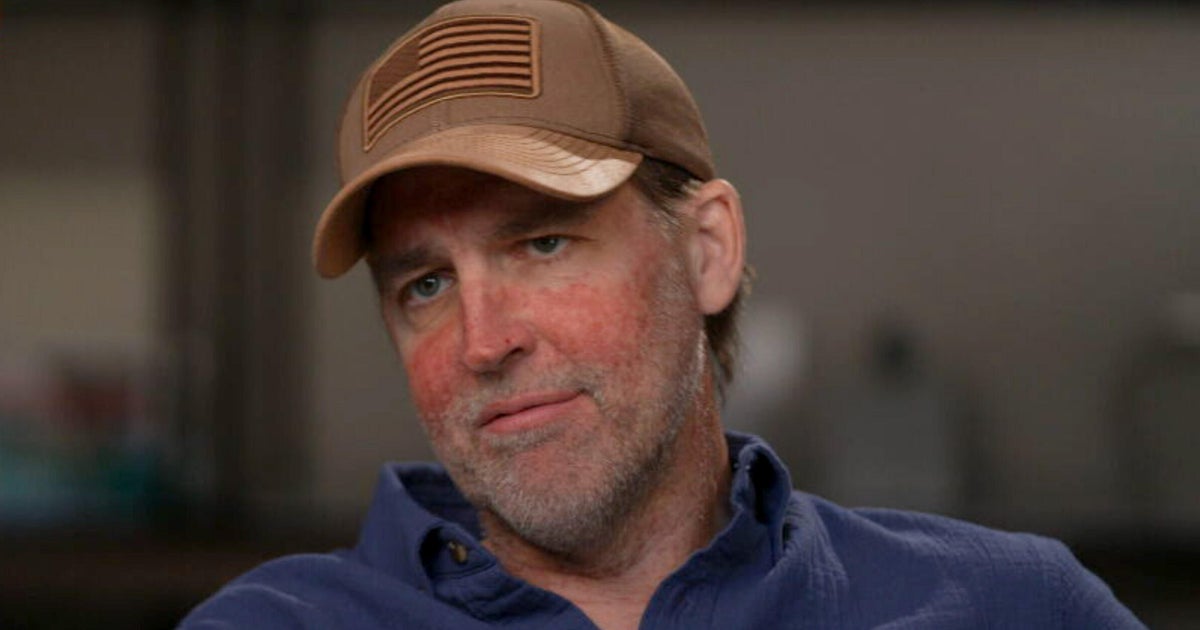
Former Nebraska Senator Ben Sasse received devastating news late last year when doctors diagnosed him with stage-four pancreatic cancer that had already metastasized throughout his body. With tumors in his lungs, liver, blood vessels, and lymph nodes, physicians gave him just three to four months to live. Now, months later and still fighting, Sasse describes himself as living on “extended time”—a gift he attributes to what he calls “providence, prayer and a miracle drug.” Rather than retreating from public life, the 52-year-old Republican has chosen to use whatever time remains to speak about issues he believes Congress and the American people are dangerously ignoring. In candid interviews with CBS News’ “60 Minutes” and at a town hall event, Sasse pulled back the curtain on both his personal battle with cancer and his profound concerns about America’s future, offering a perspective that only someone facing mortality can provide.
The experimental drug daraxonrasib has been nothing short of miraculous for Sasse, shrinking his tumor volume by an astonishing seventy-six percent over four months. Before finding this treatment, his pain was so excruciating that he would stand under scalding hot water in the shower at night, trying to burn away the throbbing sensation of tumors pressing against his spine. Now, with the help of morphine and this breakthrough medication, he’s experiencing significantly less pain and cherishing each additional day he gets with his wife Melissa, to whom he’s been married for thirty-one years, and their three children. The maker of daraxonrasib recently reported encouraging results from clinical trials, with patients surviving a median of 13.2 months compared to just 6.7 months with traditional chemotherapy. For Sasse, this drug hasn’t just extended his life—it’s given him a platform and a mission to advocate for changes he believes could save countless other lives while addressing the existential challenges facing American democracy.
Why Congress Has Lost Its Way
Sasse’s journey through Washington provides him with a unique vantage point to critique American politics. A Nebraska native who earned his Ph.D. in history from Yale University, he was elected to the Senate in 2014 and won reelection even after publicly clashing with President Trump. But in 2022, just two years into his second term, he made the unexpected decision to resign from Congress to become president of the University of Florida. When asked why he left elected office, Sasse didn’t mince words: the Senate was “very, very unproductive.” He found himself spending most of each week away from his wife and three children in Nebraska, missing precious family time while accomplishing very little of substance in Washington. “We didn’t do real things,” he said bluntly. “And it felt like the opportunity cost was really high.”
In Sasse’s view, Congress has become consumed by what he calls “reductionistic tribalism”—a narrow, combative approach to politics that rewards appealing to extreme niches rather than building broad coalitions or addressing complex, long-term challenges. Social media has made this problem exponentially worse, he argues, by creating incentives for politicians to perform rather than deliberate. “It doesn’t encourage a lot of humility,” Sasse explained. “It doesn’t encourage someone saying, ‘You know what, I used to believe this, but I listened to somebody else, and I realized I was wrong, and I’ve learned this new thing.’ There’s no audience for that.” Instead of wrestling with the fundamental questions that will determine America’s future—questions about national security, the future of work, and how to build resilient institutions—Congress spends its time on what Sasse dismisses as “smack-down nonsense” designed to go viral and energize partisan bases.
Sasse believes structural reforms could help address these problems. He thinks the House of Representatives should be dramatically expanded from 435 members to around 2,000, which would mean each representative would serve far fewer constituents and potentially have closer connections to their communities. The Senate, meanwhile, needs to become “less like Instagram” and more deliberative, focusing on serious long-term policy work rather than theatrical performances for cable news and social media. Looking toward the future, Sasse posed a sobering question: “In 2040, or 2050, or 2060 does the republic survive? I suspect yes, and I would bet yes. But it’s not a 90/10 bet.” For the republic to endure, he argues, it requires “people who do deliberative, long-form discourse, learning, humility and community building”—none of which characterizes today’s political environment. Despite these concerns, Sasse maintains a complicated optimism, believing in what “a free people and a republic can build” if they start with what he calls the “little platoons” of family, extended kin networks, neighborhoods, workplaces, and places of worship.
The AI Revolution Congress Isn’t Preparing For
When asked what critical issues Congress is neglecting, Sasse immediately pointed to artificial intelligence—a transformation he describes as “both glorious and horrific at the same time.” In his assessment, the digital revolution will “accelerate almost everything about the human experience,” and most economic activity—”anything that can be reduced to a series of steps”—will be automated, becoming “really, really cheap, really fast, and really ubiquitous.” He envisions a future, perhaps just three to thirteen years away, when we’ll all have robots that build other robots for us, ushering in an era of what he calls “ubiquitous abundance” where high-quality goods are plentiful and inexpensive.
But this technological utopia comes with a dark side that Sasse believes neither political party is adequately addressing. The wholesale automation of work will create massive economic upheaval and profound uncertainty for millions of Americans. “It’s pretty scary to not know what you’re going to do to add value for your neighbor 10 or 25 years from now,” Sasse observed. He pointed out something that previous generations could take for granted but future generations cannot: “We’ve never lived in a world where 22-year-olds couldn’t assume that the work they did they would be able to do until death or retirement. And we’re never going to have that world again.” This represents a fundamental rupture in the social contract and the American Dream, yet Congress isn’t having serious conversations about how to prepare workers for this transition, how to restructure education, or how to maintain social cohesion when traditional employment disappears for vast segments of the population. According to Sasse, “Neither of these parties really have very big or good ideas about 2030 or 2050, at a national security level, at a future of work level, at an institution-building level.” While lawmakers focus on daily controversies and partisan point-scoring, the ground is shifting beneath the entire economy, and America is sleepwalking into a future it hasn’t prepared for.
Fighting for the Right to Try Experimental Treatments
Sasse’s personal experience with cancer has reinforced his long-held belief that more Americans should have access to experimental treatments. During the CBS News town hall, he heard from Mike Hugo, a thirty-seven-year-old father who was diagnosed four years ago with glioblastoma, an aggressive brain cancer that typically kills within months. Hugo participated in a clinical trial for a medical device called Optune, and the treatment has given him four additional years with his family—time to attend “two daddy-daughter dances that no one said I would ever make” with his daughters, who were five and seven when he was diagnosed and are now nine and eleven.
Hugo’s question to Sasse focused on why so few people can access these potentially life-saving treatments, despite a 2018 federal “right to try” law that Sasse himself co-sponsored. The legislation was designed to make it easier for patients with life-threatening illnesses to access not-yet-approved drugs under certain circumstances, but Sasse admits the law was watered down during the congressional process, making it stricter than originally intended. He advocates for going much further, saying he’d like to “decentralize a lot more of those decisions to individuals, patients and their care providers, rather than one-size-fits-all rules at the FDA.” With tens of thousands of Americans diagnosed with pancreatic cancer each year and a “tiny” survival rate, Sasse argues that “the best way to make a dent in that is more experiments.”
His proposal is straightforward but controversial: significantly expand access to experimental drugs and let patients, in consultation with their doctors, decide how much risk they’re willing to accept in pursuit of more time with their families. “I’d like to open up the dial quite a bit and let a lot more people get access to these drugs,” he said. Critics of such “right to try” expansions worry about weakening patient protections and the possibility of desperate patients being exploited, but for Sasse—who credits an experimental drug with giving him months of additional life he wouldn’t have had otherwise—the calculus is clear: when you’re facing certain death, the opportunity to try something new, even if it’s risky and unproven, should be more readily available. His advocacy comes not from abstract policy debates but from lying awake at night in agony, from the visceral understanding of what it means to be told you have months to live, and from the profound gratitude of being given a reprieve he knows many others never receive.
Confronting Mortality with Faith and Honesty
When Sasse publicly revealed his diagnosis in late December through a jarring social media post announcing “I’m gonna die,” it shocked many who knew the energetic former senator. The weeks leading up to his diagnosis had been a nightmare of unexplained, escalating pain, culminating in those desperate late-night showers where he turned the water as hot as possible, trying to scald his back to distract from the throbbing of tumors pushing against his spine. The diagnosis, when it finally came, at least gave a name to his suffering: stage-four pancreatic cancer with metastases throughout his body. Doctors gave him three to four months—a timeframe he has now narrowly exceeded, leading him to hope he might “crank and live a year instead of a handful of months.”
As a deeply committed Christian, Sasse has prayed for a miracle, but he’s quick to clarify that healing isn’t “my biggest prayer.” His faith gives him a broader perspective on mortality: “We’re all mortal. We’re all on the clock. We’re all going to be pushing up daisies eventually, and I think wisdom requires us to grapple with our death and our finitude early.” Rather than viewing his terminal diagnosis as purely tragic, Sasse sees it as containing “a touch of grace because it forces me to tell the truth.” The truth he’s been forced to confront is one he believes all humans instinctively resist: “The lie I want to tell myself is that I’m the center of everything. And I’m going to be around forever. And I can work harder, and store up enough, that I can atone for my own brokenness. I can’t.” Facing death has stripped away pretense and forced a reckoning with what truly matters—not political ambition, not accomplishments, not wealth or status, but relationships, legacy, and what we leave behind.
The hardest part of this reckoning involves his family. Sasse and Melissa have been married for thirty-one years, and while he acknowledges “we’re going to be apart for a time,” he expresses confidence that “she’s tough and gritty and theologically rooted, and she’s going to be fine.” Their two adult daughters are twenty-four and twenty-two, and Sasse struggles with the milestones he’ll miss: “I want to walk them down the aisle when they get married. That’s not likely to be. That’s not the math on my time card.” But perhaps most painful is leaving behind their fourteen-year-old son, whom Sasse calls their “providential surprise.” He knows his son will “be fine” and will have “other wise men and women to put a hand on his shoulder,” yet the loss is almost unbearable: “But I’m super bummed to not be there at 16 and 18 and 20 years old in his life. I want to give him more advice than he wants, and I want to put my arm on his shoulder, that arm on his shoulders to get taller.” These aren’t the words of a politician crafting a message but of a father facing the grief of an abbreviated life.
A Parting Vision for America
When asked about his “parting wish” for America, Sasse’s answer connected his personal confrontation with mortality to what he sees as a national need. “I think we need to have more deliberation about our mortality and our finitude to therefore get back to wisdom about what living a life of gratitude looks like,” he said. It’s a characteristically thoughtful response from someone who has spent his career as both an academic and a public servant, but it’s also deeply personal—a distillation of what he’s learned from his own diagnosis and what he wishes more Americans understood before facing their own mortality.
His prescription for the country is remarkably simple and profoundly countercultural in our hyperconnected, distracted age: “I’d like a lot more dinner tables to turn off the devices, put them out of the room, pour a big glass of wine, break bread together, and wrestle with some really grand questions about what you’re building for your family and your next generation.” This vision of families gathering without the intrusion of technology, engaging in serious conversations about values and legacy and the future, stands in stark contrast to the shallow, reactive, tribalistic politics Sasse criticizes. It’s a call to recover what he sees as the foundational “little platoons” of civil society—the intimate connections and local communities that make democracy possible and life meaningful.
Sasse’s message, delivered from the perspective of someone living on borrowed time, challenges both our politics and our personal priorities. He’s arguing that Congress needs to think bigger and longer-term, particularly about transformative challenges like artificial intelligence that will reshape society. He’s advocating for medical reforms that would give more patients access to experimental treatments that could extend their lives. But more fundamentally, he’s calling for a cultural shift—away from the performative tribalism of social media and partisan combat, and toward the deliberative, humble, community-centered approach he believes republics require to survive. Whether America will heed this call remains uncertain, and Sasse himself admits the odds of the republic thriving in 2040, 2050, or 2060 aren’t as favorable as he’d like. But having faced his own mortality with remarkable honesty and grace, he’s determined to spend whatever time remains sounding the alarm and pointing toward what he believes could be a better path forward—not just for politics, but for how we live our lives and what we pass on to the next generation.