


A Royal History: British Monarchs’ Historic Visits to America
The Crown Returns to American Shores
King Charles III is embarking on a momentous journey this week—his first state visit to the United States since ascending to the British throne in 2022. Accompanied by Queen Camilla, the royal couple will spend four days on American soil, from Monday through Thursday, with a schedule that includes some of the nation’s most prestigious venues and traditions. On Tuesday, King Charles will make history by addressing a joint meeting of Congress, followed by an elegant banquet dinner at the White House that evening. The visit will conclude with a trip to New York City on Wednesday. While this marks Charles’ inaugural state visit as monarch, he’s no stranger to America—he’s crossed the Atlantic an impressive nineteen times before his coronation. This latest visit continues a rich tapestry of royal-American relations that spans nearly a century, with British royals creating unforgettable memories on American soil, from sampling quintessentially American foods to sharing dance floors with Hollywood legends.
Breaking New Ground: The First Royal Visit of 1939
The story of British royal visits to America begins in June 1939, a pivotal moment in history just before the world would be engulfed in the flames of World War II. King George VI and Queen Elizabeth—who would later be affectionately remembered as the Queen Mother—made the groundbreaking journey across the Atlantic, becoming the first reigning British monarchs to officially visit the United States. This wasn’t just a diplomatic formality; it was a bridge-building mission during uncertain times. President Franklin D. Roosevelt understood the importance of personal connections and hosted the royal couple at a quintessentially American event: a picnic. It was there, in a delightfully informal setting that contrasted sharply with the pomp and circumstance usually surrounding royalty, that King George VI experienced something completely novel to his aristocratic palate—his very first hot dog. This simple moment, a British king enjoying America’s favorite casual food, symbolized the warmth and accessibility that would characterize British-American relations for decades to come. The visit wasn’t just about hot dogs and handshakes, though; it laid crucial groundwork for the alliance that would prove vital when war broke out just months later.
The Young Princess and the Post-War Years
The tradition continued into the next generation when Princess Elizabeth, not yet queen, visited Washington, D.C., in October 1951 with her husband, Prince Philip, the Duke of Edinburgh. This visit came during a particularly interesting time—the White House itself was undergoing extensive renovations, making it temporarily uninhabitable for its usual residents. As a result, President Harry Truman graciously hosted the royal couple at Blair House, the president’s official guest residence. Despite the unusual accommodations, the visit maintained all the dignity and significance of a major diplomatic event. Princess Elizabeth, demonstrating the thoughtfulness that would later characterize her seven-decade reign, presented President Truman with exquisite gifts that spoke to both nations’ shared history and appreciation for fine craftsmanship: a beautifully framed 17th-century mirror and oil painting, along with an elegant candelabra. Six years later, now as Queen Elizabeth II, she returned to American shores in October 1957 for a formal state visit commemorating the 350th anniversary of the Jamestown settlement, one of the earliest permanent English colonies in North America. This visit showcased the queen’s curiosity about American culture. At Arlington National Cemetery, she and Prince Philip solemnly laid wreaths at the Tomb of the Unknown Soldier, honoring the sacrifice of American service members. But perhaps the most memorable moment came at a Maryland football game, where the queen, witnessing the imposing size of American football players up close, turned to the governor with genuine bewilderment and asked, “Where do you get all those enormous players?” It was a question that captured both her charm and the cultural differences that made these visits so fascinating.
Cultural Exchanges and Coming of Age in the ’60s and ’70s
The 1960s and 1970s saw a new generation of royals discovering America with fresh eyes and youthful enthusiasm. Princess Margaret, Queen Elizabeth II’s vivacious younger sister, embarked on an ambitious 14-day tour of the United States in November 1965, bringing her unique blend of royal sophistication and adventurous spirit. Her visit included a formal dinner at the White House with President Lyndon B. Johnson, maintaining the diplomatic traditions that had been established by previous visits. But Margaret’s tour was about more than state dinners and protocol—she embraced American culture with genuine enthusiasm. In California, she experienced the thrill of riding a San Francisco cable car, that iconic symbol of the city by the bay. At Universal Studios in Hollywood, she met the legendary filmmaker Alfred Hitchcock on the set of his thriller “Torn Curtain,” bridging the worlds of British royalty and American cinema. Five years later, in July 1970, a young Prince Charles, just 21 years old and already heir to the throne, made his first official visit to the United States alongside his sister, Princess Anne. The siblings met with President Richard Nixon and were honored with a formal White House dinner, but Charles also got to experience a slice of American life that was far removed from palace protocol. First daughter Tricia Nixon took him to a baseball game, introducing the future king to America’s favorite pastime. Then came 1976, a year of tremendous significance for the United States—the bicentennial celebration of American independence. With delicious irony, Queen Elizabeth II returned in July of that year to help America celebrate two hundred years of freedom from British rule. Hosted by President Gerald Ford and First Lady Betty Ford, the visit included a spectacular state dinner in the White House Rose Garden, a visit to the U.S. Capitol, and another solemn ceremony at Arlington National Cemetery. The queen’s gift to President Ford perfectly captured the historical moment: a soup tureen painted with images of both the White House and Independence Hall, symbols of American democracy born from British colonial roots.
The Diana Years and Royal Glamour of the ’80s and ’90s
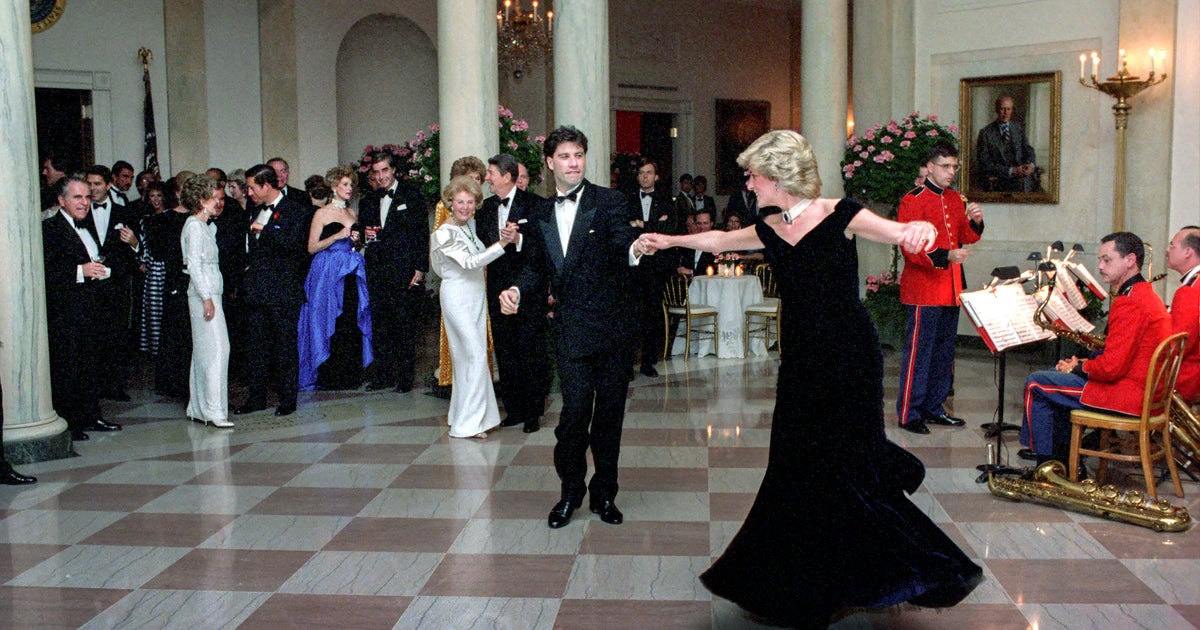
The 1980s and 1990s brought a new level of glamour and global fascination to royal visits, particularly with the emergence of Princess Diana as an international icon. In November 1985, Prince Charles and Princess Diana visited Washington, D.C., where they were received by President Ronald Reagan and First Lady Nancy Reagan. The visit included the customary tea and formal gala dinner, but what happened that evening would become one of the most iconic images of the decade. Princess Diana, radiant in a midnight blue velvet gown, took to the dance floor in the White House’s Cross Hall with none other than John Travolta, dancing to music from “Saturday Night Fever.” The image of the princess and the Hollywood star dancing together captured imaginations worldwide and represented a perfect fusion of royal elegance and American pop culture. The photographs from that evening would become among the most reproduced images of Diana’s life. Queen Elizabeth II herself returned to Washington in May 1991, when President George H. W. Bush and First Lady Barbara Bush hosted a state dinner in her honor. The visit included a charming tradition—the queen ceremonially planted a little-leaf linden tree on the South Lawn of the White House, a living symbol of the enduring relationship between the two nations. However, the visit is perhaps best remembered for what became known as the “talking hat” speech. When the queen delivered remarks at a welcoming ceremony, the lectern had not been adjusted for her modest height, and the audience could only see her hat bobbing above the microphones, not her face. With characteristic good humor, two days later when addressing Congress, the queen opened with a joke that brought down the house: “I do hope you can see me today.”
The Modern Royal Family Embraces 21st Century America
As the new millennium progressed, British royal visits to America evolved to reflect changing times and interests while maintaining their diplomatic importance. In May 2007, Queen Elizabeth II and Prince Philip made what would be their final official visit to the United States. Hosted by President George W. Bush to commemorate the 400th anniversary of Jamestown, the trip included a white-tie state dinner, a visit to Children’s National Medical Center, and a wreath-laying ceremony at the World War II Memorial. But before arriving in Washington, the royal couple made a stop that was particularly close to the queen’s heart—the 133rd Kentucky Derby at Churchill Downs. As a lifelong racing enthusiast who owned and bred racehorses herself, the queen was in her element watching America’s most prestigious horse race, her genuine joy evident in every photograph. The younger generation of royals continued building bridges between Britain and America. In December 2014, Prince William and Catherine, then known as the Duchess of Cambridge, made a three-day visit that perfectly blended traditional diplomacy with modern cultural engagement. Prince William’s meeting with President Barack Obama at the White House honored the formal traditions, and his speech at the World Bank addressed serious global issues. But the couple also showed their more relaxed side at a Brooklyn Nets basketball game in New York, where they met music royalty Jay-Z and Beyoncé, as well as NBA superstar LeBron James, demonstrating how the royal family could connect with contemporary American culture. Just a few months later, in March 2015, then-Prince Charles and Camilla, who at the time held the title Duchess of Cornwall, embarked on a four-day official tour that included meetings with President Obama and then-Vice President Joe Biden at the White House. “I think it’s fair to say that the American people are quite fond of the royal family,” Obama remarked during the visit, capturing a sentiment that decades of these diplomatic and cultural exchanges had cultivated. The royal couple’s itinerary included visits to the National Archives, Arlington National Cemetery, George Washington’s Mount Vernon estate in Virginia, and even a stop in Louisville, Kentucky, continuing the royal family’s connection to America’s horse racing heritage. Now, as King Charles III makes his first state visit as monarch, he continues this remarkable tradition that has spanned more than eight decades, strengthened diplomatic ties, bridged cultural differences, and created countless memorable moments that have enriched the relationship between two nations bound by history, language, and shared values.