



Tragic Discovery in Colombia: American Airlines Flight Attendant Found Dead After Disappearance
The Disappearance That Sparked an International Search
The vibrant nightlife of Medellín, Colombia, turned into the backdrop of a heart-wrenching mystery when Eric Fernando Gutierrez Molina, a 32-year-old American Airlines flight attendant, vanished during what should have been a routine layover. The North Texas resident and U.S. citizen had gone out for an evening of recreation on Saturday night with a colleague in El Poblado, one of Medellín’s most popular neighborhoods known for its bustling restaurant scene, trendy bars, and international tourism appeal. It was supposed to be a casual night out between coworkers in a city that has worked hard to shed its troubled past and reinvent itself as a tourist destination. Instead, it became the last time anyone would see Gutierrez Molina alive. When Sunday morning arrived and he failed to report for his scheduled return flight from Medellín to Miami, alarm bells began ringing. His longtime partner, Ernesto Carranza, knew immediately that something was terribly wrong when his repeated attempts to reach Gutierrez Molina went unanswered—a scenario completely out of character for someone so reliable and communicative.
Disturbing Clues and Mounting Concerns
As hours turned into days without contact, the circumstances surrounding Gutierrez Molina’s disappearance grew increasingly troubling. Carranza discovered that his partner’s phone was pinging locations in Medellín that made no sense given where he should have been. “Both locations were nowhere near where he was supposed to sleep for the night,” Carranza explained, his worry evident in every word. The digital breadcrumbs painted a picture of someone who had strayed far from the safety of his hotel, whether by choice or force remained unknown. Adding another disturbing layer to the mystery, the fellow flight attendant who had accompanied Gutierrez Molina on that fateful Saturday night reported having significant gaps in her memory of the evening’s events. According to Sharom Gil, a friend of the missing flight attendant, the colleague couldn’t recall important parts of the night—a detail that raised immediate red flags about what might have transpired in those Medellín bars. The possibility of drink tampering or other foul play immediately entered the minds of those following the case, as such incidents have unfortunately become more common in popular tourist destinations worldwide.
The Heartbreaking Discovery
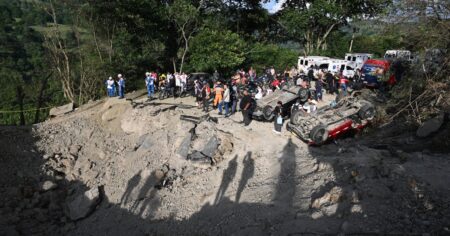
On Friday, after days of searching and hoping against hope for a different outcome, Medellín Mayor Fico Gutierrez delivered the news that everyone had been dreading. A lifeless body had been discovered in a remote area between the municipalities of Jerico and Puente Iglesias during the ongoing search operation for Gutierrez Molina. The mayor, speaking through social media with the gravity the situation demanded, indicated that there was “a very high probability that it is this person,” though official identification would need to wait for the coroner’s examination in Medellín. In a gesture that spoke to the human side of this tragedy, Mayor Gutierrez personally took on the unbearable task of informing Gutierrez Molina’s father, who had traveled to Colombia to search for his son. “I have just personally delivered the painful news to his father, who is in Medellín,” the mayor wrote, expressing solidarity with the family and friends now facing unimaginable grief. The mayor confirmed that an investigation was underway, though additional details about the circumstances of death, the condition of the body, or potential suspects were not immediately available to the public.
The Response from American Airlines and U.S. Officials
American Airlines, the employer that had sent Gutierrez Molina to Medellín as part of his regular duties, responded to the tragedy with expressions of support and cooperation. In a statement provided to CBS News Texas, the airline said it was “actively engaged with local law enforcement officials in their investigation and doing all we can to support our team member’s family during this time.” The statement reflected the difficult position airlines find themselves in when their crew members face dangers during international layovers—responsible for their employees’ well-being yet dependent on foreign authorities for investigation and resolution. The U.S. government’s response came through multiple channels, though constrained by privacy laws and diplomatic protocols. When contacted by CBS News Texas, representatives from the U.S. Embassy in Colombia explained that they were “restricted from speaking about most individual cases due to federal privacy laws,” a standard limitation that often frustrates families seeking information during international crises. The State Department, however, did acknowledge awareness of “reports” of Gutierrez Molina’s disappearance and stated it was “closely tracking the situation.” In a statement that reflected the current administration’s priorities, officials emphasized that “The Trump Administration has no greater priority than the safety and security of Americans, and the State Department stands ready to provide all consular assistance to Americans in need abroad.”
Understanding the Risks Faced by Airline Crews
This tragedy shines a spotlight on the often-overlooked vulnerabilities faced by airline crew members during international layovers. Flight attendants and pilots regularly find themselves with limited time in foreign cities, sometimes in areas where language barriers exist and local dangers may not be immediately apparent. The pressure to decompress after long flights, combined with the camaraderie that naturally develops among crew members, often leads to social outings in unfamiliar territory. While most of these experiences pass without incident, the Gutierrez Molina case serves as a sobering reminder that airline employees working international routes face unique safety challenges that desk-based workers never encounter. Medellín specifically presents a complicated picture for international visitors. The city has undergone remarkable transformation over the past two decades, evolving from one of the world’s most dangerous cities during the height of the drug cartel violence into a modern metropolis that attracts digital nomads, tourists, and business travelers. However, like many cities experiencing rapid change, pockets of danger remain, and criminals sometimes specifically target foreigners perceived as wealthy or vulnerable.
A Community in Mourning and Questions That Remain
As news of the discovery spread through the aviation community and beyond, colleagues, friends, and family of Eric Fernando Gutierrez Molina began processing the reality that he would not be coming home. His longtime partner Carranza faces the unimaginable task of moving forward without someone who was central to his life. The North Texas community that Gutierrez Molina called home mourns the loss of one of their own, taken far too soon under circumstances that remain unclear. The investigation now falls to Colombian authorities to determine exactly what happened during those missing hours between Saturday night’s outing and the discovery of the body days later in a location far from the tourist districts. Questions abound: How did Gutierrez Molina end up in such a remote location? What caused his death? Was this a tragic accident, a robbery gone wrong, or something more sinister? Did the memory gaps reported by his colleague indicate they were both targeted? As the coroner’s office works to formally identify the body and determine cause of death, these questions weigh heavily on everyone who knew and loved Eric Fernando Gutierrez Molina. This tragedy serves as a painful reminder that behind every uniform, every service with a smile at 30,000 feet, and every “welcome aboard” greeting stands a real person with loved ones, dreams, and a life that extends far beyond the aircraft cabin. The aviation industry and travelers alike owe it to workers like Gutierrez Molina to remember their humanity and the risks they accept as part of bringing us safely to our destinations around the world.