

Colorado Court Overturns Sentence of Former Election Official in Voting System Breach Case
Appeals Court Finds Free Speech Violation in Sentencing
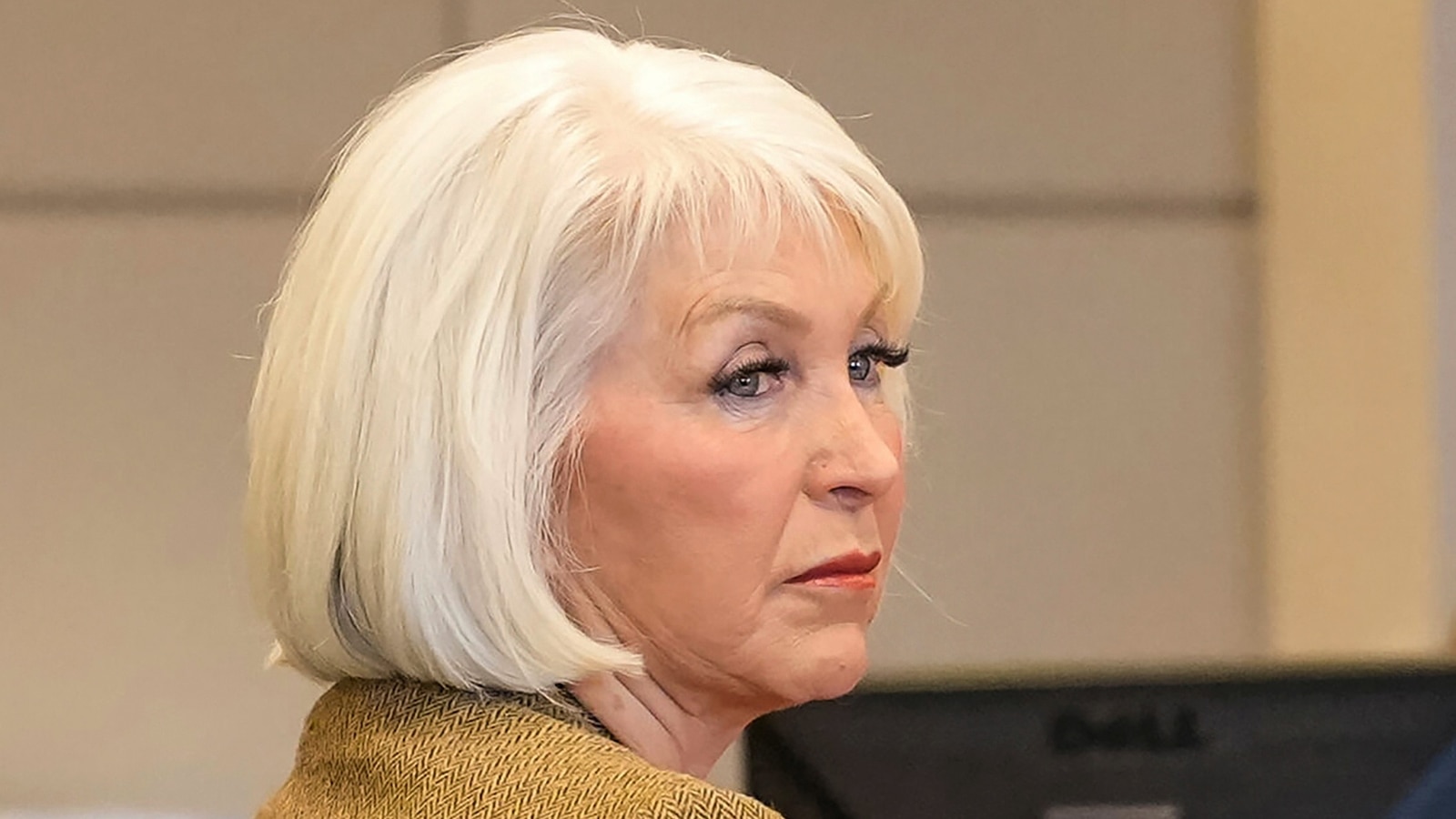
In a significant legal development that has captured national attention, a Colorado appeals court has made the decision to overturn the prison sentence handed down to Tina Peters, a former county clerk who became a controversial figure in the aftermath of the 2020 presidential election. Peters had been convicted for her role in what prosecutors described as a deliberate scheme to illegally access voting systems while searching for evidence to support claims of widespread election fraud. The appeals court’s Thursday ruling represents a complex legal outcome: while the judges upheld Peters’ criminal conviction, they determined that the original sentencing process had violated her constitutional rights. The case now returns to a lower court, where a judge will be tasked with determining an appropriate new sentence that addresses the crimes Peters committed without penalizing her for her political beliefs about election integrity.
The Original Crime and Conviction
Tina Peters served as the clerk for Mesa County, Colorado, a position that gave her significant responsibilities and access to election systems and infrastructure. According to prosecutors and evidence presented at trial, Peters abused this trusted position by providing unauthorized access to the county’s election software to an individual with connections to Mike Lindell, the CEO of MyPillow and a prominent supporter of former President Donald Trump. Lindell had become one of the most vocal proponents of claims that the 2020 election had been stolen through fraud, and he actively sought evidence to support these allegations. Peters facilitated this security breach as part of what she apparently believed was an effort to uncover proof of election manipulation. The breach represented a serious violation of election security protocols and potentially compromised the integrity of voting systems. After a trial in 2023, Peters was found guilty of multiple charges related to her unauthorized sharing of access to secure election equipment. In 2024, a district court judge sentenced her to nine years in prison, a sentence that reflected the seriousness with which the court viewed her crimes and what the judge characterized as her dangerous beliefs about election fraud.
The Appeals Court’s Reasoning and Free Speech Concerns
The three-judge appeals panel issued a nuanced ruling that separated Peters’ actions from her beliefs. In their written decision, the judges made clear that while Peters’ conviction would stand, the sentencing judge had crossed a constitutional line by allowing Peters’ political views about election fraud to influence the severity of her punishment. “Here, the trial court’s comments about Peters’ belief in the existence of 2020 election fraud went beyond relevant considerations for her sentencing,” the appeals court wrote in their opinion. The judges drew a critical distinction between thought and action, emphasizing that “her offense was not her belief, however misguided the trial court deemed it to be, in the existence of such election fraud; it was her deceitful actions in her attempt to gather evidence of such fraud.” This reasoning reflects fundamental principles of American constitutional law, which protect citizens’ rights to hold and express unpopular or even factually unsupported beliefs without facing government punishment for those beliefs themselves. The appeals court essentially ruled that while the justice system can and should punish criminal actions, it cannot impose harsher penalties simply because a defendant holds controversial political views or subscribes to conspiracy theories. The court’s decision acknowledges that Peters broke the law through her deceptive conduct in breaching election systems, but it also protects her First Amendment rights by preventing her beliefs about election fraud from being treated as an aggravating factor in her sentencing.
Political Dimensions and Presidential Pardon Attempt
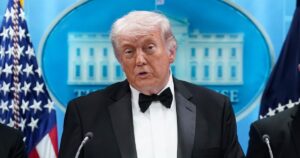
The Peters case exists at the intersection of criminal justice and the highly polarized political debates surrounding the 2020 election. Her case attracted attention from prominent figures in the election denial movement, and in December, President Donald Trump announced that he would pardon Peters as part of what he characterized as an effort to provide relief to individuals he believed were politically persecuted for questioning election results. However, this pardon announcement revealed either a misunderstanding of constitutional law or a symbolic gesture, as the President of the United States does not have the legal authority to pardon individuals convicted of state crimes. Presidential pardons only apply to federal offenses, while Peters was convicted in Colorado state court under state laws. This limitation on presidential power reflects the federalist structure of American government, which maintains separate and independent state and federal judicial systems. Trump’s announcement of a pardon he couldn’t legally grant highlighted the political nature of the case and demonstrated how Peters had become something of a cause célèbre among those who continue to question the legitimacy of the 2020 election. Her supporters view her as a whistleblower who was persecuted for attempting to investigate election irregularities, while her critics see her as someone who violated her oath of office and compromised election security based on unfounded conspiracy theories.
State Officials Respond to the Appeals Decision
Following the appeals court’s decision to send the case back for resentencing, Colorado Secretary of State Jena Griswold issued a strong statement emphasizing that Peters should receive no preferential treatment when a new sentence is determined. Griswold, who as the state’s chief election officer has been responsible for defending Colorado’s election integrity against unfounded allegations, expressed concern about the broader impact of Peters’ actions beyond the immediate criminal conduct. “Her actions have been repeatedly used to spread conspiracy theories, amplify falsehoods, and fuel dangerous election lies,” Griswold stated, highlighting how the case has reverberated far beyond Mesa County. From Griswold’s perspective and that of other election officials nationwide, Peters’ breach of election systems has provided ammunition for those seeking to undermine public confidence in democratic processes. The unauthorized access Peters facilitated has been cited in countless social media posts, speeches, and presentations by election conspiracy theorists as supposed evidence of vulnerability in voting systems, even though no actual evidence of fraud was discovered through Peters’ illegal actions. Griswold’s statement suggests that state prosecutors will argue during resentencing that Peters’ crimes should still result in significant prison time based solely on the nature of her criminal conduct, even if her beliefs cannot be used against her. Peters’ attorney did not immediately provide comment to media outlets following the appeals court decision, leaving questions about the defense strategy for the upcoming resentencing hearing.
Implications for Election Security and Criminal Justice
The Peters case carries implications that extend well beyond one former county clerk’s criminal conviction. On one level, it serves as a cautionary tale about the consequences of allowing political beliefs to override professional obligations and legal constraints. Election officials across the country hold positions of trust that are fundamental to democratic governance, and Peters’ abuse of that trust to facilitate unauthorized access to voting systems represents a serious breach that threatened election security and public confidence. The successful prosecution and conviction in this case send a message that such actions will face serious legal consequences regardless of the political motivations behind them. At the same time, the appeals court’s ruling on the sentencing issue reinforces important constitutional protections that apply even to individuals whose beliefs may be widely rejected or considered dangerous. The principle that people cannot be punished more harshly for their political views, even misguided ones, is fundamental to free speech protections. As the case returns to the district court for resentencing, the judge will face the challenge of imposing a sentence that appropriately reflects the seriousness of Peters’ crimes—her deceptive conduct in breaching election security—without crossing the line into punishing her for her beliefs about election fraud. Whatever sentence is ultimately imposed will likely face scrutiny from both those who believe Peters should face the maximum consequences for undermining election integrity and those who view her prosecution as politically motivated. The case serves as a reminder of the complex legal and political challenges that have emerged in the aftermath of the 2020 election and the ongoing tensions between election security, free speech, and the rule of law in an era of deep political polarization.