
A Father’s Viral Plea: How One TikTok Video Is Transforming the Stem Cell Donor Registry
When Desperation Meets Social Media
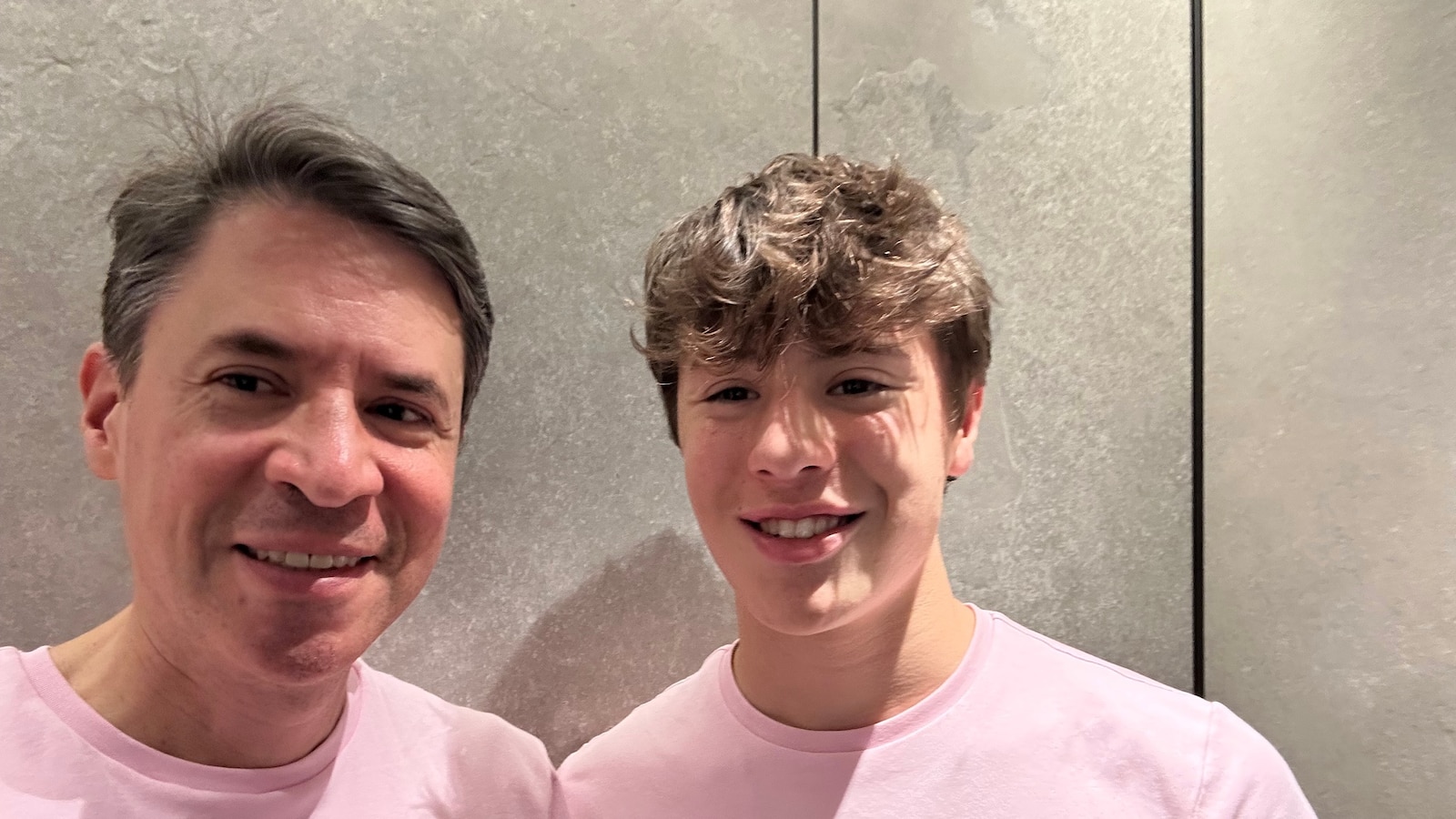
In February, Juan Uribe, a 51-year-old father from Colombia, did something he never imagined he’d do—he posted his first TikTok video. But this wasn’t about dance trends or funny moments; it was a desperate plea to save his teenage son’s life. Looking directly into the camera with raw emotion etched across his face, Juan introduced himself and explained that his 15-year-old son Max had been diagnosed with a rare blood disorder that would soon develop into deadly forms of blood cancer—MDS or AML—unless he received a stem cell transplant within just a couple of months. The statistics were both encouraging and terrifying: with a perfect stem cell match, Max would have a 95% five-year survival rate. Without it, the outcome was unthinkable. As a father, Juan said he would do absolutely everything within his power to ensure his son not only survived but faced the minimum number of complications throughout the treatment process. His voice carried the weight of every parent’s worst nightmare—watching helplessly as your child faces a life-threatening condition. What happened next would demonstrate the remarkable power of social media when combined with genuine human compassion and a community willing to act.
The Challenge of Finding a Match in a System That Doesn’t Represent Everyone
Juan’s video wasn’t just about asking for help; it was about exposing a critical gap in the stem cell donor registry system. He explained that finding a perfect match for Max had proven extraordinarily challenging, primarily because his son is half-Colombian. Juan himself is 100% Colombian, while his wife is 100% Caucasian, creating a unique genetic combination in their son that makes finding a match incredibly difficult. The statistics he shared were eye-opening and deeply troubling: if you’re white, you have approximately an 80% chance of finding a match in the global registries. If you’re Latino, that percentage drops dramatically to just 50%. And if you’re Black, the odds plummet even further to a mere 30%. These disparities aren’t just numbers—they represent real lives hanging in the balance, families facing impossible situations, and children like Max whose survival depends on the diversity of the donor registry. The problem lies in how human leukocyte antigens (HLA) work. These proteins, found on most cells in the human body, help your immune system identify which cells belong and which don’t. Doctors match blood stem cell donors with patients based on HLA typing, but each person has 12 unique HLA markers, creating millions of possible combinations. The ideal donor is typically between 18 and 35 years old, as younger donors generally provide the best outcomes for recipients.
A Twin Sister Who Couldn’t Help and the Search for Millions
Perhaps one of the most heartbreaking aspects of Max’s situation is that even his twin sister, Sophie, isn’t a match for him. Out of nearly 43 million registered donors worldwide—a number that seems impossibly large—there are currently zero perfect matches for this 15-year-old boy fighting for his life. The uniqueness of Max’s genetic composition, resulting from his mixed Latino and Caucasian heritage, means that the combination of HLA markers in his system is exceptionally rare. According to NMDP (formerly known as the National Marrow Donor Program and Be The Match), approximately 75% of patients who need a stem cell transplant don’t have a matching donor within their own family and must depend on registries for their survival. This statistic underscores just how common Max’s predicament actually is—countless families face this same desperate search. Juan understood that finding Max’s match would require casting an extraordinarily wide net, which is why he set an ambitious goal: to generate 1 million new donor registrations in his son’s name. He knew that with millions more people in the system, especially those with diverse ethnic backgrounds, the probability of finding Max’s perfect match—and matches for thousands of others in similar situations—would increase significantly.
When a Prayer Goes Viral: 30 Million Views and Counting
The response to Juan’s video exceeded anything he could have imagined. Within just 24 hours of posting, more than 11 million people had viewed his heartfelt plea. The video continued to spread across social media platforms like wildfire, eventually reaching 30.3 million views and still climbing. But the real measure of success wasn’t in the view count—it was in the action those views inspired. People from all corners of the world began requesting swab kits in Max’s name, willing to undergo the simple process of registering as potential stem cell donors. The NMDP partnered directly with Juan, who continued posting updates and information on social media, directing people to the organization’s website where they could learn about the donation process and request their own swab kits. According to the organization, more than 59,000 people have registered to become stem cell donors through the registry since Juan’s initial video was posted. These weren’t just abstract numbers on a screen; each registration represented a real person making a conscious decision to potentially save a stranger’s life, inspired by one father’s courage to be vulnerable and ask for help in the most public way possible.
A Father Who Left Everything Behind
Juan’s dedication to saving his son extends far beyond posting a video. Last summer, he made the difficult decision to leave his job entirely, choosing to focus all his time and energy on finding Max a donor and navigating the complex medical landscape his family now inhabited. In conversations with media outlets, Juan has been clear about the stakes: “This is a once in a lifetime opportunity. If we don’t get it right now, we can’t reverse the consequences. We can’t reverse the trauma that we put my son through. So I have to be absolutely focused on this. This is the only thing that matters at this point in time.” These words capture the impossible weight carried by parents of seriously ill children—the knowledge that every decision, every action, every moment counts in ways that most of us will hopefully never have to fully understand. Juan’s single-minded focus reflects both his desperation and his determination. He knows that there’s no second chance at this, no opportunity to go back and try again if they get it wrong. The window for Max to receive his transplant is narrow, measured in months rather than years, adding an urgent ticking clock to an already overwhelming situation.
Creating Lasting Change Beyond One Family’s Story
While Juan’s immediate goal is finding a match for Max, he’s increasingly aware that his efforts are creating ripples far beyond his own family’s crisis. With each new person added to the stem cell donor registry, every patient currently searching for their lifesaving match gains a renewed chance at finding their cure. The 59,000 new registrations inspired by Max’s story don’t just potentially help Max—they create possibilities for thousands of other patients, many of whom come from minority communities that have been historically underrepresented in donor registries. Juan has begun to articulate a broader vision for how society should approach stem cell donation, suggesting that signing up should become as routine and automatic as getting a driver’s license or registering to vote. “I think that there’s a real gap and a real need to try and make it as automatic as getting your license or signing up to be a voter,” he explained. “That’s really how widespread we should make getting people added to the stem cell registry.” This perspective represents a shift from viewing donor registration as an extraordinary act of charity to seeing it as a basic civic responsibility—something we should all do as members of a community that cares for one another. Max’s story has illuminated the critical need for greater diversity in stem cell donor registries and demonstrated how social media, often criticized for its superficiality, can be harnessed for genuine good. As Juan continues his fight to save his son, he’s simultaneously helping to build a more inclusive system that might prevent other families from facing the same desperate odds. The 30 million people who watched his video saw more than a father’s plea—they saw a reflection of our shared humanity and the power we have to help one another in our darkest moments.