
Rediscovering History: The Sunken Danish Warship Dannebroge Emerges from Copenhagen Harbor
A 225-Year Journey from Battle to Discovery
In a remarkable archaeological find that bridges centuries of history, marine archaeologists in Denmark have located the wreck of the Dannebroge, a Danish warship that met its tragic end during the Battle of Copenhagen in 1801. The discovery, announced exactly 225 years after the historic naval clash, has stirred emotions across Denmark, where this battle holds a special place in the national consciousness. Denmark’s Viking Ship Museum is spearheading the excavation efforts, working against the clock to document and preserve this significant piece of maritime history before the site becomes part of Lynetteholm, an ambitious construction project that will transform Copenhagen Harbor into a new housing district by 2070.
The circumstances surrounding this excavation are as challenging as they are historic. Divers are working in extraordinarily difficult conditions, navigating through thick sediment with virtually zero visibility at a depth of 15 meters below the harbor’s surface. Despite these obstacles, the team has already uncovered fascinating artifacts that are beginning to tell the story of those who served aboard the Dannebroge during its final, fateful battle. According to Morten Johansen, the museum’s head of maritime archaeology, this discovery represents far more than just another shipwreck—it’s an opportunity to understand the human experience of naval warfare in the early 19th century from a perspective that written accounts cannot fully capture.
The Historic Battle That Changed Denmark’s Fate
The Battle of Copenhagen in 1801 stands as one of the most significant naval engagements in European history, marking a crucial moment not only for Denmark but for the broader geopolitical landscape of the Napoleonic era. The confrontation pitted the legendary British Admiral Horatio Nelson and his fleet against Denmark’s navy, which had formed a protective blockade outside Copenhagen Harbor. The British objective was clear and strategic: force Denmark to withdraw from the League of Armed Neutrality, an alliance of Northern European powers that included Russia, Prussia, and Sweden. This alliance posed a significant threat to British naval supremacy and commercial interests during a period of intense conflict across Europe.
At the heart of this brutal engagement was the Dannebroge, a 48-meter warship that served as the Danish flagship under the command of Commodore Olfert Fischer. Nelson identified the Dannebroge as his primary target, and the vessel bore the full brunt of the British assault. The battle itself was a nightmare of fire and destruction, with cannon fire ripping through the ship’s upper deck before incendiary shells ignited a devastating fire. Thousands of sailors on both sides were killed or wounded during the hourslong clash, which would become known as one of Nelson’s “great battles.” The violence of naval warfare during this era was particularly horrific—as Johansen explains, it wasn’t necessarily the cannonballs themselves that caused the most casualties, but rather the deadly wooden splinters that exploded like grenade shrapnel when cannonballs struck the ships’ hulls, tearing through flesh and bone indiscriminately.
The Legend and the Reality
The Battle of Copenhagen has given us not only historical records but also one of the English language’s most enduring idioms. The phrase “to turn a blind eye” is believed to have originated during this very battle when Nelson, having lost sight in his right eye in a previous engagement, deliberately ignored a signal from his superior to withdraw. According to historical accounts, Nelson placed his telescope to his blind eye and remarked, “I have only one eye, I have a right to be blind sometimes.” This act of defiance allowed him to continue the attack, ultimately securing British victory. Eventually, Nelson offered a truce, and a ceasefire was negotiated with Denmark’s Crown Prince Frederik, but not before the Dannebroge had suffered catastrophic damage.
The stricken flagship, engulfed in flames and unable to continue fighting, slowly drifted northward through the harbor waters. Then came the moment that would echo through Copenhagen’s history—the ship exploded with such force that the deafening roar could be heard throughout the entire city. For the citizens watching from shore, this explosion symbolized not just the loss of a ship, but a traumatic defeat that would reshape Denmark’s international position and national identity. The event has been chronicled extensively in books and immortalized on canvases, becoming deeply woven into the fabric of Danish national memory and culture. Yet despite all the written accounts from enthusiastic spectators and historians, the physical evidence from the wreck itself offers something that words cannot—a tangible connection to the lived experience of those who faced death that day.
Uncovering Personal Stories Beneath the Waves
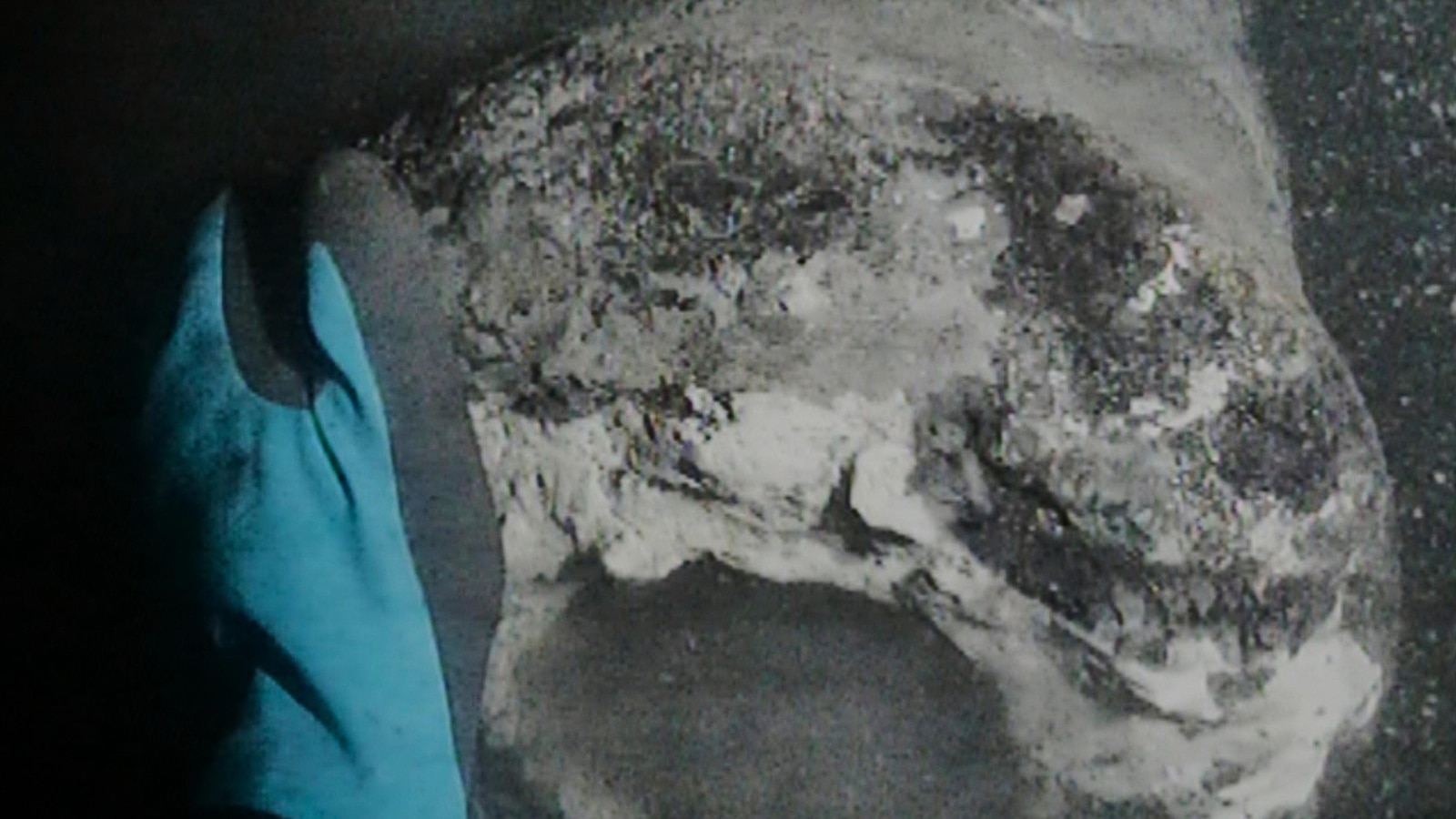
The artifacts emerging from the murky depths of Copenhagen Harbor are transforming our understanding of life and death aboard the Dannebroge. Marine archaeologists have discovered two cannons that once defended the ship, along with uniforms and insignia that speak to the formal structure of naval service. More poignant are the personal items: shoes that once protected a sailor’s feet, bottles that may have contained water, rum, or medicine, and ceramics used for daily meals. Perhaps most haunting is the discovery of part of a sailor’s lower jaw—possibly belonging to one of the 19 crew members who remain unaccounted for and who likely perished when the ship exploded or in the chaos of battle.
These discoveries are made even more remarkable by the extreme conditions under which divers must work. Marie Jonsson, a diver and maritime archaeologist on the team, describes working in an environment where visibility can completely disappear within moments. Clouds of silt, disturbed from the seabed by the divers’ movements, create an underwater darkness so complete that visual navigation becomes impossible. In these moments, archaeology becomes an exercise in tactile sensation—feeling with fingers instead of seeing with eyes, identifying objects through touch alone. The site is littered with cannonballs, creating additional hazards for divers already working in challenging conditions. Yet despite these difficulties, the team has also uncovered more delicate items, including pieces of basketry, which Jonsson notes help create a more intimate connection with the people who once called the Dannebroge home.
Racing Against Development and Time
The urgency surrounding this excavation cannot be overstated. The archaeological team is engaged in a literal race against time, working to document and preserve the Dannebroge before the site is consumed by the Lynetteholm project, one of Copenhagen’s most ambitious urban development initiatives. This megaproject envisions the creation of an entirely new district in the middle of Copenhagen Harbor, with completion expected by 2070. Once construction begins in earnest, access to the wreck site will become impossible, and any artifacts or information not recovered now may be lost forever. Marine archaeologists began surveying the area late last year, carefully targeting locations that matched historical records of the flagship’s final position.
The identification process has combined multiple scientific approaches to confirm that this wreck is indeed the Dannebroge. Experts have compared the dimensions of the wooden components found at the site with old drawings and ship plans from the period, finding remarkable consistency. Additionally, dendrochronological dating—a technique that uses the patterns of tree rings in wood to determine when a tree was cut—has confirmed that the timber matches the year the ship was constructed. These multiple lines of evidence, combined with the location, the presence of numerous cannonballs, and the artifacts associated with a flagship of the period, leave little doubt about the wreck’s identity. The discovery was announced by the Viking Ship Museum on April 2nd, exactly 225 years after the battle occurred, adding symbolic weight to an already significant historical moment.
Rewriting History Through Archaeological Evidence
What makes this discovery particularly valuable to historians and archaeologists is the opportunity it provides to reexamine a pivotal event in Scandinavian history through physical evidence rather than relying solely on written accounts. Historical records from battles are notoriously problematic—they’re often written by victors, influenced by propaganda, affected by the limited perspective of individual observers, or colored by nationalistic sentiment. The physical remains of the Dannebroge, by contrast, offer unbiased testimony about the realities of naval warfare, shipbuilding techniques, daily life at sea, and the final moments of a ship under catastrophic attack.
Johansen emphasizes that while enthusiastic spectators wrote extensively about the Battle of Copenhagen, we actually know relatively little about the experience of being aboard a ship while it was being systematically destroyed by enemy fire. The archaeological evidence is beginning to fill these gaps, providing insights into everything from the construction techniques used in Danish naval vessels to the personal possessions sailors carried with them, from the layout of life aboard a warship to the devastating effects of British gunnery. Each artifact—whether a uniform button, a ceramic dish, or a fragment of human remains—adds another piece to the puzzle, helping researchers construct a more complete and nuanced understanding of this crucial moment in Danish and European history. As Jonsson poignantly observes, these objects bring us closer to the individuals who served aboard the Dannebroge, transforming them from nameless casualties in historical accounts into real people with lives, hopes, and stories worth remembering.