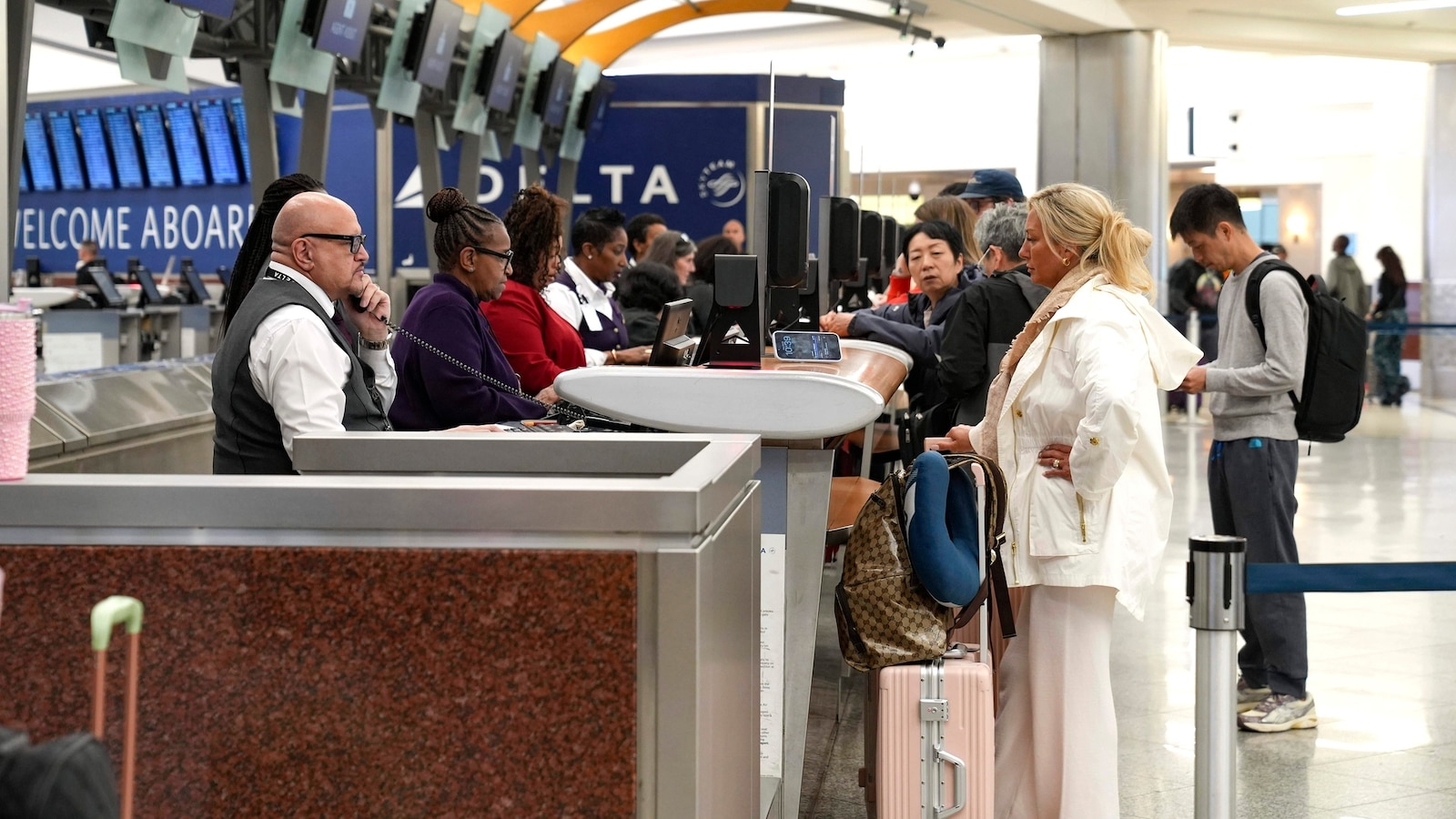

Delta Air Lines Suspends Special Services for Congress Members Amid Government Shutdown
Understanding the Service Suspension Decision
Delta Air Lines made a significant announcement on Tuesday that caught the attention of travelers and political observers alike. The major airline carrier, headquartered in Atlanta, revealed it would be putting a temporary hold on special treatment services previously offered to members of the United States Congress. This decision didn’t come out of nowhere—it’s directly connected to the pressures and challenges the airline industry has been facing due to an extended partial government shutdown that has stretched on for weeks. The airline emphasized in their public statement that while safety will always remain their top concern, taking care of both their workforce and regular customers has become their primary focus, and frankly, this has gotten increasingly tough given the current political and operational climate everyone’s dealing with.
The specialty services that Congress members had grown accustomed to won’t be available for the time being. This includes convenient airport escorts who would guide lawmakers through busy terminals and the premium red coat services that provided an extra level of personalized attention. However, Delta isn’t completely cutting off congressional representatives—they’ll still have access to the Capital Desk reservations line, which serves as a dedicated booking and service channel. But here’s the real change: when Congress members show up at the airport, they’ll be treated just like everyone else. Their place in line, their boarding priority, and the level of service they receive will be determined solely by their SkyMiles membership status, just like any other frequent flyer. It’s a democratization of the airport experience, if you will, brought about by extraordinary circumstances that have strained the entire aviation system.
The Ripple Effects of the Government Shutdown on Air Travel
The partial government shutdown that triggered Delta’s decision has been dragging on for over a month now, and its effects on air travel have been anything but subtle. Major airports across the country, especially busy hub airports like Hartsfield-Jackson Atlanta International Airport—which happens to be Delta’s home base and one of the world’s busiest airports—have turned into scenes of frustration and delay. Travelers have found themselves stuck in security lines that snake endlessly through terminals, sometimes taking hours to navigate. The reason? Staffing shortages among Transportation Security Administration officers have reached critical levels. TSA agents, who are considered essential workers and required to show up for their shifts despite not receiving paychecks during the shutdown, have been calling out sick at unprecedented rates. You can hardly blame them—showing up to work without knowing when your next paycheck will arrive is demoralizing at best and financially impossible at worst for many workers.
These staffing challenges have created a domino effect throughout the aviation system. When security lines back up, passengers miss flights. When passengers miss flights, airlines have to rebook them, putting additional strain on customer service systems and creating operational headaches. Gate agents and flight attendants find themselves dealing with increasingly frustrated travelers who are stuck in situations beyond anyone’s control. The whole carefully choreographed dance of modern air travel, which depends on thousands of workers performing their roles precisely and on time, starts to break down when key players in the system are missing. Delta’s decision to suspend special services for Congress members reflects the reality that the airline simply doesn’t have the bandwidth to provide these extras when their basic operations are under such strain and when they need to focus their limited resources on serving the hundreds of thousands of regular passengers who depend on them every day.
How Other Airlines Are Responding to the Crisis
Delta isn’t operating in a vacuum, of course, and questions naturally arise about how other major carriers are handling the situation. When asked about whether they planned to implement similar service suspensions for Congress members, responses from other airlines were mixed. American Airlines, one of Delta’s major competitors, didn’t immediately provide a response when contacted by ABC News about their policies. United Airlines, another industry giant, was similarly noncommittal, with a spokesperson simply stating they had nothing to share at the moment. These non-responses might indicate that these carriers are still evaluating their options, or perhaps they’re being cautious about making public statements on what has become a politically charged issue.
Southwest Airlines took a somewhat different approach in their response. Rather than announcing specific service changes, they issued a statement that focused on their ongoing communication with federal partners and aligned themselves with broader industry concerns. Southwest emphasized that they, along with the rest of the airline industry, are calling on Congress to fund critical agencies like the Transportation Security Administration and Customs and Border Protection without any more delays. This response reflects the reality that the shutdown isn’t just an inconvenience—it’s actively threatening the functionality of the nation’s aviation system, which depends on these federal agencies to operate safely and efficiently. Southwest’s statement puts the ball squarely in Congress’s court, essentially saying that the best way to resolve the service disruptions everyone’s experiencing is to end the shutdown and restore funding to these essential agencies.
The Broader Message Behind Delta’s Move
There’s something symbolic about Delta’s decision that goes beyond just the practical allocation of resources. By removing special privileges for Congress members—the very people responsible for the budget impasse causing the shutdown—Delta is sending a message. It’s a corporate way of saying, “You’re not exempt from the consequences of your decisions.” When lawmakers experience the same security line delays, the same reduced service levels, and the same travel frustrations as their constituents, perhaps it provides a more immediate understanding of how the shutdown affects real people in their daily lives. There’s an element of poetic justice here that hasn’t been lost on observers and commentators discussing Delta’s announcement.
This move also reflects how the private sector sometimes responds when government dysfunction reaches a certain threshold. Airlines exist in a unique position—they’re private companies, but they operate within an infrastructure that’s heavily dependent on government agencies and regulations. When that governmental infrastructure breaks down, as it does during a shutdown, airlines are caught in the middle. They can’t fix the TSA staffing problems or speed up customs processing, but they can control their own resource allocation. Delta’s decision represents a company taking action within the limited sphere of control it has, prioritizing the masses of regular travelers over a small group of VIPs who, ironically, have the power to end the very crisis causing the problem. It’s corporate pragmatism meeting political statement in a way that resonates with frustrated travelers across the country.
Looking Forward: The Path to Resolution
As the government shutdown continues with no immediate resolution in sight, Delta’s suspension of congressional services highlights just how far-reaching the effects of political gridlock can be. What started as a budget dispute in Washington has cascaded into real operational challenges for major corporations and daily headaches for millions of American travelers. The airline industry’s calls for Congress to fund TSA and CBP aren’t just about restoring special services for lawmakers—they’re about maintaining the basic functionality of the nation’s aviation system, which serves as critical infrastructure for both business and personal travel. Every day the shutdown continues, the strain on the system grows, with tired and financially stressed TSA officers, frustrated passengers, and airlines trying to maintain operations under increasingly difficult circumstances.
The resolution to this situation ultimately doesn’t rest with Delta or any other airline—it rests with the elected officials in Washington who need to find a path forward on the budget issues keeping the government partially closed. Until that happens, travelers can expect continued disruptions, longer wait times, and reduced services across the board. Delta’s move to treat Congress members like everyone else might seem like a small gesture in the grand scheme of things, but it represents an important principle: when policies create hardships for everyday Americans, perhaps those who make the policies should experience those same hardships firsthand. Whether this will have any effect on expediting budget negotiations remains to be seen, but at the very least, it ensures that the consequences of the shutdown are distributed a bit more equitably. For regular travelers, there’s a certain satisfaction in knowing that everyone’s in the same boat—or in this case, the same security line—until Congress can get its act together and reopen the government.