

Congressional Democrats Demand Ethics Investigations into Former Trump Administration Lobbyists
Lawmakers Raise Concerns About Potential Conflicts of Interest
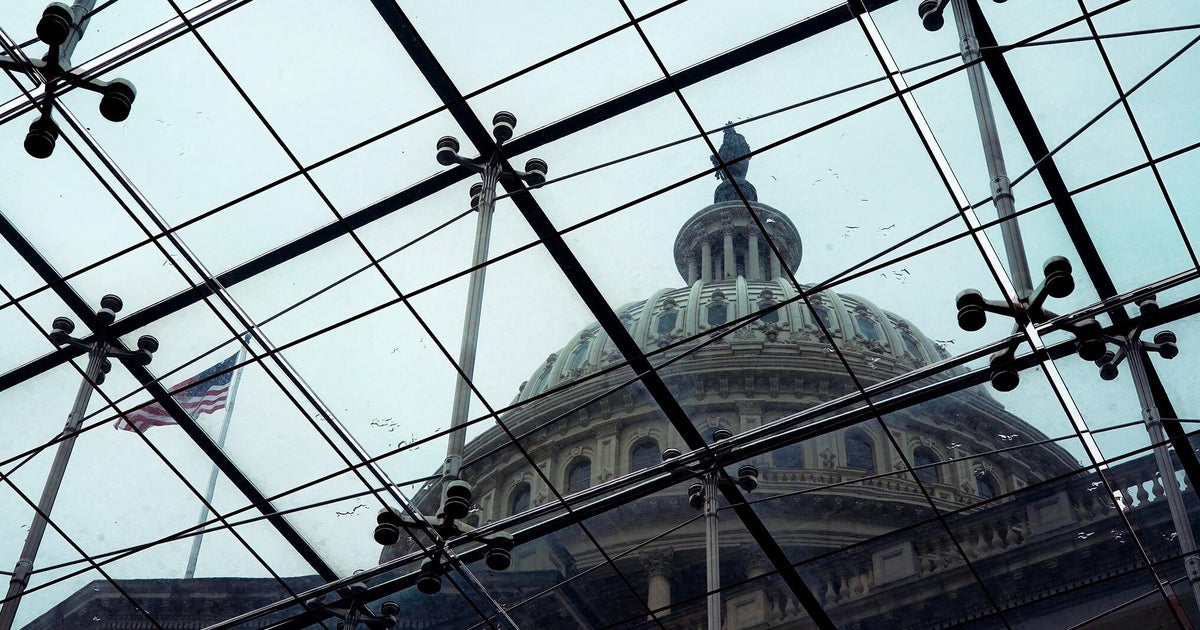
In a coordinated effort to ensure transparency and ethical conduct within the federal government, four Democratic members of Congress have formally requested comprehensive ethics investigations into former lobbyists who received appointments in the Trump administration. The bipartisan group includes Senators Elizabeth Warren from Massachusetts and Andy Kim from New Jersey, along with Representatives Pat Ryan from New York and Deborah Ross from North Carolina. These lawmakers have reached out to the inspectors general—the internal watchdogs responsible for oversight—at sixteen separate federal agencies, expressing serious concerns that former lobbyists may have used their government positions to provide preferential treatment to their previous clients, potentially violating federal ethics regulations.
The scope of their inquiry is extensive, covering some of the most prominent figures in the Trump administration’s second term. Among those under scrutiny are Attorney General Pam Bondi, border czar Tom Homan, Transportation Secretary Sean Duffy, and White House Chief of Staff Susie Wiles. The letter was distributed to inspectors general across major government departments, including the Justice Department, the Pentagon, the Treasury Department, the State Department, the Department of Health and Human Services, the Department of Homeland Security, and the Environmental Protection Agency. This wide-ranging approach demonstrates the lawmakers’ concern that the issue of former lobbyists influencing policy decisions for their previous clients may be systemic rather than isolated to just one or two agencies.
The Ethics Rules and Their Limitations
The heart of the lawmakers’ concern centers on existing federal ethics regulations and their potential shortcomings. Current federal ethics laws mandate that government employees refrain from working on matters directly involving clients they represented within the past year. While this “cooling-off period” is designed to prevent immediate conflicts of interest, the four Congress members argue that it may not be sufficient to truly eliminate the influence of former client relationships. In their letter, they expressed worry that “even when they comply with that minimal requirement, after a mere 12 months, their former-client relationships often remain fresh enough to improperly sway their decision-making.” This observation highlights a significant gap between the letter of the law and the spirit of ethical governance.
According to research compiled by the Campaign Legal Center, as of April 2025, at least twenty-one former lobbyists had been appointed to key leadership positions within the federal government. This represents a substantial number of individuals who previously worked to influence government policy on behalf of private interests and now find themselves on the other side of the table, making policy decisions. The situation is further complicated by the fact that during President Trump’s first term in office, he issued an ethics pledge that extended the recusal period from one year to two years, providing an additional layer of protection against conflicts of interest. However, notably, no such ethics pledge has been issued during his second term in office, leaving only the standard one-year restriction in place and potentially creating more opportunities for conflicts of interest to arise.
Specific Cases Raising Red Flags
The lawmakers’ letter details several specific instances that have raised concerns about potential favoritism toward former lobbying clients. Attorney General Pam Bondi and White House Chief of Staff Susie Wiles both previously worked for Ballard Partners, a prominent lobbying firm with numerous high-profile clients. Since Bondi assumed leadership of the Justice Department, the legislators allege that several of Ballard’s clients have received what appears to be favorable treatment from the department. One particularly notable example cited in the letter involves the Justice Department dropping its opposition to the merger between American Express and GBT, a transaction that had previously faced government scrutiny.
The concerns about Ballard Partners extend beyond this single merger. The lawmakers also pointed out that Ballard was retained by both Paramount and Netflix, two entertainment giants that are both seeking to merge with Warner Brothers Discovery. This is particularly noteworthy because Paramount is the parent company of CBS News, adding another layer of complexity to the ethical considerations at play. The appearance of impropriety in such high-stakes business dealings can undermine public trust in government decision-making, regardless of whether any actual wrongdoing occurred.
Transportation Secretary Sean Duffy presents another case study in potential conflicts of interest. Before joining the Trump administration, Duffy worked as a lobbyist for BGR Group, where he represented the Partnership for Fair and Open Skies among other clients. The lawmakers noted that since Duffy’s confirmation as Transportation Secretary, BGR has significantly expanded its lobbying presence at the Department of Transportation, growing from fourteen clients during the Biden administration to nineteen clients. This increase in lobbying activity raises questions about whether BGR may be leveraging its former employee’s current position to attract new clients or gain more favorable access to department decision-makers, even if Duffy himself is recused from matters directly involving the firm.
The Shadow of Criminal Investigation
Perhaps the most serious allegations in the letter concern border czar Tom Homan, whose situation extends beyond mere ethics concerns into the realm of potential criminal activity. Until last year, Homan was the subject of an FBI bribery investigation, according to sources who confirmed details to CBS News. During this investigation, sources indicate that Homan was recorded accepting a bag containing fifty thousand dollars in cash from an undercover FBI agent. The alleged payment was purportedly made in exchange for future government contracts, representing a clear-cut case of attempted bribery if the allegations are true.
However, the situation surrounding Homan has become murkier since the investigation was closed. Deputy Attorney General Todd Blanche publicly acknowledged the existence of the investigation but stated that it was closed after the FBI determined there was “no credible evidence of any criminal wrongdoing.” Homan himself has vehemently denied any wrongdoing and has claimed that he never accepted any money, directly contradicting the accounts from sources familiar with the investigation. This conflicting information—between sources saying he was recorded accepting cash and both Homan and the Justice Department saying no crime occurred—has left many questions unanswered and has fueled concerns about whether the investigation was conducted thoroughly and impartially, particularly given that Homan received his appointment after the investigation was closed.
The Broader Implications for Government Ethics
The case of Susie Wiles, the White House Chief of Staff, illustrates how deeply the lobbying-to-government pipeline can affect the executive branch at its highest levels. Wiles previously worked for Mercury Public Affairs, a firm that, according to the lawmakers’ letter, reported lobbying the White House for twenty-six different clients in 2025 alone. Having the White House Chief of Staff—one of the most powerful unelected positions in government—come from a firm that is actively lobbying the very institution she now helps to run creates obvious concerns about conflicts of interest and access. Even if Wiles scrupulously follows all recusal requirements, the appearance of special access for her former firm’s clients can damage public confidence in the integrity of White House decision-making.
These cases collectively paint a picture of a government where the revolving door between lobbying firms and federal agencies is spinning rapidly, with former advocates for private interests moving into positions where they regulate or make policy affecting those same interests. While not all such transitions necessarily result in wrongdoing, the structural incentives and relationships created by this system make it difficult to ensure that government officials are making decisions based solely on the public interest rather than on lingering loyalties or future career considerations. The fact that spokespeople for the Justice Department, the White House, and the Department of Transportation could not be immediately reached for comment on these serious allegations only adds to the impression that transparency may not be a priority. As these investigations proceed—if the inspectors general choose to pursue them—they will serve as an important test of whether existing ethics rules are sufficient to protect the integrity of government decision-making or whether more robust reforms are needed to truly separate lobbying interests from policy-making power.