
Understanding Your Home’s Water Quality: A Practical Guide to Filtration
The Reality of American Tap Water
When you turn on your kitchen faucet, you’re generally getting safe, high-quality water, thanks to rigorous federal standards and local utility oversight. The United States has developed one of the most comprehensive water safety systems in the world, with the Environmental Protection Agency monitoring more than 90 different contaminants under the Safe Drinking Water Act. Municipal water treatment facilities work around the clock, using disinfectants like chlorine to eliminate harmful microorganisms before water ever reaches your home. For the vast majority of Americans—more than 90 percent, according to experts—the water flowing from their taps is perfectly safe to drink without any additional treatment.
However, this doesn’t mean every glass of water tastes exactly the same or that water quality is identical from one building to the next. The journey water takes from treatment facility to your glass can affect its final characteristics, especially in older buildings with aging pipes. This uncertainty, combined with legitimate concerns about well-publicized water crises in certain communities, has created a booming market for water filtration products. From simple twenty-dollar pitchers to sophisticated reverse osmosis systems costing several thousand dollars, American consumers now face an overwhelming array of choices. Gregory Pierce, who directs UCLA’s Human Right to Water Solutions Lab, offers reassuring perspective: unless you’re experiencing actual health problems, have received an official notice from your water system, or there’s credible reporting about contamination in your area, you probably don’t need a filter at all. You’re certainly welcome to use one if it improves taste, but it shouldn’t be considered necessary for safety reasons in most places.
Investigating Your Local Water Quality
Before investing in any filtration system, the smartest first step is understanding what’s actually in your water. Every public water system in the United States is required to produce an annual Consumer Confidence Report, a detailed document that lists every contaminant detected in the water supply and confirms whether the system meets federal safety standards. These reports are typically available on your city or utility’s website, and you can always contact your water provider directly with specific questions or concerns. It’s worth noting that water systems are generally only responsible for water quality up to the point where their infrastructure meets private property, which means the quality can vary significantly depending on your specific building’s plumbing condition and age.
For many households, reading through the Consumer Confidence Report provides all the reassurance needed. However, some people want additional certainty, particularly those living in older buildings where lead pipes or deteriorating plumbing might introduce contaminants after the water leaves the municipal system. This is where professional water testing comes in. Jess Goddard, chief science officer at SimpleLab, an environmental testing company, recommends testing your water to identify specific risks before investing in treatment solutions. The testing process is straightforward: you order a kit (typically costing a couple hundred dollars or more, depending on which contaminants you’re screening for), collect a water sample following detailed instructions, and mail it to a certified laboratory. The lab then analyzes your water for specific substances—including PFAS chemicals, microplastics, heavy metals, and disinfection byproducts—and provides a comprehensive report of findings.
If you have a private well rather than municipal water service, testing becomes even more important since wells aren’t regulated under the Safe Drinking Water Act. Well owners bear full responsibility for monitoring their water quality, and the EPA along with other agencies offers resources specifically designed for people with private wells. If testing reveals serious contamination issues, Pierce recommends contacting your water utility or state environmental agency immediately for professional guidance, as the solution may extend beyond simply installing a household filter to include temporary use of bottled water or infrastructure upgrades like pipe replacement.
Choosing the Right Filter for Your Needs
If testing indicates you could benefit from filtration, or if you simply want to improve taste and odor, the next challenge is selecting the right system without overspending on unnecessary features. The key is understanding what different filters actually do and matching those capabilities to your specific needs. The EPA points out that many household water uses—flushing toilets, washing clothes, watering plants—don’t require treated water, so most people are primarily concerned with water used for cooking and drinking. When evaluating filters, look for certifications from the nonprofit organization NSF International and the American National Standards Institute. Common NSF/ANSI ratings include Standard 42 for addressing aesthetic concerns like taste and odor, Standard 53 for reducing contaminants with health effects, and Standard 401 for emerging compounds of concern. NSF maintains a searchable online database where you can look up products by name or search for filters that reduce specific contaminants you’re worried about.
Sydney Evans, a science analyst who led water filter testing at the Environmental Working Group, emphasizes an important principle: “Not every filter is good for everything, and even if there’s a filter out there that does absolutely everything, maybe you don’t need it.” This is crucial advice in a marketplace that often encourages consumers to buy the most expensive, comprehensive system available. Many households use filters not because of genuine safety concerns but because of taste or odor issues. As Goddard notes, these aesthetic factors “really do impact people’s enjoyment or sense of confidence in their drinking water,” which are legitimate reasons to filter even when water is technically safe. For these situations, a basic activated carbon filter—like those found in many common pitcher models—can be highly effective at reducing the chlorine and chlorine byproducts that create taste and odor issues. These byproducts naturally form when chlorine reacts with organic matter in water during the treatment process.
Even when these disinfection byproducts are well below federal safety limits, some people prefer to reduce them as a precautionary measure. Samantha Bear, a senior research analyst at SimpleLab, notes that she and her colleagues filter their tap water not because it’s unsafe, but to minimize long-term exposure to these compounds. Similarly, many people living in areas without documented high levels of PFAS contamination still worry about these “forever chemicals” that have received significant media attention. The EPA confirms that appropriate filters can reduce PFAS levels, though they recommend contacting your water provider first to understand your specific exposure. Lead represents another concern that filters can address, even though the EPA emphasizes that no level of lead exposure is considered safe and some situations may require solutions beyond filtration, such as pipe replacement.
Understanding Different Filtration Systems
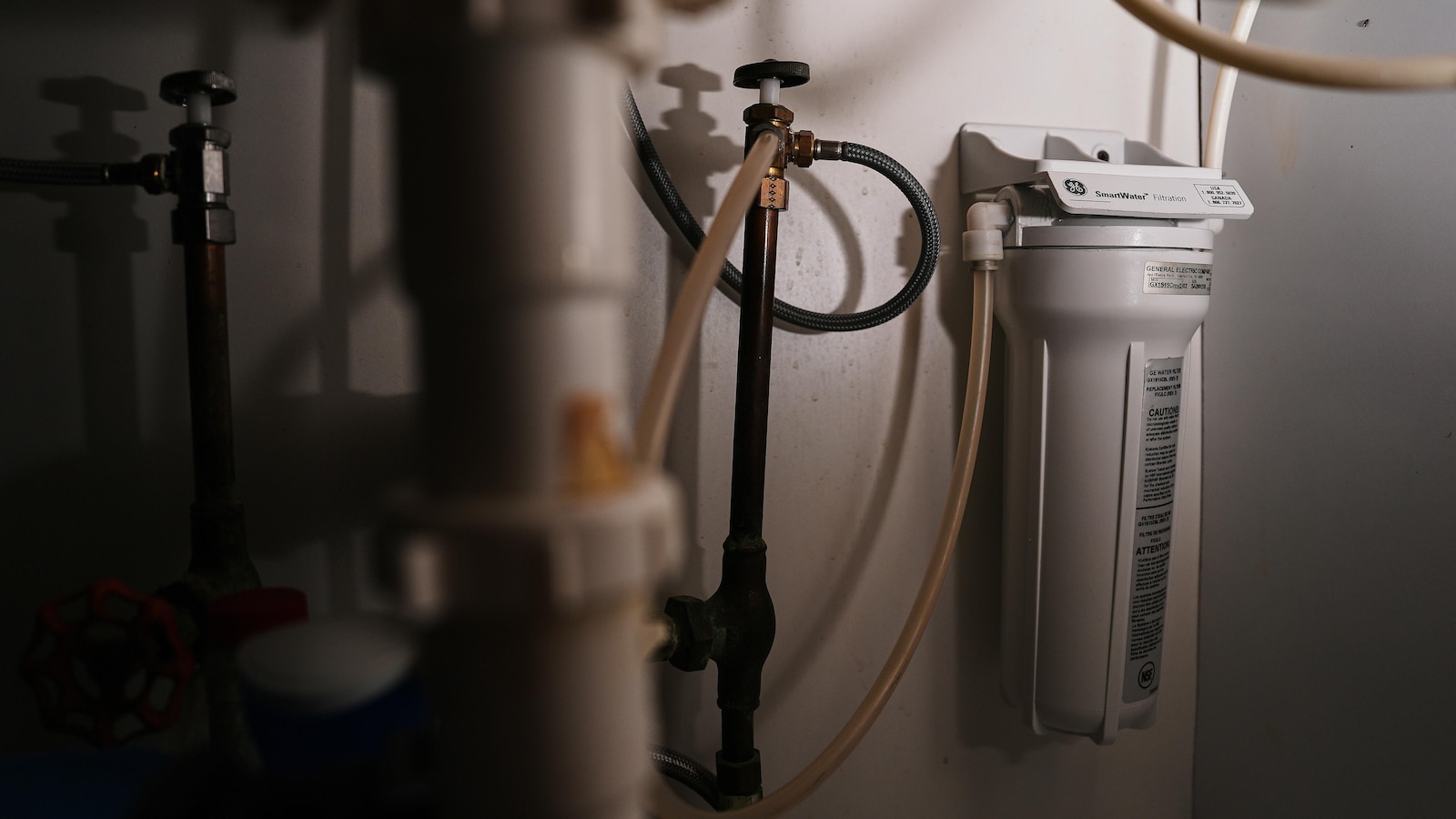
Water filters come in several basic categories, each with different installation requirements, costs, and capabilities. Point-of-use systems—including pitchers, refrigerator filters, and faucet-mounted units—treat water right where you drink or cook with it. These are typically the most affordable and easiest to install, with many requiring no tools whatsoever. Under-sink systems and reverse osmosis units also provide point-of-use treatment but offer more comprehensive filtration and usually require professional installation. These systems can remove a wider range of contaminants but come with higher upfront costs and ongoing maintenance requirements.
Point-of-entry systems, commonly called whole-home filters, treat water before it’s distributed throughout the house, meaning every faucet, shower, and appliance receives filtered water. These systems represent a significant investment, typically requiring professional installation and costing substantially more than point-of-use options. However, they’re generally only necessary when dealing with issues that affect all household water—such as hardness (high mineral content), elevated iron levels, or certain volatile compounds—rather than contaminants that originate within a building’s plumbing. Water softeners, which many people confuse with filters, actually serve a different purpose: they reduce minerals that can damage plumbing and appliances through buildup, but they don’t remove most contaminants. Distillation systems, which boil water and condense the steam to remove minerals and some contaminants, are relatively uncommon in residential settings. Most households simply don’t need whole-home systems or distillation unless they’re addressing a specific, documented problem that’s been identified through testing.
The Critical Importance of Filter Maintenance
Purchasing a filter is only the first step; proper maintenance is equally important for ensuring it continues protecting your water quality rather than degrading it. Filter cartridges don’t last forever—they gradually lose effectiveness as they accumulate the contaminants they’re designed to remove. Even more concerning, filters that aren’t changed according to manufacturer instructions can become breeding grounds for bacteria, potentially making your water quality worse than if you hadn’t filtered it at all. As Pierce notes, neglected filters “may do more harm than good,” transforming from a protective measure into an actual source of contamination.
Each filter type has specific maintenance requirements detailed in its instructions, typically based on either time elapsed (such as every two months) or volume of water filtered (such as every 40 gallons). Following these guidelines isn’t optional if you want your investment to serve its intended purpose. Many modern filter systems include indicator lights or timers to help you track when replacement is due, but ultimately, the responsibility falls on the homeowner to stay on top of this maintenance. When calculating the true cost of a filtration system, remember to include these ongoing expenses for replacement cartridges, which can add up significantly over time, particularly for more sophisticated systems.
Making an Informed Decision
The water filter industry has grown tremendously, fueled partly by legitimate concerns about water quality but also by marketing that can sometimes overstate risks or promote unnecessary products. The key to navigating this marketplace is starting with facts about your specific water supply rather than assumptions or fears. For most Americans, municipal tap water is safe, affordable, and environmentally friendlier than bottled alternatives. That said, the decision to filter your water is personal and can be based on factors beyond pure safety—including taste preferences, concerns about long-term exposure to compounds that are legal but not necessarily desirable, and the peace of mind that comes from taking additional precautions.
If you decide to invest in filtration, let testing and research guide your choice rather than price or marketing claims. The most expensive system isn’t necessarily the best for your situation, and a simple pitcher filter might address your actual needs just as effectively as an elaborate whole-home system. Whatever you choose, commit to proper maintenance, because a well-maintained basic filter will always outperform a neglected sophisticated one. By taking these thoughtful, informed steps, you can ensure that every glass of water you drink meets both safety standards and your personal preferences, without wasting money on unnecessary technology or falling behind on the maintenance that keeps any filtration system working as intended.