


Ecuador Deploys Massive Security Force Amid Escalating Drug Violence Crisis
A Nation Under Siege: Understanding Ecuador’s Emergency Response
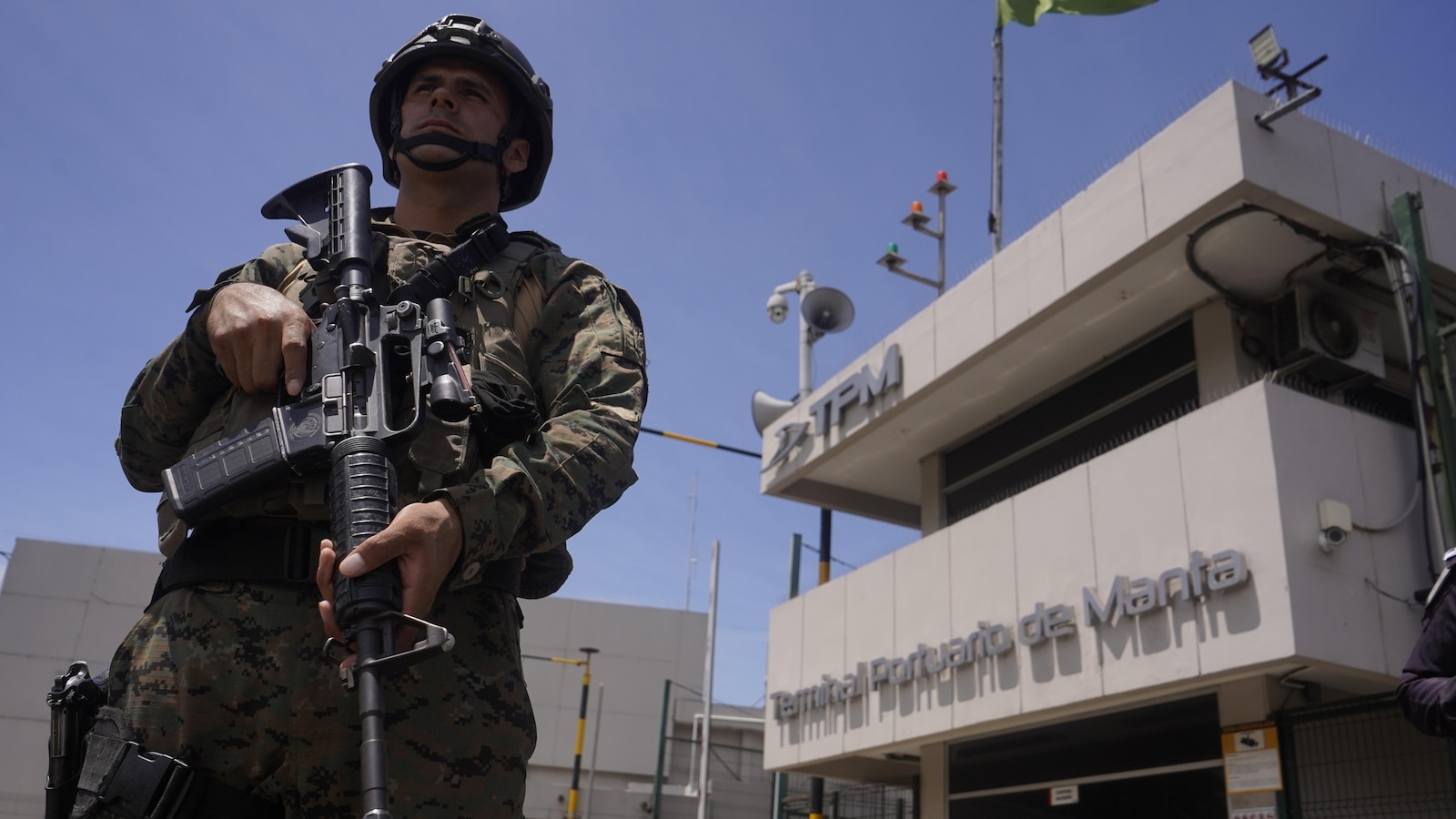
Ecuador is currently experiencing one of the most challenging periods in its recent history as the South American nation grapples with unprecedented levels of drug-related violence. In a dramatic show of force, Ecuadorian authorities announced Monday that they have mobilized an impressive 75,000 soldiers and police officers to four provinces particularly hard-hit by criminal activity. This massive deployment comes as the government implements strict nighttime curfews in an attempt to restore order and protect citizens from the violence that has been plaguing these regions. The curfew, which prohibits residents from leaving their homes between 11 p.m. and 5 a.m., began Sunday night and is scheduled to remain in effect for two weeks across the provinces of Guayas, El Oro, Los Rios, and Santo Domingo de los Tsachilas.
The scope of this security operation is unprecedented in Ecuador’s recent history, reflecting the severity of the crisis facing the nation. Within just the first night of the curfew’s implementation, authorities reported arresting 253 individuals for violating the restrictions, demonstrating both the government’s commitment to enforcement and the challenges ahead. While the emergency measures cover Guayaquil—Ecuador’s largest and most populous city—they notably do not extend to the capital city of Quito or the world-famous Galápagos Islands, a major tourist destination. This selective application suggests that authorities are focusing their resources on the areas experiencing the most acute security challenges, particularly those coastal regions that have become epicenters of drug trafficking and cartel violence.
Military Action and Government Resolve
The government’s response has gone beyond simply deploying personnel and enforcing curfews. Interior Minister John Reimberg revealed on Monday that Ecuadorian military forces had utilized authorized artillery to destroy three identified targets, though he remained deliberately vague about the specific nature of these strikes. His stark words to journalists—”Let whatever must fall, fall — and whoever must fall, fall”—underscore the government’s determination to take aggressive action against criminal organizations operating within the country’s borders. Fortunately, officials reported that these military operations resulted in no recorded casualties, though the full impact and effectiveness of these strikes remain to be seen.
This escalation in military involvement represents a significant shift in how Ecuador is approaching its security crisis. President Daniel Noboa, a conservative leader who has taken a hardline stance on crime, recently extended a state of exception that grants the military extraordinary powers. Under this emergency declaration, armed forces can conduct joint patrols with police officers and even enter private homes without obtaining a search warrant—measures that would be considered extreme in many democratic societies but which the government argues are necessary given the extraordinary circumstances. The administration has clearly decided that the threat posed by organized crime requires an equally forceful response, even as civil liberties advocates raise concerns about the implications of such broad powers.
The Root Causes: A Perfect Storm of Violence
To understand why Ecuador has reached this critical juncture, it’s essential to examine the underlying factors driving the violence. The country has become a crucial battleground in the international drug trade, with rival cartels fighting viciously for control of coastal ports that serve as key transit points for smuggling cocaine to the United States and other markets. Last year, Ecuador recorded its highest homicide rate in decades, with a staggering 50 murders per every 100,000 residents, according to the Ministry of the Interior. To put this in perspective, this represents a fivefold increase in the homicide rate since the COVID-19 pandemic began, transforming what was once considered one of South America’s safer countries into one struggling with violence comparable to some of the region’s most dangerous nations.
The situation has been exacerbated by the involvement of powerful international criminal organizations. Cartels from Colombia and Mexico have identified Ecuador as strategically valuable territory and have moved aggressively to establish control over drug trafficking routes. These international groups have formed alliances with local gangs, creating a complex criminal ecosystem that has proven difficult for authorities to dismantle. The violence is not merely a side effect of this criminal activity—it’s often deliberate, as rival groups battle for dominance, send messages to competitors, and attempt to intimidate law enforcement and government officials. Innocent civilians frequently find themselves caught in the crossfire of these conflicts, contributing to a growing sense of insecurity among ordinary Ecuadorians.
International Dimensions and Regional Tensions
President Noboa has not hesitated to point fingers at neighboring Colombia, accusing its government of failing to do enough to prevent cartels from operating along the shared border between the two nations. This criticism has created diplomatic tensions in the region, with Noboa taking concrete actions to express his displeasure. In January, the Ecuadorian president imposed tariffs on Colombian imports, declaring that these economic measures would remain in place until the security situation along the border shows significant improvement. This move represents a calculated gamble—using economic pressure to force action on security issues—though it also risks damaging important trade relationships and potentially creating additional economic hardship for both countries.
The cross-border nature of the security crisis became even more apparent earlier this month when Ecuador’s military announced it had conducted a joint operation with the United States against a training camp used by Colombian drug traffickers. This coordinated assault, which involved drones, helicopters, and boats, targeted a facility located on Ecuador’s side of the border. According to officials, the camp belonged to Comandos de la Frontera, a splinter group that broke away from the Revolutionary Armed Forces of Colombia (FARC) after that guerrilla organization signed a historic peace deal with Colombia’s government in 2016. The fact that Ecuador felt compelled to invite U.S. military involvement in operations on its own territory speaks volumes about the severity of the threat and the limitations of what Ecuadorian forces can accomplish alone.
Criticism and Controversy Surrounding Government Methods
Despite the government’s aggressive stance, President Noboa faces mounting criticism from civil society organizations and human rights groups who argue that his iron-fisted approach has failed to deliver meaningful reductions in crime while simultaneously putting innocent civilians at risk. Critics point out that military-led security operations, while dramatic and visible, don’t address the root causes of criminal violence—poverty, lack of economic opportunity, weak institutions, and corruption. There are also serious concerns about the potential for human rights abuses when military forces are given such broad powers with limited oversight, particularly when operating under emergency conditions that suspend normal legal protections.
These concerns are not merely theoretical. A troubling case from last year raised profound questions about the government’s crime-fighting methods and the accountability of security forces. Eleven soldiers were sentenced to more than 30 years in prison for the abduction of four children whose bodies were later found outside a military base near Guayaquil. This horrific incident shocked the nation and highlighted the potential for terrible abuses when military personnel operate with insufficient oversight and accountability. While the prosecution and conviction of these soldiers demonstrated that the justice system can function, the incident itself underscored the dangers inherent in militarizing law enforcement responses to criminal activity. As Ecuador continues to navigate this crisis, finding the right balance between effective security measures and protection of civil liberties will remain one of the government’s most difficult challenges, with the wellbeing of millions of Ecuadorians hanging in the balance.