



Investigation Underway into Alleged Beating of Mexican Citizen by ICE Officers
Serious Injuries Spark Multiple Investigations
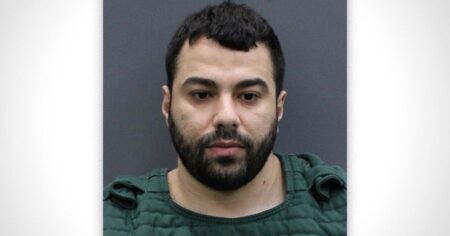
A troubling incident in Minnesota has prompted both state and federal authorities to launch investigations into the alleged brutal treatment of a Mexican citizen during an immigration arrest. Alberto Castañeda Mondragón, a 31-year-old man, ended up in intensive care with devastating injuries—eight skull fractures—following what he describes as a violent encounter with Immigration and Customs Enforcement (ICE) agents on January 8th in a St. Paul shopping center parking lot. According to Castañeda Mondragón’s account, ICE agents forcibly removed him from his vehicle, slammed him to the ground, and repeatedly struck his head with a steel baton. The severity of his injuries tells a story that medical professionals find deeply concerning and inconsistent with ICE’s official version of events. Last week, investigators from both the St. Paul Police Department and the FBI visited the shopping center where the arrest took place, canvassing the area and seeking surveillance footage that might shed light on what actually happened during those critical moments. This case has become part of a growing pattern of troubling incidents involving federal immigration enforcement in Minnesota, raising serious questions about accountability, use of force, and whether officers are being truthful about their actions.
Conflicting Accounts: ICE’s Version Versus Medical Evidence
The stark contrast between ICE’s official statement and the medical evidence has become the central issue in this case. ICE has maintained that Castañeda Mondragón caused his own catastrophic injuries by attempting to flee while handcuffed, claiming he “fell and hit his head against a concrete wall” while running toward a highway. However, medical professionals who treated him at a Minneapolis hospital have told the Associated Press that this explanation simply doesn’t match the injuries they observed. A CT scan revealed fractures on the front, back, and both sides of Castañeda Mondragón’s skull—a pattern that a doctor stated was inconsistent with injuries from a simple fall. Hospital staff noted that a single fall couldn’t plausibly account for the brain hemorrhaging and fragmented memory the patient experienced. In an interview published earlier this month, Castañeda Mondragón directly contradicted ICE’s account, stating that the arresting officers were “racist” and “started beating me right away when they arrested me.” His legal team has alleged that he was racially profiled, adding another layer of concern to an already troubling case. The Department of Homeland Security, through spokesperson Tricia McLaughlin, has doubled down on their version of events, even as questions mount about inconsistencies in their various statements about the incident.
Evidence Lost as Investigation Delayed
One of the most frustrating aspects of this investigation is that crucial video evidence may have been lost forever due to delays in launching the inquiry. When investigators finally began canvassing the shopping center last week—more than a month after the incident—they discovered that at least one business had already overwritten its surveillance footage. Most security systems automatically delete recordings after a certain period, typically 30 days, to make room for new footage. Johnny Ratana, owner of Teepwo Market, an Asian grocery store with a view of the parking lot where the arrest occurred, reported that St. Paul police visited his business twice in recent days. During the second visit, a data technician attempted to recover images that had been automatically overwritten, though it’s unclear whether that effort was successful. Ratana also mentioned being approached by FBI agents seeking the same footage. The question many are asking is: why did it take so long for authorities to begin investigating such serious allegations? St. Paul police explained that they couldn’t begin their investigation until Castañeda Mondragón filed an official police report—a process delayed by weeks because of his hospitalization and uncertainty surrounding his immigration status. Police finally took his statement just a week ago at the Mexican consulate, but by then, potentially critical evidence had already disappeared.
Pattern of Concerning ICE Conduct in Minnesota
This incident isn’t happening in isolation—it’s part of a troubling pattern of questionable conduct by federal immigration officers in Minnesota. Authorities are currently conducting another federal probe examining whether two ICE officers committed perjury regarding a separate shooting incident in Minneapolis. In that case, federal prosecutors were forced to drop charges against two Venezuelan men who had been accused of attacking an officer with a snow shovel and broom handle. The charges were dismissed after video evidence directly contradicted the sworn testimony provided by the ICE officers, raising serious questions about whether those officers lied under oath. Additionally, the FBI recently informed Minnesota authorities that it would not share any information or evidence related to the January 24th fatal shooting of Alex Pretti by federal immigration officers. That killing is currently the subject of a Justice Department civil rights investigation. These multiple incidents, occurring within a relatively short timeframe in the same geographic area, have created an atmosphere of distrust and raised concerns among elected officials, community members, and civil rights advocates. The pattern suggests potential systemic issues with how immigration enforcement is being conducted in the region, particularly regarding the use of force, truthfulness in official reports, and accountability when things go wrong.
Unanswered Questions and Agency Stonewalling
For weeks, the U.S. Department of Homeland Security has refused to provide meaningful answers about Castañeda Mondragón’s case. The agency has not responded to detailed questions from the Associated Press, including a crucial query about whether the arresting officers were wearing body cameras and, if so, whether footage of the arrest exists. This lack of transparency is particularly troubling given that body-worn cameras are specifically intended to provide an objective record of police encounters and protect both officers and civilians. Furthermore, there are significant contradictions even within ICE’s own statements about the case. Spokesperson Tricia McLaughlin claimed that ICE conducted a “targeted enforcement operation” to arrest Castañeda Mondragón, suggesting they knew about his immigration status before the arrest. However, this directly contradicts a January 20th court filing in which ICE stated that officers only determined the man had overstayed his work visa after he was already in custody. When asked which account was correct, McLaughlin did not respond. These inconsistencies undermine the agency’s credibility and raise additional questions about what really happened and whether officials are being forthright with the public. The refusal to answer basic questions, combined with contradictory statements, has left investigators, lawmakers, and the public in the dark about crucial aspects of the case.
What Comes Next: Uncertain Future and Calls for Accountability
The path forward in this case remains uncertain, though several developments are on the horizon. Castañeda Mondragón has been summoned to meet with ICE on February 23rd at the agency’s main detention facility in Minneapolis—an appointment that carries the real possibility that he could be taken back into custody and deported before investigations are complete. This prospect has raised concerns among his legal team and advocates who worry that his removal from the country could effectively end any chance of holding officers accountable for what happened to him. Meanwhile, local prosecutor John Choi, the chief prosecutor of Ramsey County, has issued a statement making clear his office’s commitment to the investigation: “It is my expectation that we will investigate past and future allegations of criminal conduct by federal agents to seek the truth and hold accountable anyone who has violated Minnesota law.” This statement signals that local authorities are taking these allegations seriously, even as federal agencies remain largely silent or defensive. The challenge investigators face is substantial—working with potentially incomplete evidence, delayed witness statements, and agencies that have shown reluctance to cooperate fully. For Castañeda Mondragón, the stakes couldn’t be higher. Beyond the physical trauma of his injuries and the lengthy recovery ahead, he faces the uncertainty of his immigration status and the possibility of being separated from his life in the United States. As these multiple investigations continue, this case has become a test of whether accountability is possible when federal agents are accused of serious misconduct, and whether the systems meant to protect people’s rights can function even when crucial time has been lost.