
Federal Reserve Rate Cuts Vanish as Oil Crisis and Iran Tensions Reshape Economic Outlook
The Market Pivot: From Hope to Reality
Financial markets have undergone a dramatic transformation in recent weeks, abandoning nearly all expectations that the Federal Reserve will reduce interest rates throughout 2026. This seismic shift in sentiment comes as escalating military tensions between the United States, Israel, and Iran have sent crude oil prices soaring past $110 per barrel—a threshold not consistently breached since the 2022 Russian invasion of Ukraine. For everyday Americans, this translates into gasoline prices climbing toward $4 per gallon at the pump, squeezing household budgets that were already stretched thin by years of elevated inflation. The change in market expectations tells a stark story: as recently as early March, traders were still holding out hope for monetary relief, with nearly 12% betting the Fed would cut rates to between 3.25% and 3.50%. Today, futures markets monitored by the CME FedWatch Tool show an overwhelming 99.5% probability that the Federal Open Market Committee will keep rates exactly where they are—between 3.50% and 3.75%—when policymakers meet on April 29. This represents more than just a technical adjustment in market pricing; it reflects a fundamental reassessment of the economic landscape facing both policymakers and ordinary citizens.
How We Got Here: Oil Shocks and Presidential Warnings
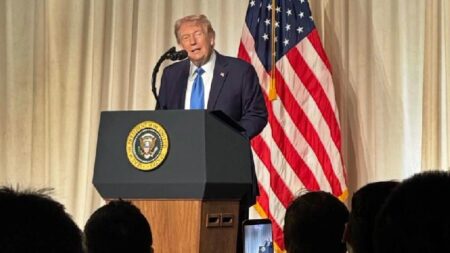
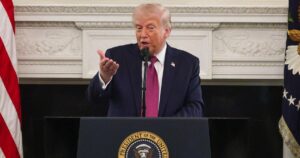
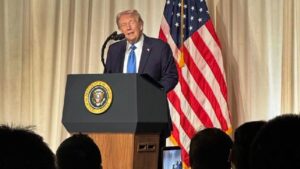
The catalyst for this dramatic reversal came during President Donald Trump’s nationally televised address earlier this month, when he signaled an aggressive military posture toward Iran. His stark warning that the United States would strike “extremely hard” in the coming weeks, coupled with threats to target Iranian power infrastructure, sent immediate shockwaves through commodity markets. Within hours, West Texas Intermediate crude—the U.S. benchmark—surged past the $110-$112 per barrel range, while international Brent crude settled above $107. These weren’t merely headline numbers; they represented real disruptions to the global energy supply chain. The Strait of Hormuz, a narrow waterway through which roughly one-fifth of the world’s oil supply passes daily, has seen Iranian naval forces effectively choke tanker traffic since hostilities intensified in late February. Physical oil trading in Houston reflected the supply crunch, with premiums climbing to $5.50 above futures prices—a concrete indicator that refiners and distributors were scrambling to secure barrels. The International Energy Agency responded by coordinating emergency releases from strategic petroleum reserves across more than thirty countries, providing some buffer but falling short of eliminating the fundamental supply shortage that now grips global markets.
The Fed’s Inflation Dilemma: Between a Rock and a Hard Place
For Federal Reserve Chair Jerome Powell and his colleagues, the oil shock couldn’t have come at a worse time. Just as inflation had begun showing credible signs of moderating toward the Fed’s 2% target, this new energy crisis threatens to unravel months of progress. The Fed’s March 18 Summary of Economic Projections told the story in numbers: officials revised their 2026 Personal Consumption Expenditures inflation estimate upward to 2.7%, a significant jump from the 2.4% they had projected just three months earlier in December. Core PCE—which strips out volatile food and energy prices and typically receives more attention from policymakers—came in at the same elevated 2.7% level, suggesting inflation pressures are broadening beyond just gasoline. The Fed’s median projection still includes one quarter-point rate cut sometime this year, but Powell’s language at the post-meeting press conference made clear that officials are adopting a wait-and-see posture. They’re watching for “second-round effects”—economist-speak for the ways an initial price shock can cascade through the economy. When diesel fuel costs more, shipping becomes more expensive. When shipping costs rise, everything from groceries to furniture gets pricier. And when workers see their living costs climb, they demand higher wages, which can feed back into prices in a self-reinforcing spiral. This is precisely the dynamic that kept inflation elevated in the 1970s, and it’s the nightmare scenario keeping Fed officials awake at night.
Inside the Fed: Dissent, Departures, and the Changing Guard
The internal dynamics at the Federal Reserve are adding another layer of complexity to an already challenging situation. At the March 17-18 policy meeting, Governor Stephen Miran broke ranks with his colleagues, casting the lone dissenting vote in favor of an immediate rate cut. The other ten voting members held firm, but Miran’s dissent highlights the genuine disagreement among experts about the appropriate path forward. Some economists argue that the economy needs support now, before higher borrowing costs push unemployment significantly higher. Others contend that cutting rates while oil prices surge would be reckless, potentially signaling to markets that the Fed has given up on its inflation fight. Beyond this policy debate lies a more fundamental transition: Powell’s tenure as Federal Reserve Chair concludes on May 15, 2026—less than a month away. President Trump has nominated Kevin Warsh as the next Chair, setting up a potential shift in the Fed’s philosophical approach. While Powell will technically remain on the Board of Governors through January 2028, history suggests that former Chairs rarely wield significant influence once they step down from the leadership role. The practical reality is that Powell will become just one vote among seven governors, stripped of the agenda-setting power and public platform that defines the Chair position. This leadership transition adds uncertainty at precisely the moment when markets crave stability and clear forward guidance.
What Prediction Markets Tell Us About Real Conviction
While official Fed projections and Wall Street research desks still forecast at least some modest rate cuts in 2026, prediction markets—where people put actual money behind their beliefs—paint a bleaker picture. Polymarket, one of the largest decentralized prediction platforms, now assigns a 36% probability to zero rate cuts throughout all of 2026, a dramatic increase from just 10% before the Iran conflict escalated. A single quarter-point cut draws 23% odds, meaning the market consensus has shifted decisively toward a prolonged period of restrictive monetary policy. Kalshi, another prediction market with real-money trading, puts the no-cut scenario at 38.5%, with nearly $3 million in volume backing these positions. This isn’t idle speculation; it represents the collective judgment of thousands of traders with financial skin in the game. The divergence between Wall Street forecasts and prediction market odds is particularly telling. Major institutions like Citi still project more than 75 basis points (three quarter-point cuts) over the course of the year, though even they have pushed back their timing expectations. This split reflects different analytical frameworks: economists at big banks are modeling scenarios where tensions ease and oil retreats, while futures traders are pricing the world as it actually exists today, with all its messy geopolitical complications. For the June 17 FOMC meeting—the next decision point after April—CME FedWatch shows a 96.7% probability of another hold. Back on March 4, that figure stood at just 66.8%, with more than 30% of traders still expecting a cut by mid-year. That entire easing premium has evaporated in a matter of weeks.
The Real-World Impact: What This Means for Americans
All of this Fed-speak and market analysis translates into concrete consequences for everyday life. The national average for gasoline is rapidly approaching or exceeding $4 per gallon in numerous states, up roughly a dollar since before the war began. For a typical household that fills up twice a week, this represents an additional $100-150 per month—money that could have gone toward groceries, savings, or entertainment. Meanwhile, mortgage rates remain stubbornly elevated near 6.38%, keeping the dream of homeownership out of reach for many would-be buyers and preventing existing homeowners from refinancing into better terms. Credit card rates, auto loans, and business borrowing costs all remain high because the Fed has no room to provide relief without risking a resurgence of inflation. The cruel irony is that inflation may accelerate regardless of what the Fed does—oil shocks have a way of forcing themselves into the economy through channels monetary policy can’t easily control. The Fed can’t drill more oil or negotiate peace in the Middle East; it can only try to prevent temporary price spikes from becoming permanent inflation through the psychological mechanism of expectations. If workers and businesses come to believe that higher inflation is here to stay, they adjust their behavior in ways that make it a self-fulfilling prophecy. Powell and his colleagues understand this dynamic intimately, which is why they’re proceeding so cautiously despite criticism that they’re keeping rates “higher for longer” than necessary. The next FOMC decision arrives on April 29, and unless oil prices collapse or a credible ceasefire materializes in the coming weeks, markets expect the Fed to do exactly what they’ve already priced in: absolutely nothing. For millions of Americans watching their budgets stretch thinner by the month, that holding pattern represents both the frustrating reality of constrained policy options and the difficult trade-offs that come with fighting inflation in a world of geopolitical chaos.